Tag: AI Agents

  • The Enterprise AI Time Bomb Is Ticking.  Cisco Shares Its Plan.

    The Enterprise AI Time Bomb Is Ticking. Cisco Shares Its Plan.

    At Cisco Live in Las Vegas this week, the company delivered a sobering security message for enterprise buyers. AI helps the bad actors move faster, and the window to get ahead of it is closing quickly.

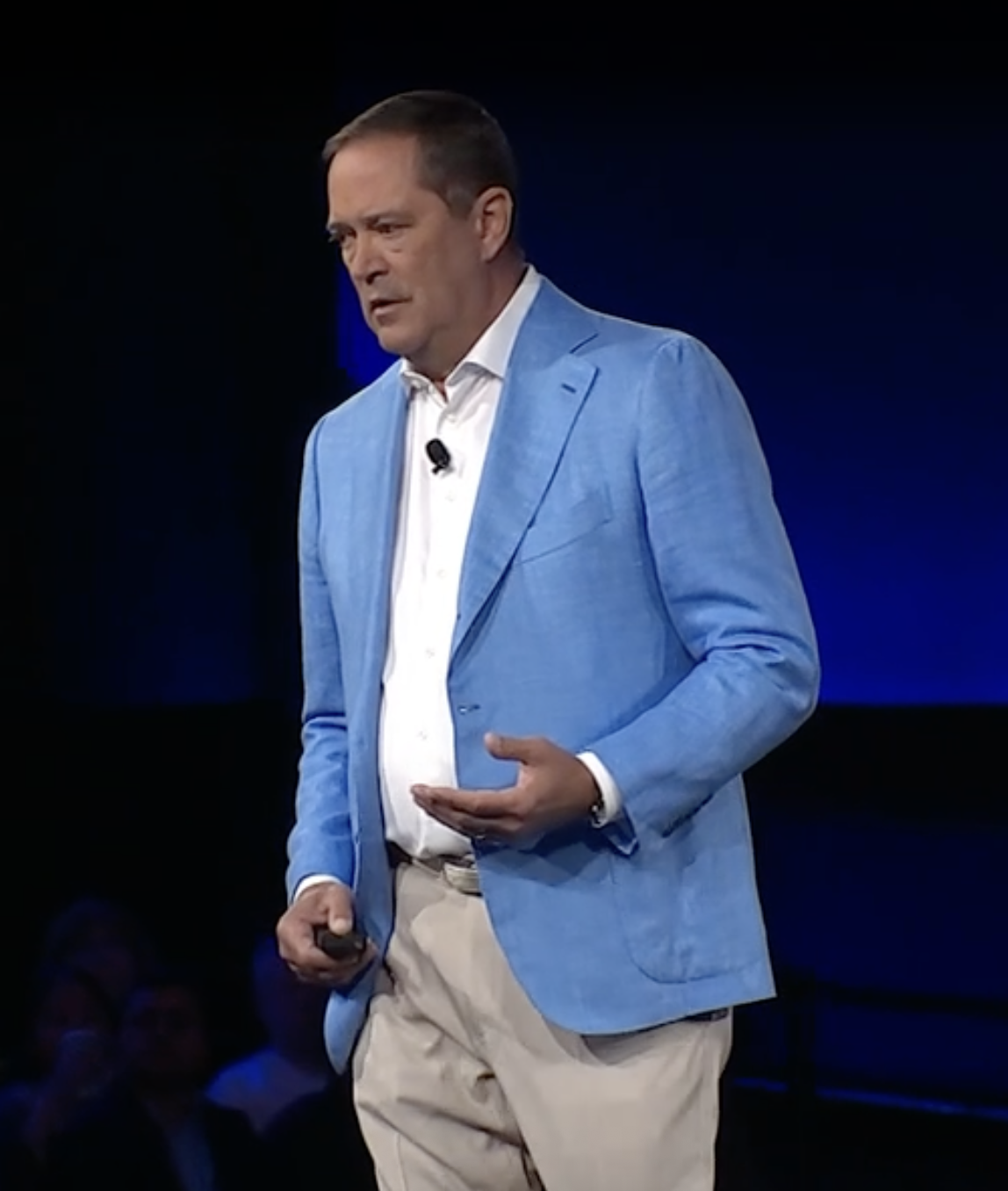
    “AI changes the speed of defense. The bad corollary to that is it’s empowering our adversaries at a pace that we’ve never seen in our careers. These models are as bad today as they’re ever going to be,” Cisco CEO Chuck Robbins told the packed keynote audience — a line that landed with more weight than a typical tech conference applause line. He wasn’t talking about AI being ineffective. He was talking about it being weaponized.

    A New Kind of Threat

    The cybersecurity industry has spent years warning about AI-powered attacks. What’s changed in 2026 is that frontier AI models — particularly Anthropic’s Claude Mythos have made those warnings concrete.

    What sets Mythos apart from prior AI models is not general intelligence but what it can do in a cybersecurity context. According to Anthropic, it can autonomously identify and exploit software vulnerabilities at a level that outpaces almost all human security experts. In controlled testing, the model has been shown to identify thousands of zero-day vulnerabilities over several weeks — a pace no human security researcher or team could match.

    The dual-use nature of that capability is what makes Mythos a defining moment for enterprise security. The same model that can find and patch vulnerabilities at unprecedented speed can, in the wrong hands, find and exploit them. CrowdStrike’s 2026 Global Threat Report found an 89% increase in attacks by adversaries using AI — and Mythos-class capability represents a meaningful step change in what those adversaries can bring to bear.

    Anthropic has acknowledged that “models of this capability level require stronger cyber safeguards before they can be generally released,” which is why public access has been withheld while safety work continues. But what this tells us is that enterprises must prepare for a post-Mythos threat environment where any number of increasingly capable open and commercial models can and will help bad actors exploit vulnerabilities in legacy or unpatched systems. We can also see that patching isn’t enough.

    Robbins warned that the capability floor for AI-assisted attacks had just risen significantly and will not come back down. The most alarming shift is speed. Where it once took days or weeks for bad actors to move from a disclosed vulnerability to a working exploit, that timeline has compressed to minutes. Cisco’s own security team demonstrated the flip side of that same capability. Robbins said in the past eight weeks, Cisco used AI to scan 1.8 billion lines of code across 25 programming languages. Before these models existed, Robbins said, that would have taken approximately eight years.

    The implication is uncomfortable but unavoidable. The same technology accelerating legitimate security work is accelerating attacks at the same pace. Neither side has an obvious advantage, and the defender’s job — protecting a complex, distributed enterprise — is structurally harder than the attacker’s.

    Agents Make Everything Harder

    If AI-powered threats were the only problem, that would be manageable. But Cisco’s President and Chief Product Officer, Jeetu Patel, outlined a second, compounding challenge: the rapid proliferation of AI agents is creating an attack surface that enterprises are almost entirely unprepared for.

    The AI industry evolved from chatbots that respond to questions to AI agents that can act autonomously. Patel said Cisco’s research found that a single AI agent generates roughly 450% more network traffic than a human performing the same task. Multiply that by thousands of agents running across an enterprise, and the infrastructure and security implications are significant.

    More importantly, agents have access to tools. Agents call APIs, query databases, submit code, and interact with external services. The goal of an agentic AI system is to perform tasks without a human in the loop. Patel’s framing was blunt: “Agents are like teenagers. They’re supremely intelligent, but they have no fear of consequence.”

    Agentic AI creates new attack vectors that aren’t easy to manage with existing solutions. For example, prompt injection attacks can manipulate an agent’s behavior. Data poisoning can corrupt its decision-making. Meanwhile, bad actors can perform tasks at high speed with a compromised agent  before anyone notices anything is wrong.

    While agentic AI has great potential, most enterprises lack the proper visibility, security and management to handle agents. Companies need a systematic way to know how many agents are running in their environment, what those agents are authorized to do, or whether they are behaving as intended. This is one security gap Cisco is racing to close alongside other security companies, hyperscalers, and startups.

    The Identity Problem Nobody Has Solved

    Businesses are just waking up to the problem of non-human identity posed by AI agents. Every person accessing a corporate system has an identity with a role, credentials, and permissions. Machines, services, and AI agents largely do not, at least not in any consistent or governed way.

    In May, Cisco acquired Astiix Security, an AI company focused on the non-human identity category.  Before enterprises can enforce meaningful controls on agent behavior, they need a reliable way to know which agents exist, what they have access to, and what they should be allowed to do. The platform helps organizations discover, govern, and protect machine identities, preventing unauthorized access and securing AI agents from malicious attacks. Cisco can integrate this technology into its Cisco Identity Intelligence and zero-trust products, such as Duo and Secure Access, to safely manage the proliferation of AI agents.

    This is not a theoretical future problem. Enterprises are deploying agents today, and most are doing so without the right identity infrastructure to govern them. If they deploy agents within a specific SaaS stack, permissions and governance are typically handled by that software. Once we start discussing multi-agent workflows that cross applications, the challenge becomes more complex. Astrix gives Cisco more capabilities to support identity for an agentic future.

    Cisco’s Response In Three Moves

    Beyond the Asterix acquisition, Cisco announced a set of products and capabilities aimed directly at the threat landscape it described.

    1. AI Defense, extended for agents. Cisco launched AI Defense roughly 18 months ago to provide visibility and guardrails for AI models and applications. The updated version adds capabilities specifically for agentic deployments: adaptive testing, behavioral guardrails, security for agentic supply chains, and support for all major agent platforms, including Claude, Codex, and OpenAI.
    2. Zero trust that gets an update for AI agents. The traditional zero trust model is built around access control: verify identity, grant minimum necessary permissions, and monitor behavior. Cisco correctly argues that today’s access control is insufficient for agents. What enterprises need is action control — the ability to intercept and verify every action an agent takes, not just whether it was authorized to log in. This is a meaningful architectural shift, and one that Cisco is embedding into its platform rather than offering as a standalone product.
    3. An agentic SOC. The cybersecurity talent shortage is severe. Approximately 4 million positions go unfilled annually in the US alone, according to Cisco. The volume of security alerts already exceeds human capacity to investigate. Cisco’s answer is an AI-powered Security Operations Center where agents autonomously triage alerts, identify anomalies, and, in time, predict and prevent breaches. The foundation is Cisco Data Fabric, a Splunk-powered platform that ingests petabyte-scale telemetry from network, security, application, and third-party sources.

    The Galileo Acquisition: Watching the Watchers

    Governing AI agents requires knowing what they are doing — not just whether they are authorized to act, but whether they are producing the outcomes they were designed for. This is the observability problem, and it is harder than it sounds.

    To address it, Cisco acquired Galileo, an AI observability company founded by researchers who previously worked with Google and DeepMind. Galileo’s technology powers what Cisco calls full-stack agent observability. This is visibility into infrastructure performance, model behavior, application runtime, and agent output quality. It also includes whether agents consume tokens at a sensible rate.

    That last point surfaced repeatedly during the keynote and reflects a real operational concern. A runaway agent that has been misconfigured or has drifted from its intended behavior can consume an entire organization’s annual AI budget in a matter of days. Token cost management is not a glamorous feature, but it is required for this new era of infrastructure.

    Cisco Cloud Control: The Platform Beneath All of It

    One of the more surprising announcements was the newly launched Cisco Cloud Control. For anyone who’s followed networking and Cisco for years, the concept of a true unified management console has been discussed for many years, and it’s devilishly difficult to execute. Every part of the portfolio had its own management tools that were loosely coupled at best, if at all. Cisco Cloud Control aims to be a new unified management platform that consolidates the company’s entire product portfolio under a single interface with single sign-on. Cloud Control is the operational layer through which Cisco intends to deliver its AI security and observability strategy.

    The security-specific capabilities embedded in Cloud Control, such as agent security monitoring, cross-domain threat correlation, and policy enforcement in natural language, represent a meaningful shift from how enterprise security tools have historically operated. Rather than logging into separate dashboards for networking, security, and operations, administrators can query their entire infrastructure environment in natural language and receive correlated, actionable insights across domains.

    The demos made it look like Cisco had finally cracked the code. Whether that vision holds up at enterprise scale remains to be tested. But the architecture Cisco described — silicon to semantics, from custom networking chips to AI agents operating on top of them — reflects a deliberate bet that the company’s control of the full infrastructure stack is a genuine competitive advantage in an AI-defined security landscape.

    The Reality. Enterprise AI Threats Are Real.

    Cisco’s keynote was, of course, a product announcement. But stripped of the stage production, the underlying argument is sound and worth taking seriously.

    AI is compressing attack timelines. Agents are expanding the attack surface in ways that existing security architectures can’t handle. The cybersecurity workforce is not growing fast enough to compensate. And most enterprises are deploying agents today without the governance infrastructure to know what those agents are doing, let alone control them.

    The organizations that will navigate this well are not necessarily the ones that move fastest. They are the ones that treat agent governance — identity, authorization, behavioral monitoring, and action control — as a first-class infrastructure concern rather than an afterthought. Enterprise technology leaders want and need their existing technology stack providers to evolve their security and management stacks to support AI threats. Cisco is making a significant bet that enterprises will pay for that infrastructure. Given the threat landscape it described, the bet seems rational.

    This article was originally published on Forbes.com.

  • Four Types of AI Agents With Dell’s John Roese. Most Enterprises Are Only Building One

    Four Types of AI Agents With Dell’s John Roese. Most Enterprises Are Only Building One

    Dell's CTO built a 4-category agent framework from real production deployments. Most enterprises are ignoring two of the categories that matter most.


    Full Show Notes

    Enterprise leaders are mapping AI agents to org charts — building digital employees, agentic teams, AI workers — and then wondering why the results fall short. Dell's Global CTO John Roese has been running agents in production long enough to know exactly why that framing fails, and what to do instead.

    In this episode, Roese shares a framework Dell developed from actual production deployments, not pilots. It identifies four categories of AI agents defined by two dimensions: how much autonomy you grant the agent, and how complex the underlying process is. Most enterprises are focused on one category. Two of the four are widely overlooked — and they may represent the fastest path to measurable ROI.

    This is a practical, grounded conversation about where agents are actually delivering value today, how to think about infrastructure cost in the context of agent economics, and why the sequence in which you deploy agents matters as much as which agents you build. If your organization is trying to move from AI experimentation to production, this episode is required listening.


    3. Chapter titles:

    • [00:00] — Introduction: Dell's dual role as tech vendor and enterprise AI user
    • [01:38] — Why the org chart model for agents fails
    • [03:12] — Decoupling human capacity from work capacity for the first time
    • [04:23] — The two-by-two framework: autonomy vs. process complexity
    • [06:14] — Productivity agents: what most enterprises already have
    • [07:00] — Hygiene agents: the overlooked category that fixes foundational data problems
    • [08:01] — The CRM data example: why every CRM is inaccurate and how agents fix it
    • [10:05] — Latent infrastructure capacity: running agents in GPU white space to cut costs to cents
    • [13:53] — Facilitation agents: removing entropy from complex cross-functional workflows
    • [17:30] — The sequencing insight: hygiene and facilitation as the path to expert agents
    • [19:24] — Why coordination agents aren't agentic bosses — and where human control actually lives
    • [22:21] — Roese's closing advice: become literate, pick a few, get them into production


    4. Guest Bio

    John Roese is the Global Chief Technology Officer and Chief AI Officer at Dell Technologies, where he is responsible for technology strategy, AI deployment, and research and development across the company. He has held senior technology leadership roles at Nortel, Enterasys Networks, Broadcom, and EMC. At Dell, he operates at a rare intersection: leading AI strategy for a major technology vendor while also deploying AI internally at enterprise scale — which means his frameworks are tested against real production constraints, not just market positioning.


    About This Podcast

    AI with Maribel Lopez is a podcast for enterprise technology leaders navigating AI adoption, agentic systems, AI infrastructure, and AI governance. Host Maribel Lopez covers enterprise technology and advises CIOs, CDOs, CMOs, and technology vendors on how to move from AI experimentation to measurable business outcomes. New episodes published bi-weekly.

    Subscribe on your platform of choice: buzzsprout.com/1947446

  • Harness Engineering, Orchestration, and Compound Agents: The Enterprise AI Vocabulary You  Need To Know

    Harness Engineering, Orchestration, and Compound Agents: The Enterprise AI Vocabulary You Need To Know

    Most enterprise AI practitioners are running multiple AI models. The question was never how many models or whether they were open models.  The question that’s harder to answer — and the one that determines whether your AI investments compound or fragment — is which system those models are part of, and what you are actually evaluating when a vendor puts a platform in front of you.

    At NVIDIA‘s GTC, Jensen Huang convened a session with the CEOs of Cursor, Perplexity, LangChain, Reflection AI, Thinking Machines Lab, and several others building at the edges of the AI ecosystem. What they described isn’t a debate about models. It’s a map of how AI systems are being assembled — orchestration layers, agent harnesses, multi-component architectures, and specialized vertical systems that combine foundation models with proprietary data and domain logic. Vendors are no longer selling model access. They’re selling systems. Understanding the components of those systems is what makes the difference between a well-matched procurement decision and an expensive one.

    Here’s the updated map.

    The Model Is a Component. The System Is the Product.

    Jensen Huang opened the session with a distinction worth internalizing: a model can be a technology or not a product. He said that ChatGPT is a product. The model underneath it is a technology that someone assembled into that product.

    This reframe is useful for enterprise buyers evaluating vendor offerings. When a vendor presents an AI platform — whether that’s Perplexity Computer, an agentic desktop assistant designed to function as an autonomous coworker, or a vertical industry system built on top of foundation models — you’re not evaluating the model. You’re evaluating everything assembled around it: how the system connects to your data, what tools it can invoke, how it manages memory and context across tasks, what guardrails constrain its actions, and how it handles the handoff between automated steps and human oversight.

    The model is the engine. The system is the car. And you’re buying the car.

    Michael Truell, CEO of Cursor, added a structural observation that clarifies why vendor evaluation has gotten more complex. For years, he said, there were two groups. There were foundation-model companies that built large general-purpose models and sold API access.  Or application companies that built models into their products or on top of them. Truell argues a third category is now well established — companies that combine the best foundation models available through APIs with their own purpose-built models and proprietary domain knowledge, assembled into a specialized vertical system. It’s not a foundation model or application layer. It’s both, plus the integration work that makes them useful together.

    When you evaluate a vendor in this third category, the question isn’t just which model it runs on. It’s whether the vertical specialization, the data architecture, and the system design match the use cases you’re actually trying to solve.

    What Harness Engineering Is, and Why It’s Now a Discipline

    Harrison Chase, CEO of LangChain, introduced a term that’s worth adding to your vocabulary: harness engineering.

    Harness engineering is the discipline of building reliable, structured environments around AI agents. The agent itself — the model running in a loop, calling tools, taking action — is only part of the system. The harness is everything surrounding it: the workflows, the tool interfaces, the validation loops, the context management strategies, and the memory architecture. It’s what makes the difference between an agent that works in a demo and one that operates reliably in production.

    NOTE: This is one definition of the term. The market is still debating this term, and I will write another specific piece on harness engineering.

    Chase made the point directly: even the closed model labs practice harness engineering constantly. He gave the example of Anthropic’s Claude and Claude Code. A model may be exceptional, but the harness around it — how it connects to file systems, how it manages long tasks, what guardrails constrain its actions — is equally responsible for the results. When enterprise teams underinvest in the harness and focus only on the model, they end up running expensive experiments that don’t scale.

    For technology leaders, this has a direct implication. Technical evaluations that benchmark models against each other without assessing the harness — the orchestration framework, the tooling, the integration architecture — are incomplete. The model is one variable. The harness is where most of the enterprise-specific work lives, and where most of the deployment risk concentrates.

    Multi-Component (Multi-Agent) AI Systems: What the Term Actually Means, and What to Ask

    You will hear vendors use terms like “compound agents,” “multi-agent systems,” and “agentic platforms” to describe their offerings. These terms are not interchangeable, and the market has not settled on consistent definitions. That ambiguity is worth understanding before you evaluate vendor claims.

    The most rigorous current framing comes from UC Berkeley’s Sky Lab, which defines a compound AI system as one that combines multiple AI components — models, retrievers, tools, databases, external APIs — to complete a task, rather than relying on a single model call. The system’s behavior emerges from how those components interact, not from any one of them individually. This framing has practical logic behind it: composing specialized components often outperforms a single frontier model on both capability and cost, particularly for complex multi-step tasks.

    Where it gets murkier is in how vendors apply the label. “Compound agent” in active use can mean three different things: a compound AI system that takes actions rather than just generating output; multiple discrete agents collaborating, each with its own reasoning loop; or an orchestrator-and-subagent architecture in which a controlling agent decomposes tasks and delegates them to specialized agents. These have meaningfully different architecture, cost, and governance implications. A vendor calling their product a “compound agent platform” may mean any of the three. The label alone tells you nothing about the actual design.

    The governance implication is the one most enterprise buyers miss. Multi-component systems diffuse accountability. When a consequential decision emerges from the interaction of a retriever, a reasoning model, and a tool execution layer, which component is responsible for the output? Traditional audit trails track the system’s final action. They often don’t track which component drove the decision that led to it. Before deploying any multi-component AI system in a business-critical workflow, buyers should require component-level architecture disclosure and confirm that audit logging covers component interactions, not just system outputs.

    The practical posture: treat “compound,” “agentic,” and “multi-agent” as marketing descriptors until a vendor discloses their specific component architecture. Ask what components the system includes, how they interact, how failures in individual components surface, and where in the stack governance and audit trails are enforced. Those answers will tell you far more than the product label.

    Orchestration Is the New Core Infrastructure

    Arvind Srinivas, CEO of Perplexity, described what his company calls Perplexity Computer: a multi-model, multi-cloud orchestration system where the models themselves become tools, and the orchestration layer determines which tool to apply to which task. The goal is that an enterprise can delegate a goal without specifying which model handles each step — the system manages that routing. Here is another take he gave on the topic in February.

    The analogy he offered is useful for enterprise framing: sub-agents are musicians, models are instruments, and the orchestration system is what produces the symphony. The quality of the output depends on all three, not just the instruments.

    The practical translation: the orchestration layer is where the strategic architecture decisions live. It determines which models get used for which tasks, how context is managed across long-running workflows, where governance and guardrails are enforced, and how exposed you are to vendor dependency. If your orchestration layer is tightly coupled to a single model provider, every future model decision becomes a migration project. If it’s designed to be model-agnostic, you preserve optionality as the model market continues to evolve rapidly.

    Mira Murati, CEO of Thinking Machines Lab, added a related dimension. Her firm has focused on making post-training — the layer of model development that adapts a foundation model to specific domains and tasks — accessible to enterprises and researchers. Most enterprise AI value doesn’t come from a raw pre-trained model. It comes from a model tailored to your domain, data, and task requirements. Accessible post-training means more organizations can build the specialized models that multi-component architectures require, without depending entirely on what general-purpose foundation models provide out of the box.

    What to Do Before Your Next AI System Decision

    The architecture described in this conversation isn’t on a roadmap. Cursor, LangChain, Perplexity, Mistral, and Thinking Machines Lab are all in production with enterprise customers today. The market has already moved.

    Three things worth doing before your next AI procurement decision:

    Evaluate the system, not just the model. Ask vendors to show you the harness — the orchestration framework, the tool interfaces, the memory architecture, the governance layer — not just model benchmark scores. You’re buying the system. Evaluate it as one.

    Require component-level architecture disclosure. When a vendor describes their offering as a compound agent, an agentic platform, or a multi-agent system, ask them to specify the components the system includes and how they interact. The label is not a specification. The architecture is.

    Treat orchestration as strategic infrastructure. The orchestration layer is where vendor dependencies are created or avoided, where governance is enforced or bypassed, and where the long-term flexibility of your AI architecture resides. It deserves the same scrutiny as your data infrastructure decisions. Evaluate orchestration before you’re locked into a system that makes changing it painful.

    The model was never the moat, but perhaps the system is. Knowing how to evaluate the totality of an AI system is what separates a well-matched AI investment from an expensive lesson.

  • Amazon Connect Is Now a Family of Products That Adds Agentic AI  to CX, HCM, Supply Chain and Healthcare

    Amazon Connect Is Now a Family of Products That Adds Agentic AI to CX, HCM, Supply Chain and Healthcare

    AWS is betting that Amazon Connect agentic AI belongs in supply chain, hiring, and healthcare — not just customer service. The branding is smart. Here’s my quick take. 

    For years, Amazon Connect meant one thing: contact center software. As of this week, it means four products, three new markets, and a bet that agentic AI is ready to run business operations — not just answer customer calls.

    At its “What’s Next with AWS” event, Amazon Web Services announced the expansion of the Amazon Connect name into a family of agentic business solutions. The original contact center product is now called Amazon Connect Customer. Three new products join it: Amazon Connect Decisions (supply chain and demand planning), Amazon Connect Talent (high-volume hiring), and Amazon Connect Health (clinical documentation and patient coordination). All four products sit under the Connect name. All four are agentic by design.

    The naming will raise eyebrows — more on that shortly. But the strategic logic is sound, and enterprise buyers should pay attention.

    What “Agentic by Design” Actually Means Here

    It’s worth being precise about what makes these products different from the AI-infused software most enterprises already live with.

    Agentic AI doesn’t just surface recommendations. It plans a sequence of actions, executes them, monitors the results, and adjusts. The word “connect” is doing double duty in this brand: it references both the product family name and the agents’ actual function — connecting to your systems, your data, and your workflows to get something done without waiting for a human to click “approve” at every step.

    The original Amazon Connect spent the last year being rebuilt on this principle. In 2025, AWS introduced what it called “next generation connect” — adding AI across the full customer journey, not just within a single interaction. Sentiment analysis, agent assist, post-call wrap-up, outbound communication, and full transcription all came along. The shift from the original Connect to Connect Customer is a shift from AI as a feature to AI as the operating model.

    The three new products start from that same premise, except they aren’t retrofits. They were built from scratch for agentic execution.

    Three Reasons the Benefits Case Is Credible

    Vendor AI announcements are easy to be skeptical of. This one has a few things working in its favor.

    Scale. Amazon Connect Customer handled 20 million interactions per day and processed 12 billion AI-powered minutes of conversation last year. That’s not a pilot. The new products are built on the same infrastructure. For enterprise buyers who have watched AI proofs of concept collapse under production load, operational scale at this level is a legitimate differentiator.

    Domain expertise embedded in the product. Amazon didn’t hire supply chain consultants to build Connect Decisions. It extracted the models and decision frameworks from its own retail and logistics operations — systems managing demand planning across more than 400 million SKUs. Connect Talent draws from Amazon’s process for hiring 250,000 seasonal workers in a single season. Connect Health is built on the clinical AI running at One Medical, which has now processed more than one million ambient documentation visits. This is proprietary operational knowledge baked into the product, not a general-purpose LLM applied to a new domain. That distinction matters for buyers evaluating whether a product will actually understand their problem.

    Integration with existing AWS infrastructure. For organizations already running on AWS, these products inherit the identity management, access controls, audit logging, and compliance certifications already in place. Buyers don’t start from zero on security posture or governance. That’s a real reduction in implementation risk, particularly in regulated industries like healthcare and financial services.

    On the Branding: Confusing Short-Term, Coherent Long-Term

    The name “Amazon Connect” has strong recognition in the enterprise market specifically as a contact center product. Adding supply chain, hiring, and healthcare products under the same name will require education.

    That said, the decision is defensible. The Connect products share a common architecture and a common design philosophy. AWS is calling that philosophy “Humorphism” — building products designed around how humans and AI agents collaborate, rather than how humans use static tools. Agents ask clarifying questions. They capture the reasoning behind manual edits. They improve over time as they learn from user decisions. Every Connect product is designed to work this way.

    The naming creates a coherent category: all Connect products are agentic, all are built on Amazon’s internal operational experience, and all are designed for line-of-business adoption rather than IT-led implementation. That’s a real product strategy, not just a logo change.

    Buyers evaluating these products should simply be explicit in conversations with AWS about which Connect product they mean. In the short term, that’s a small friction. In the long term, a unified family brand is cleaner than four separate product names with no connective tissue.

    The Open Questions That Need Answers

    Pricing is TBD. AWS did not address how these products will be priced or licensed. For supply chain and hiring products competing with established enterprise software, pricing model matters significantly. Per-transaction, per-user, and consumption-based models all create different budget implications. Enterprise buyers should not evaluate these products without getting pricing clarity first.

    The ERP and HCM question is unresolved. Connect Decisions targets supply chain planning. Connect Talent targets high-volume hiring. Both markets have entrenched incumbents — SAP and Oracle on the ERP side, Workday and Oracle HCM on the talent side — that already hold enterprise data and run existing workflows.

    The question isn’t whether Amazon can build better AI. The question is how Connect Decisions and Connect Talent interact with the systems enterprises already have. A few scenarios are possible, and AWS hasn’t clarified which one applies. The existing ERP or HCM system could become a data source that feeds the Connect agents. The incumbent vendor could build its own agents that call Connect products as tools. Or both systems end up running parallel agent workflows that need to be orchestrated together. Each of these plays out differently for buyers in terms of integration complexity, data governance, and total cost of ownership.

    The demos shown at the event depict Connect Decisions and Connect Talent operating as primary systems of action — generating demand plans, running interviews, surfacing candidate assessments. That implies some displacement of existing workflow software, at minimum for the activities these agents handle. Whether that displacement requires wholesale replacement of incumbent systems, or whether it can coexist alongside them, is not clear from what was announced. Buyers who already run SAP or Workday should press AWS specifically on this before evaluating further.

    What to Do With This Information

    If you’re an existing Amazon Connect customer, evaluate what the next-generation Connect Customer capabilities mean for your current deployment before looking at the new products. The AI-across-the-journey architecture is a meaningful shift from the original product, and understanding it fully is the right starting point.

    If you’re in supply chain, high-volume hiring, or healthcare and are currently underserved by your existing software, these products are worth a serious look. The domain expertise and scale credentials are real. Get pricing clarity and understand the integration model before committing.

    If you’re running SAP, Workday, or another incumbent system in these domains, don’t assume this announcement is irrelevant to you. The better question to ask your existing vendor is: what is your agent strategy, and how does it interact with what AWS just announced?

    The question isn’t whether Amazon Connect should be a family of products. The question is whether or how to make your current stack work alongside it.

    Subscribe to my AI with Maribel Lopez podcast on your channel of choice at https://www.buzzsprout.com/194744.

  • NemoClaw, OpenClaw, and the Real Reason Enterprises Haven’t Deployed AI Agents Yet

    NemoClaw, OpenClaw, and the Real Reason Enterprises Haven’t Deployed AI Agents Yet


    NVIDIA’s NemoClaw adds enterprise security to OpenClaw. What it does, what it doesn’t, and what CIOs should do before deploying.

    FULL SHOW NOTES

    OpenClaw became the fastest-growing open-source project in history. Enterprise buyers watched from the sidelines — not because the technology wasn’t useful, but because an autonomous agent with access to corporate file systems, credentials, and external communication channels is a governance and security problem that no one had solved at the enterprise level.

    At NVIDIA’s GTC 2026 conference, Jensen Huang announced NemoClaw: a reference stack that adds enterprise security controls to OpenClaw. In this solo episode, Maribel Lopez breaks down what NemoClaw actually does, why the SaaS partner ecosystem matters as much as the technology itself, and where the hype is running ahead of the reality.

    WHAT WE COVER

    •       Why OpenClaw created a shadow IT problem before NemoClaw existed

    •       What OpenShell, the Privacy Router, and Nemotron models actually do for enterprise buyers

    •       Why Salesforce, ServiceNow, SAP, Cisco, and CrowdStrike being in the ecosystem matters

    •       The hardware dependency NVIDIA’s marketing glosses over

    •       Why “working with NVIDIA” and “ready to deploy” are not the same thing

    •       The three questions every CIO should answer before touching any of this

    TIMESTAMPS

    00:00  —  Why enterprise IT teams were watching OpenClaw from the sidelines

    01:45  —  What OpenClaw is and why it created an enterprise security problem

    04:00  —  What NemoClaw actually does: OpenShell, Privacy Router, Nemotron

    06:30  —  The SaaS ecosystem: Salesforce, ServiceNow, SAP, Cisco, CrowdStrike

    08:30  —  Where the hype is ahead of the reality

    10:15  —  Three questions CIOs should answer before deploying

    RESOURCES MENTIONED

    •       NemoClaw announcement and NVIDIA Agent Toolkit: build.nvidia.com

    •       Full written analysis: NemoClaw Brings Enterprise-Grade Security Controls to OpenClaw — lopezresearch.com

    •       NVIDIA GTC 2026 Jensen Huang keynote

    ABOUT THIS PODCAST

    AI with Maribel Lopez covers enterprise AI adoption, agentic systems, AI governance, and AI-driven customer experience. Maribel Lopez is founder and principal analyst at Lopez Research, a technology research and strategy firm.

    Subscribe on Apple Podcasts, Spotify, or your platform of choice here: https://www.buzzsprout.com/1947446

    KEYWORDS

    enterprise AI agents, agentic AI security, NemoClaw NVIDIA, OpenClaw enterprise deployment, AI agent governance, enterprise AI strategy, AI governance enterprise, agentic AI risks

  • Cisco’s Winning AI Formula: Real CX Problems, Practical Solutions

    Cisco’s Winning AI Formula: Real CX Problems, Practical Solutions

    Companies with the best customer experience focus on consistency, clarity, and a mindset of continual improvement. Most enterprise AI initiatives fail not because the technology doesn’t work but because companies chase broad or ill-defined use cases instead of addressing a real problem. For example, many organizations have built chatbots that wow in demos but frustrate users in practice.

    When Liz Centoni, Cisco’s Chief Customer Experience Officer, talks about solving “boring problems,” she’s not being modest—she’s highlighting a fundamental truth about artificial intelligence that most companies miss. While the tech world obsesses over flashy AI demos and theoretical capabilities, Cisco quietly built practical and measurable AI use cases that make it easier for its enterprise customers to use and troubleshoot their Cisco environments.   

    “We’re solving the most boring problems that are instrumental to our customers’ operational environments—problems everybody’s been circling around for years,” Centoni explained during an industry analyst breakout at the Cisco Live conference in San Diego. What are examples of these “boring” problems? Configuration errors that cause 25% of all support cases. Network professionals spending up to 50% of their time on manual tasks and minimizing security breaches caused by human error.

    The results speak volumes: Cisco has achieved a 22-25% decrease in low-severity support cases and a 10% reduction in high-severity cases year-over-year. Additionally, its AI-powered renewal process has reduced the time its customer success teams spend on data gathering from 40% to under 5%, freeing them to focus on actual customer relationships.

    By addressing the low-hanging fruit of basic support issues, Cisco can focus its support teams’ time on more complex problems while also enhancing its sales process.

    The Three Pillars of AI-Driven Customer Experience

    During her Cisco Live keynote, Centoni shared that Cisco’s customer experience strategy centers on three core areas that any company can adapt to its customer experience challenges:

    1. Resiliency: Preventing Problems Before They Occur With AI

    The most tangible impact comes from what Cisco calls “services as code”—integrating AI-powered testing into deployment pipelines to catch configuration errors before they cause outages. “We can envision a future where we go from configuration chaos to configuration confidence,” Centoni explained.

    This isn’t just about finding defects. The system proactively validates configurations against established best practices and operational requirements specific to each customer’s environment. One customer who adopted this approach summarized the value: “Security, resiliency, consistency—you delivered all three.”

    The broader lesson: AI’s value often lies not in replacing human decision-making but in preventing the human errors that cause the most expensive problems.

    2. Simplicity: Creating Unified, Intelligent Interfaces

    Cisco recognized that customers were drowning in multiple interfaces and disconnected tools. Like many large technology vendors, Cisco aims to simplify the customer experience (CX) by offering a unified, AI-powered interface that provides a “hyper-personalized view into your entire Cisco environment,” as Centoni described it.

    This interface doesn’t just aggregate information—it understands context. It can identify which devices are approaching end-of-support, suggest remediation scripts for security vulnerabilities, and even generate compliance reports tailored to specific regulatory requirements.

    The key insight: AI’s real power in simplification comes not from hiding complexity but from making complex information actionable and relevant to each user’s specific context.

    3. Time to Value: Personalizing the Journey to Success

    Personalization isn’t a new concept, but it’s proven elusive in both consumer and B2B sales. Cisco has created what they call an “adoption agent” that digitalizes customer intent and creates personalized onboarding journeys. Rather than providing a standard set of features, the system aligns adoption with each customer’s specific goals and key performance indicators (KPIs).

    “We’re digitizing the customer’s intent, the KPIs, the outcomes, and then we’re helping them adopt the features that tie up to that intent, not just a whole standard set of features,” Centoni explained.

    Breaking down data siloes was a key theme of most technology vendor’s presentations in this spring’s technology conference circuit. Cisco also showcased how AI could help the company connect and analyze data across various sources. This strategy represents a shift from product-centric to outcome-centric customer success enabled by AI’s ability to process and connect disparate data sources. 

    The Role of Agentic AI: From Tools to Teammates

    In 2025, a technology conference can’t be complete without sharing a vision for Agentic AI. Cisco was no exception. While there is still some debate over the definitions of Agentic AI, most technology companies define it as a system of AI agents “designed to act autonomously, making decisions and taking actions to achieve goals with limited human oversight. Unlike generative AI, which focuses on creating content, agentic AI focuses on doing by executing tasks and solving problems. It perceives its environment, reasons about it, and acts upon it, often without direct human intervention.” Agentic AI concept is both empowering and terrifying to organizations that want to reap the productivity of agents but need to minimize the risk of fully autonomous workflows.

    During the analyst conference at Cisco Live, Centoni shared a balanced approach to moving into Agentic AI. She said, “We want our teams to think about it as augmentation,” Centoni emphasized. “I would love to be in a space where instead of asking for an intern to help them do their job, everyone in my team could spin up an agent to be able to help them with tasks.”

    Agentic AI agents can operate like capable colleagues, understanding their context, making informed decisions, and coordinating multiple tasks to achieve a goal. Carlos Pereira, Cisco’s Fellow and Chief Architect for Customer Experience, explained the distinction: “The way we look at it is the way we have been using traditional AI as a tool. The way we expect to use agentic AI is where it becomes a teammate.”

    This shift from tool to teammate enables what the technology industry refers to as “ambient agents”—AI systems that operate in the background, triggered by events rather than direct commands. As Harrison Chase, CEO of LangChain (a key partner for Cisco in building these systems), described during the Cisco Live keynote: “We define ambient agents as agents that are triggered by events, run in the background, but they’re not completely autonomous.”

    The power of this approach becomes clear in practice. Instead of a customer reporting a network issue and waiting for a human to diagnose it, Cisco’s ambient agents can detect the problem in real-time, analyze historical data and best practices, and provide personalized recommendations—all before the customer even knows there’s an issue.

    While Cisco’s efficiency gains are impressive, the real return on investment extends beyond traditional metrics. Centoni noted that customer satisfaction consistently improves when solutions are found through AI-enabled methods. AI will also change the nature of work itself at Cisco. “Reducing cognitive load and friction enables my teams to get more creative in how we solve our customers’ problems,” Centoni observed. “They can use that (extra) time for learning. They can use that time to balance work and life.”

    Agentic AI offers significant potential business impact, where AI not only enhances existing processes but also enables entirely new ways of creating value. When routine tasks are automated, human workers can focus on the complex, creative problem-solving that drives real competitive advantage.

    AI Lessons for Every Company

    Cisco also offers practical lessons for any organization looking to transform customer experience with AI:

    Start with Pain Points, Not Possibilities

    Rather than asking, “What can AI do for us?” Cisco asked, “What problems do our customers and employees face every day?” This question led Cisco to focus on configuration errors, manual tasks, and data silos—initial use cases that may seem unglamorous but can deliver high impact rapidly.

    Design for Augmentation, Not Replacement

    “We are thinking about autonomous in terms of tasks that augment what our teams do,” Centoni emphasized. This approach reduces resistance, maintains quality control, and often delivers better results than fully automated systems. Over time, there will be opportunities to have more autonomous systems; however, Cisco’s strategy offers a more pragmatic approach to minimizing risk today. 

    Embrace Continuous Learning

    Unlike traditional software that follows a “build it, ship it, maintain it” cycle, AI systems require continuous improvement. “It’s build it, improve the accuracy of it… it’s continuous learning,” Centoni noted. Businesses need to design processes for ongoing feedback and refinement.

    Prioritize Trust and Transparency

    With customer relationships at stake, Cisco maintains human oversight at critical decision points. “The decision is never up to the agent, per se. The decision is up to the human at the end of the day,” Centoni explained. The balance between AI capability and human control builds trust with both employees and customers.

    Think Beyond Efficiency

    While cost savings matter, the real value lies in enabling new capabilities. Cisco’s agents don’t just handle support cases faster—they can predict and prevent issues that would never have been caught manually.

    The Future of AI in Customer Experience

    Cisco’s vision extends beyond current capabilities to what Centoni calls “intelligent anticipation”—systems that understand customer environments so deeply that they can resolve problems before customers are even aware of them.

    “Our goal, whether it’s a customer who spends a few thousand dollars or a customer who spends a few billion dollars with us: we want them to feel like they’re our only customer because we know their environment. We know them so well, sometimes even better than they do themselves,” Centoni explained.

    The vision of hyper-personalized, predictive customer experience represents the true promise of AI in business—not replacing human relationships but making them more meaningful by removing friction and adding intelligence to every interaction.

  • AI Agents in Action: ServiceNow’s Knowledge 2025 Vision for Enterprise Workflow Transformation

    AI Agents in Action: ServiceNow’s Knowledge 2025 Vision for Enterprise Workflow Transformation

    The AI industry evolved from Generative AI to the Agentic AI era at a breakneck pace. Are AI Agents fact or fiction? The reality is somewhere in between, and buyers remain skeptical. As technology leaders race to implement artificial intelligence across the enterprise, many organizations are experiencing a paradox. Despite increasing investments in AI technology, the maturity of enterprise AI adoption has declined nine points year over year, according to ServiceNow’s latest AI maturity index survey.

    Additionally, Lopez Research data shows that companies struggle to show meaningful business outcomes from early AI proof of concepts, leading to fewer than anticipated AI projects moving from pilot into production. The use cases shared at ServiceNow’s Knowledge 2025 conference revealed a crucial insight: there’s still tremendous business upside available in automating existing processes. However, organizations need effective orchestration, governance, and data quality to unlock the promise of these sophisticated AI tools without creating complexity.

    Orchestration: Moving Beyond Isolated AI Tools

    Agentic AI is the buzzword of 2025. Technology vendors, like ServiceNow, are racing to showcase maturing AI offerings that will deliver on the promise of automated work. ServiceNow used its Knowledge 2025 conference to showcase its vision for orchestrated, agentic AI, which are autonomous AI entities that can reason, plan, and take action independently across systems and departments.

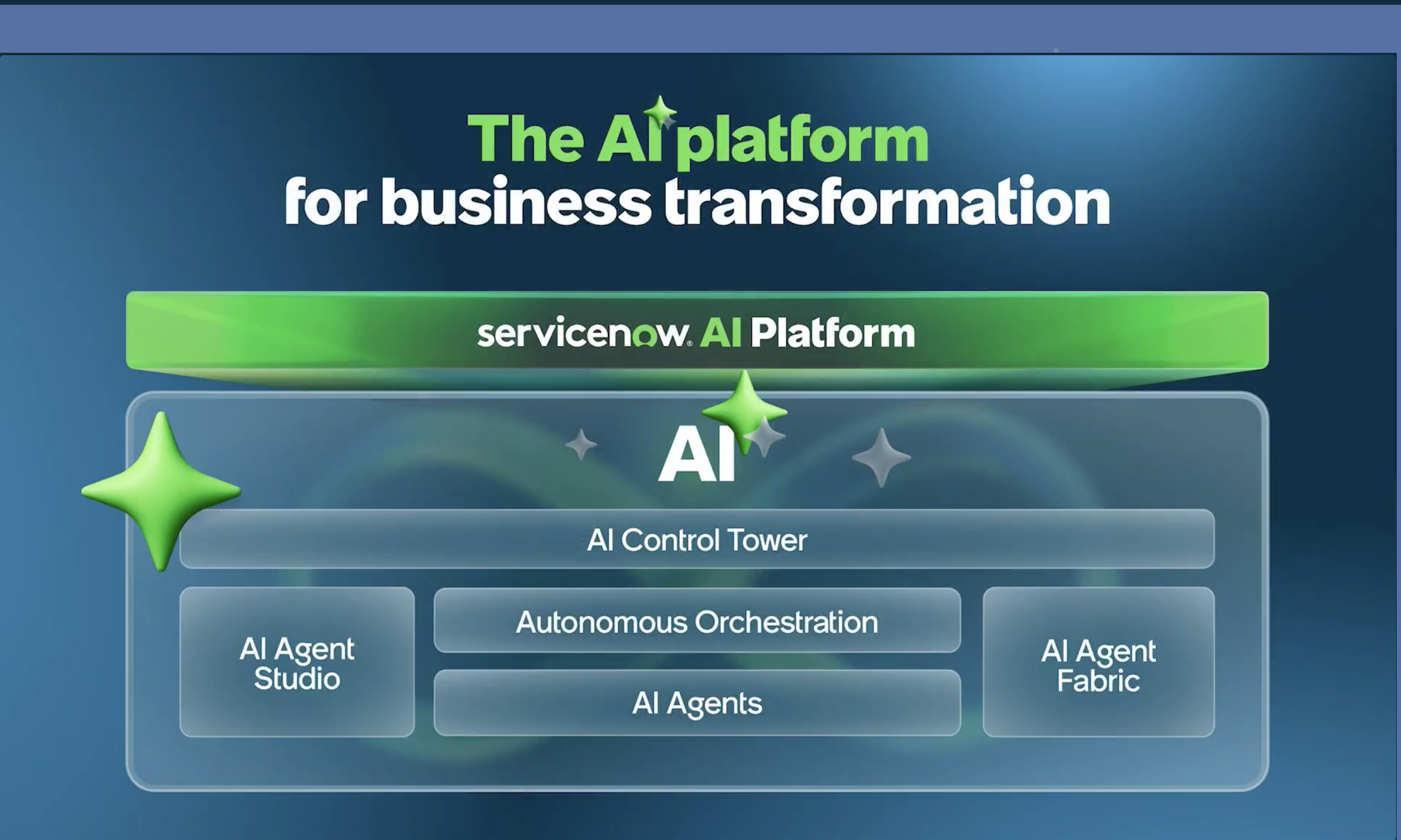
    “What they are is a new digital workforce,” explained John Sigler, EVP of ServiceNow’s AI platform, during the keynote presentation. “And ServiceNow is in a great spot to provide the management of that new workforce with the AI Control Tower, where you can manage, govern, secure, onboard, and offboard, and update all your AI agents.”

    ServiceNow’s focus on orchestration and governance addresses a critical gap Lopez Research has identified in the enterprise AI landscape. While many vendors have spent 2024 defining what agents are and how to create them, few have tackled the orchestration and governance challenges that would allow organizations to confidently deploy these agents autonomously across the various data and software silos. Even with fully baked technology, the potential brand, business, and compliance risk associated with automated workflows provides a significant roadblock to delivering production Agentic AI systems today.

    Sigler showed how the AI Control Tower enables organizations to manage, govern, and secure their AI agents, provide visibility into agent actions, and monitor outcomes. The demo showcased how an employee can drill down into individual agents to see the tasks they perform and the benefits they deliver.

    Orica has already realized these benefits in their IT Service Desk, boosting deflection rates from 18% to 94% and doubling the number of fully resolved cases without human intervention—a testament to the power of automation and agents.

    Reimagining Processes, Not Just Automating Them

    Unlike previous automation waves that often simply accelerated existing workflows, the next wave of agentic AI innovation will emphasize improving processes rather than automating them. The evolution beyond robotic process automation (RPA) was evident in how ServiceNow positions its AI agents.

    In a software demonstration, Joe Davis, EVP of Engineering for Platform and AI, showed how a contract renewal issue typically involving multiple departments and taking days or weeks to complete can be compressed into minutes using autonomous agents working across systems. The key shift here is shepherding a process across what were previously disparate data and application silos. 

    Demo view of multi-agent orchestration of ServiceNow and third-party agents.  Source: ServiceNow

    Chris Taylor, Group CDIO at Stellantis, reinforced this approach: “What we see is an incredible momentum building. We’ve passed the initial fear factor, and people are starting to use it, adopt it, and create tangible value. It’s less of a threat, more of a way to enhance their productivity and enhance their job satisfaction.”

    Stellantis has redesigned its processes around these capabilities, with Taylor noting, “In Europe, 85% of our cars are scheduled and loaded onto transporters using AI. It’s faster. We connect to the customer needs, and we get higher quality.”

    Using Stellantis as an example, ServiceNow showcased a demo of a supply chain specialist alerted by an AI agent that detected a 25% increase in battery cell costs that could impact production. The agent recommended an alternate approved supplier and conducted a comprehensive analysis to ensure the new supplier could deliver the correct product requirements. This integration utilized ServiceNow’s Workflow Data Fabric to bring together data from internal and external systems, enabling the specialist to resolve a major supply chain issue.

    When network transactions began dropping at a Jeep plant, AI agents diagnosed the problem by analyzing the scale of the issue, identifying that it was isolated to network services, and recommending rolling back a change to a Kubernetes container. After approval, the agents executed the rollback, confirmed network performance stabilization, and created a knowledge base article documenting the fix, preventing disruption to car production.

    The demo highlighted more than just automation of existing processes, but a fundamentally better way to detect, diagnose, and resolve network issues, with AI agents working proactively rather than reactively.

    Data Quality: The Foundation for Effective AI

    A fundamental challenge for implementing effective AI remains data access and quality. During the keynote, ServiceNow referenced a Gartner statistic stating that 60% of AI projects will be abandoned by 2026 due to a lack of AI-ready data.

    Gaurav Rewari, SVP and GM of Data and Analytics at ServiceNow, who presented on data strategy, underscored this point: “Here’s the uncomfortable truth. AI agents like the ones you just saw are only as powerful as your data.” This acknowledgment that “the journey to an agentic AI heaven goes through a data hell” represents a significant AI implementation challenge that Lopez Research sees in designing effective AI: data readiness. It’s 2025, and we still struggle with the “Garbage In: Garbage Out” problem.  

    To address this, ServiceNow unveiled its strategy for AI-ready data, which includes:

    1. RaptorDB: A new database offering designed to handle billions of complex transactions supporting operational and analytical workloads in real-time.
    2. Workflow Data Fabric: ServiceNow’s data integration and semantic layer that connects structured and unstructured data across the enterprise.
    3. Workflow Data Network: An ecosystem of 100+ integrations with data platforms including Snowflake, Teradata, AWS, Cloudera, Databricks, Google Cloud, Microsoft, and Oracle.
    4. Data Catalog and Governance: The announced acquisition of data.world to manage, harmonize, and govern data at scale.

    It’s good to see a set of AI platform offerings that focus on data quality instead of just the mechanics of how agents work. Canada Life has already leveraged these data capabilities with their AI-powered catalog builder and Now Assist for Creator to automate self-service management, reducing catalog creation development time by 200%—showing how data-driven AI can transform specific business processes.

    Simplifying Agent Creation

    The low-code/no-code movement isn’t new. Still, we’re seeing a new round of innovation as we move into the AI era/ ServiceNow is making agent creation accessible to business users through AI Agent Studio, allowing non-technical users to create and deploy agents that can transform business processes. By putting these tools in the hands of those who genuinely understand the business, ServiceNow enables organizations to reinvent inefficient processes to be more intelligent and dynamic. To improve return on investment, Lopez Research sees enterprise buyers landing and refining a few specific AI use cases before expanding these tools across the organization.

    “It’s important for everyone to be able to build these AI agents,” said Sigler, before Joe Davis demonstrated creating a research and development agent in about a minute. “You can see it’s low code. You provide instructions using natural language, and you give the agent access to a set of tools.”

    Lloyds Bank has taken advantage of this approach, transforming HR and workplace services with Now Assist and GenAI virtual agents, automatically deflecting up to 90% of HR-related cases and saving teams over 4,000 workdays—demonstrating how business-led AI initiatives can drive significant operational improvements.

    The conference also highlighted how AI agents can transform customer experience processes. Terence Chesire VP, CRM and Industry Workflows at ServiceNow stated during the keynote, “in customer service, you need more than just great omni-channel intake, you need to also orchestrate and automate the hard part, which is resolution and fulfillment, whether it’s a dispute in banking, ordering a telco service, or processing a warranty claim in manufacturing.” This approach to end-to-end process transformation, rather than simple task automation, represents a significant evolution in how organizations approach AI implementation.

    Workforce Transformation: Connecting Front Office to Front Line

    The true power of agentic AI extends beyond process automation to fundamentally transforming how the workforce operates. As CEO of UKG, Jennifer Morgan highlighted at Knowledge 2025, “About 80% of the workforce is made up of frontline, field hourly employees,” yet “only 23% of frontline employees feel that they have access to the technology and the insight that they need.”

    There’s a significant opportunity for AI agents to bridge the gap between the front office and the frontline workers who are the face of the organization to customers. By creating what UKG describes as “a single point of interaction,” organizations can connect field employees back to enterprise systems and data.

    AstraZeneca offers a compelling example of this transformation in action. By revolutionizing their onboarding process with ServiceNow, they’ve streamlined the integration of 20,000 new employees annually, saving over 90,000 hours through optimized workflows. As Cindy Hoots, Chief Digital Officer and CIO, AstraZeneca, explained: “We’ve been able to take processes that used to take 20 minutes, 30 minutes, and now get them to the point that we can do that in just mere seconds.”

    This workforce transformation extends to scientific operations as well. In AstraZeneca’s laboratory environments, AI agents are helping lab managers monitor equipment, automatically detect issues through image recognition, determine warranty status, and even place supply orders based on sensor data. What previously required manual inventory checks and paperwork now happens autonomously, giving valuable time to researchers focused on life-saving discoveries.

    The Missing Link: Governance by Design

    AI Governance shouldn’t be an afterthought designed to remediate compliance issues. AI governance should start as a framework of policies, guidelines, and oversight mechanisms that guide the development, deployment, and use of artificial intelligence to ensure safety, fairness, and transparency. AI governance should be part of developing, deploying, and modifying AI models, systems, and agents. 

    ServiceNow emphasized governance as a foundational element of its AI strategy. The AI Control Tower provides a central hub for managing, monitoring, and governing AI agents across the enterprise.

    This approach embeds governance into the design phase rather than treating it as an afterthought, allowing organizations to deploy autonomous agents more confidently. Yet, organizations must maintain a critical eye by continuously monitoring agents and processes. The system provides visibility into how agents are used across departments, what LLMs they use, and the specific tasks and benefits each agent provides. As AI agents become more autonomous and more widely deployed, this governance capability will be crucial for ensuring security, compliance, and alignment with business objectives. 

    Governance matters because real business value requires the right people and agents to have the correct permissions to manage and use data. In one demonstration, ServiceNow showcased how AI agents could help sales representatives prepare for doctor meetings by aggregating insights from various systems, generating presentation materials, and even remembering the doctor’s lunch preferences. When these AI capabilities extend to patient services, they can orchestrate complex multi-organization workflows, such as automatically generating insurance justification forms and rebate cards while protecting the patient’s data.

    Strategic Partnerships: Accelerating the AI Journey

    The conference highlighted ServiceNow’s partnership approach as crucial to its AI strategy. The company showcased collaborations with data and cloud providers like AWS, Cloudera, IBM, Snowflake, and Teradata, and strategic technology partnerships with Microsoft and NVIDIA.

    These partnerships reveal that the AI capabilities showcased at Knowledge 2025 aren’t overnight developments. The first Knowledge 2025 keynote included a discussion between ServiceNow CEO Bill McDermott and NVIDIA CEO Jensen Huang, who noted they had been working together for six years to reach this point in AI development.

    This historical context is important—it reminds us that we’ve reached a tipping point where we’re seeing the fruits of many years of research and development. The seemingly sudden explosion of AI capabilities is the culmination of sustained investment and strategic collaboration.

    Orchestrating Tomorrow: The New Business Operating System

    If done well, AI agents are not mere automation tools but transformative elements that can reimagine how work gets done across the enterprise. ServiceNow has addressed several key challenges that have limited the impact of AI initiatives by creating enhancements to orchestration, data quality, processes, and governance. 

    As enterprises navigate this transition, the shift from isolated AI tools to orchestrated AI agents working across departments represents a fundamental change in how work gets done, transforming tasks that once took days into processes completed in minutes, and turning the promise of AI from a technology buzzword into tangible business results.

    The future of work isn’t just about automating what we do today—it’s about reimagining what’s possible when AI agents can work autonomously and collaboratively across systems, data sources, and departments. It’s about creating what Lopez Research calls Right-time Experiences that deliver the correct information to the right person or thing at the right time. The shift from what we discussed in the 2014 Right-time Experiences book is that those “things” are intelligent connected devices and AI agents working with humans to complete workflows round-the-clock. ServiceNow’s customer use cases and product demonstration suggest this future is well on its way to becoming a reality.