Category: Business Applications

  • Three Shifts in AI-Driven Labor That CIOs and CEOs Can’t Ignore

    Three Shifts in AI-Driven Labor That CIOs and CEOs Can’t Ignore

    What Sam Altman’s Vision at the Cisco AI Summit Means for Enterprise Workforce Strategy

    By Maribel Lopez, Lopez Research  |  February 2026

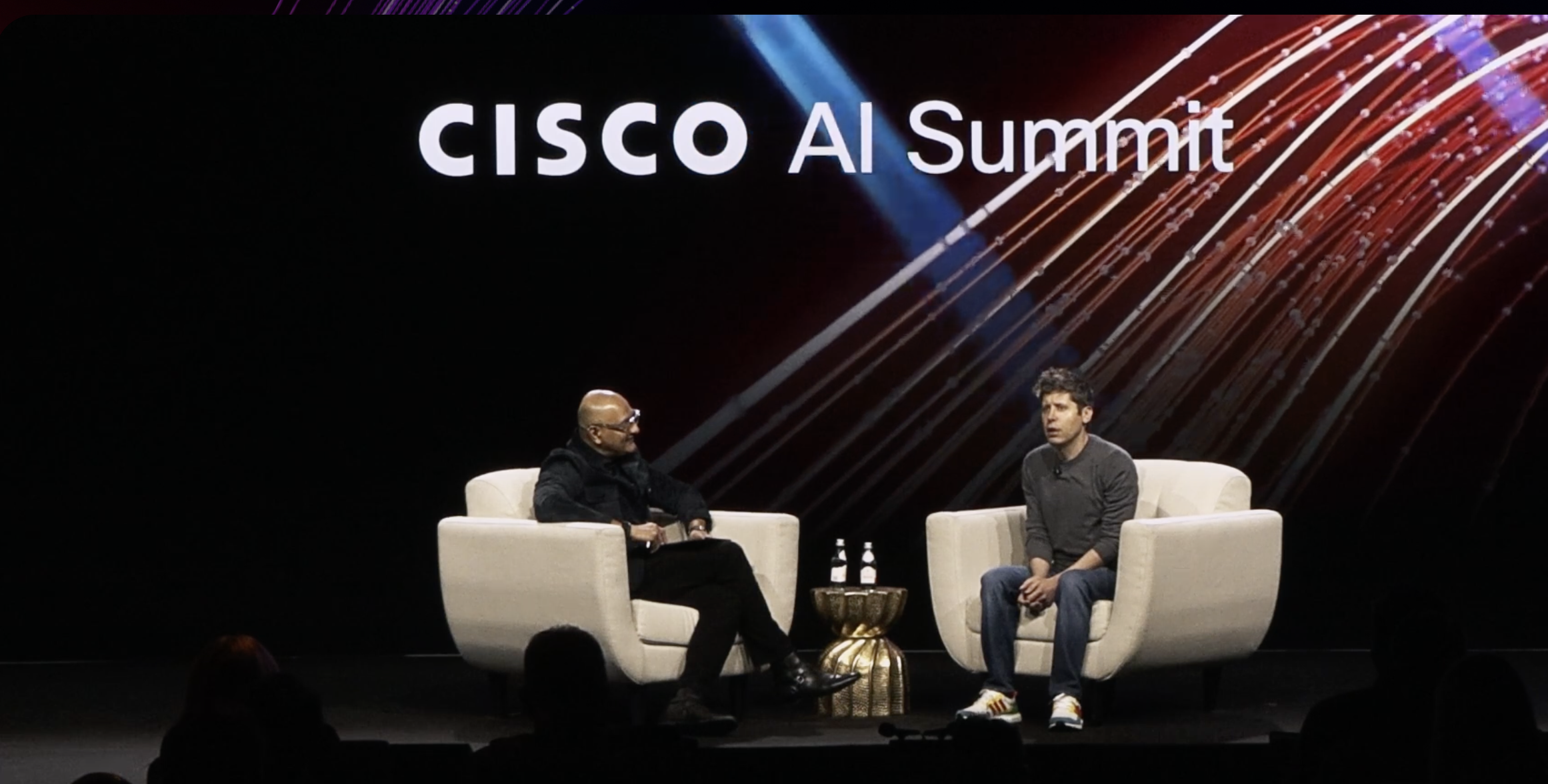
    Cisco builds over 70% of its AI software products using AI. Not on a roadmap. Not as a pilot. Today, in production, through its partnership with OpenAI’s Codex platform. When Jeetu Patel, Cisco’s Chief Product Officer, shared this at the Cisco AI Summit alongside OpenAI CEO Sam Altman, the audience heard more than a product update. They heard a preview of how labor itself is about to be restructured.

    For CIOs and CEOs rethinking workforce strategy, three shifts from this conversation demand immediate attention: AI that acts on your behalf, the transformation of software development roles, and the emergence of AI-only companies as a new category of outsourced labor.

    Shift 1: AI That Acts on Your Behalf

    AI is crossing from finding information to acting on it. For years, the promise centered on surfacing insights, answering questions, connecting dots across silos. What Altman described goes further: always-on AI that accesses your computer, browses the web, edits your documents, and executes tasks without waiting for human approval.

    This shift is already underway. Consumers use OpenClaw’s Clawdbot as a personal assistant, granting it access to everything (risky, but the usefulness is undeniable). On the enterprise side, SaaS vendors are embedding agents into customer service platforms, IT operations workflows, and sales processes where AI doesn’t just recommend an action but completes it. These deployments remain narrow: an agent that resolves a tier-one support ticket, triages security alerts, or drafts and sends a follow-up email after a sales call. But they mark the beginning of a fundamental change in knowledge work. The AI no longer waits for you to act on its suggestion. It acts.

    Altman described giving Codex full access to his computer and lasting only two hours before he couldn’t go back. He acknowledged the real challenges this creates around security, data access, and permissioning. Existing software, hardware, and even legal frameworks weren’t designed for always-on AI that watches what you do and takes action on your behalf.

    For enterprise buyers, this reinforces a message I’ve been sharing for some time: the AI infrastructure conversation extends well beyond models and compute. Identity frameworks, governance stacks, observability, and security architectures all need rethinking, because they were designed for people, not AI agents. The good news is that organizations already investing in these foundational capabilities will absorb AI labor more safely and more quickly. But it requires treating security and governance as enablers of AI adoption, not obstacles to it.

    Shift 2: Software Development Roles Are Being Redefined, Not Eliminated

    Patel described how Cisco works with OpenAI and Codex to fundamentally change how it develops software. AI Defense, a security product Cisco launched last year, will have nearly 100% of its code written by Codex within weeks. This reflects a pattern that will spread across the enterprise.

    Developers aren’t going away, but their job is evolving. The core competency shifts from writing code to constructing precise software requirements, evaluating whether AI output meets those requirements, and articulating what needs to change when it doesn’t. Running tests, writing documentation, producing boilerplate? AI handles that. Defining what the software should accomplish and judging whether it got there? Still human.

    Altman described Codex as feeling less like a tool and more like a teammate: “The Codex app is the first time, to me, it has truly felt like interacting with a teammate.” That distinction matters. When AI shifts from tool to collaborator, the human role shifts from operator to supervisor. CIOs should already be rethinking team composition, performance evaluation, and career development within their engineering organizations.

    Even with AI doing the heavy lifting, design still matters enormously. As Altman noted: “There’s so much value in how you package it, how you have users interact with it, how easy you can make it.” Better models alone don’t guarantee better outcomes. The interface, the workflow, the experience determine whether adoption accelerates or stalls.

    A deeper shift sits underneath this conversation: the future of software requires designing it to work equally well whether a human or an AI operates it. That’s not how software works today. Most software isn’t even easy for humans to use, let alone optimized for AI agents. Altman illustrated this with a telling example: his AI agent used Slack on his behalf, marked everything as read, and broke his workflows. Software built for one type of user doesn’t automatically serve another. This is a design problem as much as a technology problem, and product teams and CIOs need to tackle it now.

    Shift 3: AI-Only Companies and the New Workforce Marketplace

    The third shift is the most speculative but potentially the most disruptive. Altman described a future with “full AI companies”: a coding model creates a complete, complex piece of software and also interacts with the real world to build a company around it.

    Consider what that implies. Not AI-assisted companies. AI-only companies: entities with no human employees, just AI systems performing the work. You would hire them the same way you hire a consulting firm or a staffing agency today.

    The concept follows a natural progression from agentic AI. Today, leading enterprises build a variety agents with the aim of having the agents collaborate to accomplish specific goals. Agents perform a task here, an automated workflow there. As agents grow more sophisticated, more of a given role consolidates into a single agentic entity. That entity can then be sold as a digital employee, just as you would hire a temporary worker from an agency or outsourcing firm.

    I can see a marketplace emerging where enterprise buyers source these agents. Today, you acquire them from software vendors and hyperscalers. But nothing prevents a person from building an entirely new AI workforce company. Envision your company hiring a cybersecurity agent from an AI agent company to build new security playbooks. The technology to support this is coming together now.

    But CEOs and CIOs need to understand something: the existence of an agent marketplace doesn’t mean you can just show up and shop. It will be like facing a thousand choices in the cereal aisle. You need to know whether you want hot or cold cereal before you walk into the store, and that’s just the first filter. Cold cereal? Sweet like Fruity Pebbles or plain like Rice Krispies? True success requires knowing exactly what talents your organization lacks and targeting AI to fill those specific gaps. Skip the hard work of defining the skills and roles you actually need, and you’ll end up overwhelmed by options or acquiring agents that don’t solve your real problems. The companies that benefit most from this marketplace will be the ones that mapped their talent gaps first.

    The implications run deep. Outsourcing firms that provide human labor for repeatable tasks face a direct competitive threat and must learn to integrate AI faster and better than their customers do. Companies struggling with persistent talent gaps in cybersecurity, data engineering, or compliance could discover a genuinely new category of solution. But it also raises hard questions about governance, accountability, and quality assurance when the “worker” is an AI system contracted from a third party.

    The Real Shift Is in Software Itself

    All three of these changes point to the same underlying transformation. The question isn’t whether AI will change your workforce. It already has. The question is whether your software, your infrastructure, and your design thinking are ready for a world where AI isn’t just a tool your employees use but a co-worker that uses your software right alongside them.

    Software is changing not just in how it gets developed but in who the user is. When the cloud emerged, companies had to rethink applications for a new delivery model. When mobile took off, they had to redesign for a second screen. AI demands something bigger: a new UX paradigm where humans and AI agents work within the same systems, using the same data, without breaking each other’s workflows. The companies that design for that world will be the ones that capture the value from everything Altman described. Start there.

  • SAP Modernization Gains Momentum: Customer Success Stories From Sapphire

    SAP Modernization Gains Momentum: Customer Success Stories From Sapphire

    For nearly two decades, Lopez Research has tracked SAP customers’ struggles when transitioning to standardized, cloud-based solutions. The reality of enterprise IT deployments is undeniable: SAP powers critical business operations—from finance and human resources to sales, marketing, and supply chain management—making any transition extraordinarily complex.

    Lopez Research has consistently heard these concerns from organizations across industries. However, we’re witnessing a significant shift as customers finally embrace modernization. Two key factors drive the modernization momentum: substantially improved SAP offerings and an urgent desire to capitalize on artificial intelligence capabilities that require modern infrastructure.

    Migrating business software from on-premises to cloud environments is like changing a car’s tires while driving at full speed. This challenge gets amplified by years of customizations that make simple drop-in replacements to modern cloud offerings impossible. The path to a new business suite is inevitably costly, complex, and time-consuming.

    Simplifying Business with SAP

    At Sapphire 2025, SAP’s message was unmistakable: they’re committed to simplifying how customers engage with their products—whether through faster, more cost-effective modernization of existing solutions, embracing AI innovations, or building solutions with partners. This comprehensive transformation has been years in the making.

    On day one, Christian Klein introduced a new transition guidance tool to accelerate migrations with fewer resources. SAP is streamlining AI deployment by embedding intelligence directly into its products. The company expects to deliver more than 400 embedded AI scenarios by year-end, with Joule functioning as a CoPilot interface across the entire suite. Multi-agent frameworks are this year’s dominant theme, and SAP has embraced agentic AI capabilities. A key objective is providing tools that reduce custom application and AI development costs throughout the entire lifecycle. SAP is enhancing customer experience through several key initiatives:

    • Line-of-business specific solution packages tailored to different buying centers (finance, HR, supply chain, sales, procurement, services)
    • Simplified commercial terms and contracts
    • Out-of-the-box AI packages with managed integration
    • Pre-packaged, SAP-managed industry-specific content
    • Inclusion of SAP Build to extend applications while maintaining a clean core

    With these changes, SAP aims to create solutions that deliver a “best of suite as a service” approach, significantly reducing complexity and implementation costs for companies adopting SAP’s business suite.

    At Sapphire 2025, SAP also announced new partnerships with AWS and Perplexity.ai. The Perplexity answer engine is being embedded directly into SAP Joule. It allows companies to integrate accurate, trusted, real-time answers on public web data with their SAP data for enhanced decision-making. The AWS collaboration establishes a dedicated AI co-innovation program and fund to support the development and deployment of generative AI applications on the SAP Business Technology Platform for cloud ERP workloads.

    SAP Responds to Customer Challenges

    On day two of SAP’s Sapphire conference, Thomas Saueressig acknowledged these customer challenges and highlighted the company’s progress over the past year. At last year’s Sapphire, SAP introduced its simplified engagement model, the RISE with SAP offering, and an integrated tool chain to streamline transformation processes. This year, Saueressig revealed that “customers using the RISE with SAP methodology and the integrated tool chain saved up to 30% of the cost for their transformations.”

    The RISE with SAP offering helps businesses transition their SAP ERP systems from on-premises to the cloud. Rather than a new standalone product, it’s a bundled package of software, platform, infrastructure, and services, marketed as “Business Transformation as a Service.” The RISE with SAP methodology encompasses SAP S/4HANA Cloud and the SAP Business Suite, enabling customers to progress from fit-to-standard to fit-to-suite implementations.

    SAP also offers GROW with SAP, a program tailored for small to medium-sized businesses seeking rapid cloud ERP adoption. It delivers a comprehensive package of solutions, best practices, adoption services, community access, and learning resources for smooth cloud implementation. The company now supports 8,500 RISE with SAP customers and manages over 146,000 systems with an impressive five-nines (99.999%) availability service level agreement.

    While companies recognize data as their strategic asset, unlocking its value has remained challenging. In February 2025, SAP announced the SAP Business Data Cloud (BDC)—a next-generation, fully managed Software-as-a-Service platform that unifies, governs, and analyzes business data across SAP and third-party sources. This solution represents the evolution of SAP’s data and analytics offerings, integrating capabilities from SAP BW, SAP Datasphere, SAP Analytics Cloud, and new AI features enabled through a strategic partnership with Databricks.

    Real-World Customer Success Stories

    The critical question remains: Will SAP’s efforts yield meaningful results? This year’s Sapphire showcased customers sharing their modernization journeys and the value they’re creating through SAP solutions and artificial intelligence.

    Mercedes-Benz: Navigating Complex Transformation

    Mercedes-Benz decided to adopt RISE with SAP in 2024. Katrin Lehmann, CIO of Mercedes-Benz Group, explained, “I took on that role just a year ago, and the first thing you do is assess what you have. I have over 10,000 applications in the system landscape, and 1,200 of those are SAP applications. Most of them (SAP apps) are still on ECC. How did we tackle that topic? We bought LeanIX.”

    SAP’s LeanIX software provides comprehensive visibility into an organization’s entire software estate—whether purchased, planned, or custom-built. By offering detailed insights into the current IT landscape and all interdependencies, SAP LeanIX helps companies plan and navigate both technical and business aspects of ERP transformation.

    Lehmann continued, “We implemented LeanIX and sorted the systems by importance. We used the time methodology, transform, invest, migrate, eliminate, to plan where we need to go. We took the most important systems, and we’re migrating those to RISE right now.”

    She emphasized that “Moving to RISE also means that we can leverage innovation, and AI is very important to us. But, AI is not new to us at all.” Mercedes-Benz engineers have been using GitHub Copilot for several years throughout their supply chain and value chain. The company has developed its own internal ChatGPT called MRS GPT, which is used across finance, HR, and manufacturing plants. When quality issues arise, workers can use natural language to ask MRS GPT for resolution assistance. The company is now looking to incorporate Joule and other SAP AI capabilities.

    Metal Services: Transformation During Crisis

    Jeff Suellentrop, CITO of Metal Services LLC, shared how his company grew too quickly and needed to reinvent its business during bankruptcy, which followed rapid growth. “We wanted to reimagine how we do business. We selected GROW with SAP, and an all-best practice implementation to replace every system in the entire company. Now there are other subsystems, but we got rid of the paper and pencil. And not only do we use the best practices for simplification, but also to level up. The (SAP) best practices were better than many existing processes. It was a few huge lifts, and we went live within eight months of initiating that process.”

    He added, “We’ve built out our full data model, which is one of the big unlocks (of value). We have the ability with a standardized, out-of-the-box core product to deploy to multiple sites, and then we can continuously innovate on top of that. We use SAP maintenance to maintain all our equipment, and we’ve returned millions and millions of dollars back into the business. Our profitability and utilization are up. We have some other AI models as well, and we’ve just scratched the surface.”

    Mars: Multi-Business Unit Strategy

    Large multinational companies face unique challenges when designing systems that can’t follow a one-size-fits-all approach. Will Beery, Global CIO of Mars Snacking, outlined the company’s digital strategy to create an architecture that is “global, standardized, scalable, and has the ability to make it easier to plug in acquisitions.”

    “We’re using the public cloud to house True Fruit, Nature’s Bakery, and now KIND. For my retail business, we’ve deployed a retail-specific RISE instance that will run M&M stores but also be fit-for-purpose (solution) for Hotel Chocolat. For Mars Wrigley, we’re developing a more customized, complex template for the rest of Mars Incorporated. The three-tier model allows us the agility to support smaller businesses like KIND. It allows us interoperability across all businesses, to drive scale and efficiency where it makes sense. It’s also going to enable a massive integration if we were to acquire a sizable snacking business in the future. SAP and RISE are a massive partner, helping us do that fast and at a lower total cost of ownership.”

    Praveen Moturu, Global Vice President – Digital Platforms at Mars Information Services, elaborated, “We took a model-driven approach from our business capabilities, business processes, data, applications, and technology, and put those models in the SAP Business Suite. It has helped us to build a cleaner platform for the future, which is resilient, and that’s one of the key cornerstones of our transformation.”

    Starting with what SAP calls a “clean core” is challenging but potentially rewarding. Moturu explained, “The productivity from the business suite is enormous for us. We started with leveraging the automation that’s already available in the (SAP) Business Suite to reduce manual interactions, human errors, and give our associates time back. Real-time data and embedded analytics helped us to drive productivity and make accurate and timely decisions that help us to drive quality. And last, but not least, the AI components that the business we introduced with Joule have increased productivity across the company. We have deployed it in our public and private cloud, and it helped us onboard new users, change management, and learning.”

    NBCUniversal: From Project to Platform Mindset

    How you start the transformation journey will shape how resilient and flexible your company becomes as market dynamics change. Abhinav Gupta, SVP of Enterprise Product at NBCUniversal, shared how his company approached transformation and offered advice for business leaders.

    “The fundamental premise of our strategy is to consolidate disparate technology platforms supporting similar processes onto a common technology platform with a standardized set of processes. It sounds easy, right? This is hard to do because this is not about the technology. It requires driving a significant mindset shift within the company. The way I like to verbalize this mindset shift is this concept of moving from a project mindset to a product or platform mindset.”

    Gupta explained how NBCUniversal structured its governance to drive this mindset shift: “One of the ways we are driving this mindset shift within NBC Universal is in the way that we have structured our governance model. The steering committee for our finance transformation effort has representation across the entire breadth of the company. We have the four CFOs who represent each of the four divisions. We have our chief accounting officer, our corporate Financial Planning and Analysis leader, our global CIO, our CTO, and our head of AI on the steering committee as well. We also have representation from EY, our primary Systems Integrator in this effort, and SAP.”

    He praised SAP’s collaborative approach, noting that SAP “brought its top product and engineering folks that have collaborated with our teams, and collectively, we have overcome some significant problem statements.”

    Despite the successes, NBCUniversal acknowledged the ongoing challenges of transformation. Gupta emphasized, “In spite of the incredible wins that I’ve shared with all of you today, we still have a long way ahead of us. The one key takeaway for the audience is this. It’s important to bake in incremental wins across your long transformation journeys. This is helpful to keep your organization and people energized, which is crucial to your success.”

    Expanding Success Stories

    Saueressig highlighted additional customer achievements, including PHP’s creation of $500 million in value using Signavio for business process transformation, enabling the company to reinvent its shared service center model. SAP Signavio is a comprehensive suite for business process transformation that helps organizations design, analyze, improve, manage, and monitor process changes.

    Nestlé saved over 5 million hours using solutions like SAP’s WalkMe—a digital adoption platform providing in-app guidance, automation, and analytics—to drive enablement and digital adoption for 270,000 people across more than 200 applications. First Abu Dhabi Bank achieved a 25% reduction in application count.

    Jan Gilg, Chief Revenue Officer for SAP Americas and SAP Business Suite, and Member of the SAP Extended Board, emphasized, “An integrated, harmonized enterprise foundation is the key, and that’s the reimagined SAP Business Suite. It is data-driven, AI-powered, and can democratize access to business AI. I’m convinced that this will then truly unlock the next wave of productivity, and the time is now.”

    Lopez Research Perspective

    Lopez Research believes we’re witnessing a critical inflection point in enterprise software modernization. After years of hesitation, SAP customers are accelerating their transformation journeys, driven by more flexible migration options and the compelling business case for AI-powered operations. While the path remains challenging, the potential benefits in operational efficiency, data-driven decision making, and competitive differentiation are becoming too significant to ignore.

    SAP customers have long viewed their relationship with the software provider as a partnership rather than a typical vendor arrangement. They expect SAP to innovate on their behalf but adopt these innovations cautiously, recognizing the potential business disruption of hasty implementation. This balanced approach to modernization—combining thoughtful planning with strategic ambition—appears to be gaining traction as organizations seek the agility needed to thrive in increasingly digital markets.

  • AI Agents in Action: ServiceNow’s Knowledge 2025 Vision for Enterprise Workflow Transformation

    AI Agents in Action: ServiceNow’s Knowledge 2025 Vision for Enterprise Workflow Transformation

    The AI industry evolved from Generative AI to the Agentic AI era at a breakneck pace. Are AI Agents fact or fiction? The reality is somewhere in between, and buyers remain skeptical. As technology leaders race to implement artificial intelligence across the enterprise, many organizations are experiencing a paradox. Despite increasing investments in AI technology, the maturity of enterprise AI adoption has declined nine points year over year, according to ServiceNow’s latest AI maturity index survey.

    Additionally, Lopez Research data shows that companies struggle to show meaningful business outcomes from early AI proof of concepts, leading to fewer than anticipated AI projects moving from pilot into production. The use cases shared at ServiceNow’s Knowledge 2025 conference revealed a crucial insight: there’s still tremendous business upside available in automating existing processes. However, organizations need effective orchestration, governance, and data quality to unlock the promise of these sophisticated AI tools without creating complexity.

    Orchestration: Moving Beyond Isolated AI Tools

    Agentic AI is the buzzword of 2025. Technology vendors, like ServiceNow, are racing to showcase maturing AI offerings that will deliver on the promise of automated work. ServiceNow used its Knowledge 2025 conference to showcase its vision for orchestrated, agentic AI, which are autonomous AI entities that can reason, plan, and take action independently across systems and departments.

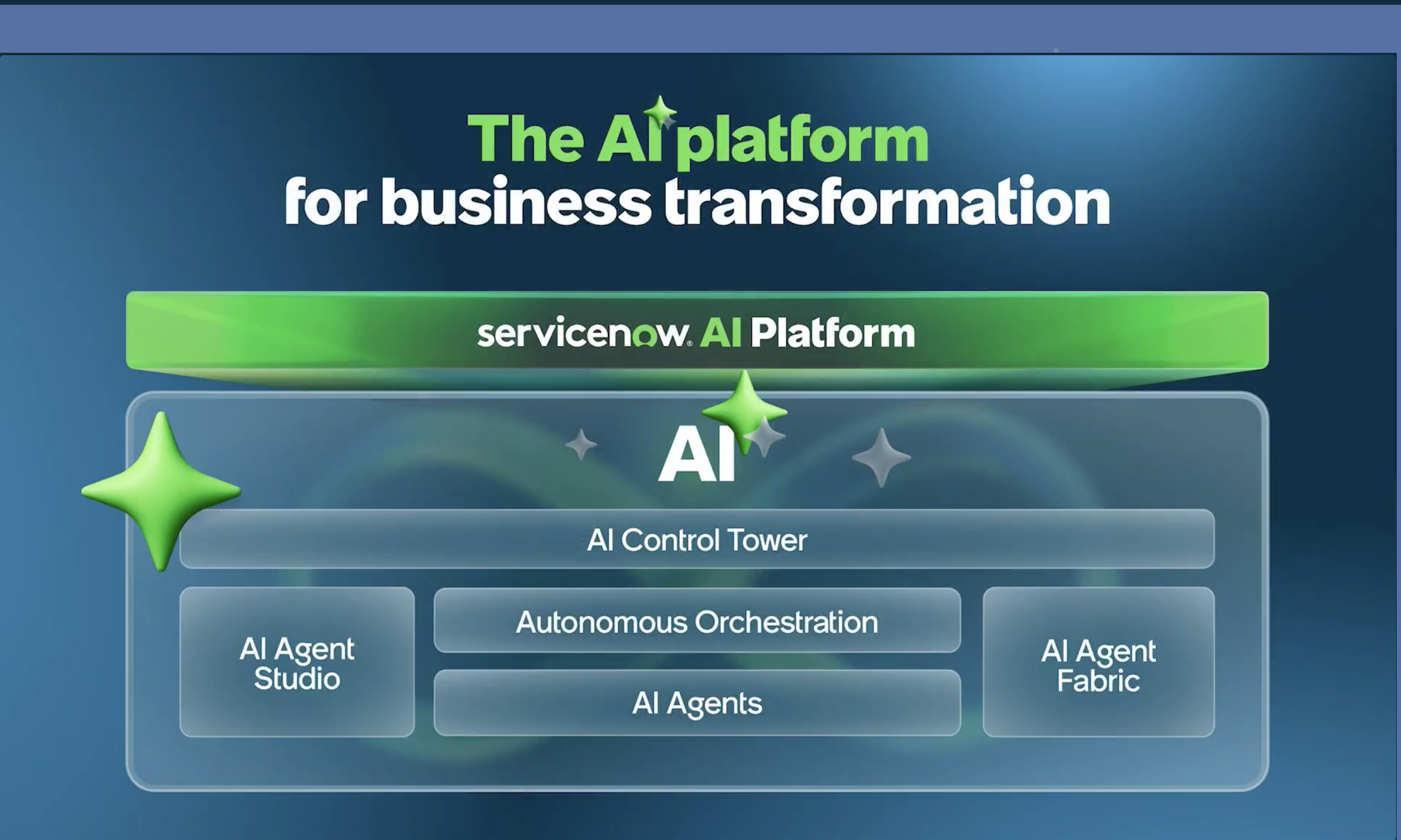
    “What they are is a new digital workforce,” explained John Sigler, EVP of ServiceNow’s AI platform, during the keynote presentation. “And ServiceNow is in a great spot to provide the management of that new workforce with the AI Control Tower, where you can manage, govern, secure, onboard, and offboard, and update all your AI agents.”

    ServiceNow’s focus on orchestration and governance addresses a critical gap Lopez Research has identified in the enterprise AI landscape. While many vendors have spent 2024 defining what agents are and how to create them, few have tackled the orchestration and governance challenges that would allow organizations to confidently deploy these agents autonomously across the various data and software silos. Even with fully baked technology, the potential brand, business, and compliance risk associated with automated workflows provides a significant roadblock to delivering production Agentic AI systems today.

    Sigler showed how the AI Control Tower enables organizations to manage, govern, and secure their AI agents, provide visibility into agent actions, and monitor outcomes. The demo showcased how an employee can drill down into individual agents to see the tasks they perform and the benefits they deliver.

    Orica has already realized these benefits in their IT Service Desk, boosting deflection rates from 18% to 94% and doubling the number of fully resolved cases without human intervention—a testament to the power of automation and agents.

    Reimagining Processes, Not Just Automating Them

    Unlike previous automation waves that often simply accelerated existing workflows, the next wave of agentic AI innovation will emphasize improving processes rather than automating them. The evolution beyond robotic process automation (RPA) was evident in how ServiceNow positions its AI agents.

    In a software demonstration, Joe Davis, EVP of Engineering for Platform and AI, showed how a contract renewal issue typically involving multiple departments and taking days or weeks to complete can be compressed into minutes using autonomous agents working across systems. The key shift here is shepherding a process across what were previously disparate data and application silos. 

    Demo view of multi-agent orchestration of ServiceNow and third-party agents.  Source: ServiceNow

    Chris Taylor, Group CDIO at Stellantis, reinforced this approach: “What we see is an incredible momentum building. We’ve passed the initial fear factor, and people are starting to use it, adopt it, and create tangible value. It’s less of a threat, more of a way to enhance their productivity and enhance their job satisfaction.”

    Stellantis has redesigned its processes around these capabilities, with Taylor noting, “In Europe, 85% of our cars are scheduled and loaded onto transporters using AI. It’s faster. We connect to the customer needs, and we get higher quality.”

    Using Stellantis as an example, ServiceNow showcased a demo of a supply chain specialist alerted by an AI agent that detected a 25% increase in battery cell costs that could impact production. The agent recommended an alternate approved supplier and conducted a comprehensive analysis to ensure the new supplier could deliver the correct product requirements. This integration utilized ServiceNow’s Workflow Data Fabric to bring together data from internal and external systems, enabling the specialist to resolve a major supply chain issue.

    When network transactions began dropping at a Jeep plant, AI agents diagnosed the problem by analyzing the scale of the issue, identifying that it was isolated to network services, and recommending rolling back a change to a Kubernetes container. After approval, the agents executed the rollback, confirmed network performance stabilization, and created a knowledge base article documenting the fix, preventing disruption to car production.

    The demo highlighted more than just automation of existing processes, but a fundamentally better way to detect, diagnose, and resolve network issues, with AI agents working proactively rather than reactively.

    Data Quality: The Foundation for Effective AI

    A fundamental challenge for implementing effective AI remains data access and quality. During the keynote, ServiceNow referenced a Gartner statistic stating that 60% of AI projects will be abandoned by 2026 due to a lack of AI-ready data.

    Gaurav Rewari, SVP and GM of Data and Analytics at ServiceNow, who presented on data strategy, underscored this point: “Here’s the uncomfortable truth. AI agents like the ones you just saw are only as powerful as your data.” This acknowledgment that “the journey to an agentic AI heaven goes through a data hell” represents a significant AI implementation challenge that Lopez Research sees in designing effective AI: data readiness. It’s 2025, and we still struggle with the “Garbage In: Garbage Out” problem.  

    To address this, ServiceNow unveiled its strategy for AI-ready data, which includes:

    1. RaptorDB: A new database offering designed to handle billions of complex transactions supporting operational and analytical workloads in real-time.
    2. Workflow Data Fabric: ServiceNow’s data integration and semantic layer that connects structured and unstructured data across the enterprise.
    3. Workflow Data Network: An ecosystem of 100+ integrations with data platforms including Snowflake, Teradata, AWS, Cloudera, Databricks, Google Cloud, Microsoft, and Oracle.
    4. Data Catalog and Governance: The announced acquisition of data.world to manage, harmonize, and govern data at scale.

    It’s good to see a set of AI platform offerings that focus on data quality instead of just the mechanics of how agents work. Canada Life has already leveraged these data capabilities with their AI-powered catalog builder and Now Assist for Creator to automate self-service management, reducing catalog creation development time by 200%—showing how data-driven AI can transform specific business processes.

    Simplifying Agent Creation

    The low-code/no-code movement isn’t new. Still, we’re seeing a new round of innovation as we move into the AI era/ ServiceNow is making agent creation accessible to business users through AI Agent Studio, allowing non-technical users to create and deploy agents that can transform business processes. By putting these tools in the hands of those who genuinely understand the business, ServiceNow enables organizations to reinvent inefficient processes to be more intelligent and dynamic. To improve return on investment, Lopez Research sees enterprise buyers landing and refining a few specific AI use cases before expanding these tools across the organization.

    “It’s important for everyone to be able to build these AI agents,” said Sigler, before Joe Davis demonstrated creating a research and development agent in about a minute. “You can see it’s low code. You provide instructions using natural language, and you give the agent access to a set of tools.”

    Lloyds Bank has taken advantage of this approach, transforming HR and workplace services with Now Assist and GenAI virtual agents, automatically deflecting up to 90% of HR-related cases and saving teams over 4,000 workdays—demonstrating how business-led AI initiatives can drive significant operational improvements.

    The conference also highlighted how AI agents can transform customer experience processes. Terence Chesire VP, CRM and Industry Workflows at ServiceNow stated during the keynote, “in customer service, you need more than just great omni-channel intake, you need to also orchestrate and automate the hard part, which is resolution and fulfillment, whether it’s a dispute in banking, ordering a telco service, or processing a warranty claim in manufacturing.” This approach to end-to-end process transformation, rather than simple task automation, represents a significant evolution in how organizations approach AI implementation.

    Workforce Transformation: Connecting Front Office to Front Line

    The true power of agentic AI extends beyond process automation to fundamentally transforming how the workforce operates. As CEO of UKG, Jennifer Morgan highlighted at Knowledge 2025, “About 80% of the workforce is made up of frontline, field hourly employees,” yet “only 23% of frontline employees feel that they have access to the technology and the insight that they need.”

    There’s a significant opportunity for AI agents to bridge the gap between the front office and the frontline workers who are the face of the organization to customers. By creating what UKG describes as “a single point of interaction,” organizations can connect field employees back to enterprise systems and data.

    AstraZeneca offers a compelling example of this transformation in action. By revolutionizing their onboarding process with ServiceNow, they’ve streamlined the integration of 20,000 new employees annually, saving over 90,000 hours through optimized workflows. As Cindy Hoots, Chief Digital Officer and CIO, AstraZeneca, explained: “We’ve been able to take processes that used to take 20 minutes, 30 minutes, and now get them to the point that we can do that in just mere seconds.”

    This workforce transformation extends to scientific operations as well. In AstraZeneca’s laboratory environments, AI agents are helping lab managers monitor equipment, automatically detect issues through image recognition, determine warranty status, and even place supply orders based on sensor data. What previously required manual inventory checks and paperwork now happens autonomously, giving valuable time to researchers focused on life-saving discoveries.

    The Missing Link: Governance by Design

    AI Governance shouldn’t be an afterthought designed to remediate compliance issues. AI governance should start as a framework of policies, guidelines, and oversight mechanisms that guide the development, deployment, and use of artificial intelligence to ensure safety, fairness, and transparency. AI governance should be part of developing, deploying, and modifying AI models, systems, and agents. 

    ServiceNow emphasized governance as a foundational element of its AI strategy. The AI Control Tower provides a central hub for managing, monitoring, and governing AI agents across the enterprise.

    This approach embeds governance into the design phase rather than treating it as an afterthought, allowing organizations to deploy autonomous agents more confidently. Yet, organizations must maintain a critical eye by continuously monitoring agents and processes. The system provides visibility into how agents are used across departments, what LLMs they use, and the specific tasks and benefits each agent provides. As AI agents become more autonomous and more widely deployed, this governance capability will be crucial for ensuring security, compliance, and alignment with business objectives. 

    Governance matters because real business value requires the right people and agents to have the correct permissions to manage and use data. In one demonstration, ServiceNow showcased how AI agents could help sales representatives prepare for doctor meetings by aggregating insights from various systems, generating presentation materials, and even remembering the doctor’s lunch preferences. When these AI capabilities extend to patient services, they can orchestrate complex multi-organization workflows, such as automatically generating insurance justification forms and rebate cards while protecting the patient’s data.

    Strategic Partnerships: Accelerating the AI Journey

    The conference highlighted ServiceNow’s partnership approach as crucial to its AI strategy. The company showcased collaborations with data and cloud providers like AWS, Cloudera, IBM, Snowflake, and Teradata, and strategic technology partnerships with Microsoft and NVIDIA.

    These partnerships reveal that the AI capabilities showcased at Knowledge 2025 aren’t overnight developments. The first Knowledge 2025 keynote included a discussion between ServiceNow CEO Bill McDermott and NVIDIA CEO Jensen Huang, who noted they had been working together for six years to reach this point in AI development.

    This historical context is important—it reminds us that we’ve reached a tipping point where we’re seeing the fruits of many years of research and development. The seemingly sudden explosion of AI capabilities is the culmination of sustained investment and strategic collaboration.

    Orchestrating Tomorrow: The New Business Operating System

    If done well, AI agents are not mere automation tools but transformative elements that can reimagine how work gets done across the enterprise. ServiceNow has addressed several key challenges that have limited the impact of AI initiatives by creating enhancements to orchestration, data quality, processes, and governance. 

    As enterprises navigate this transition, the shift from isolated AI tools to orchestrated AI agents working across departments represents a fundamental change in how work gets done, transforming tasks that once took days into processes completed in minutes, and turning the promise of AI from a technology buzzword into tangible business results.

    The future of work isn’t just about automating what we do today—it’s about reimagining what’s possible when AI agents can work autonomously and collaboratively across systems, data sources, and departments. It’s about creating what Lopez Research calls Right-time Experiences that deliver the correct information to the right person or thing at the right time. The shift from what we discussed in the 2014 Right-time Experiences book is that those “things” are intelligent connected devices and AI agents working with humans to complete workflows round-the-clock. ServiceNow’s customer use cases and product demonstration suggest this future is well on its way to becoming a reality.

  • The Everchanging Face Of Webex Supports Cisco’s Growth

    Javed Khan

    Three years ago, many people would’ve written of Webex as a languishing asset in Cisco’s portfolio. After all, how sexy is collaboration? How much growth is there in the market? IDC’s research said the worldwide Unified Communications & Collaboration (UC&C) market grew 29.2% year over year from 2020 to 2021. Meanwhile, Reportlinker estimates the global enterprise collaboration market size will grow from USD 47.2 billion in 2021 to USD 85.8 billion by 2026, representing a Compound Annual Growth Rate (CAGR) of 12.7%.

    Clearly, collaboration tools are the foundation for work, education, and even our personal lives. You only need to witness the addition of emojis as a way of expressing yourself as one example of humanizing a business application for both work and play.

    Over the past month, Cisco’s made two major collaboration announcements. The first announcement with Lockheed Martin and Amazon showcases how communication and collaboration tools will support science. These companies teamed up to integrate human-machine interface technologies into NASA’s Orion spacecraft, providing an opportunity to learn how future astronauts could benefit from far-field voice technology, AI, and tablet-based video collaboration. It brings a new meaning to that old Star Trek line, “Space, the final frontier.”

    What’s interesting to me is not that we’re bringing collaboration to space. The average enterprise doesn’t care. What matters is that space communications represent the ultimate latency use case challenge. Finding a way to optimize collaboration to a destination with a minimum distance of 33.9 million miles (54.6 million kilometers) from Earth means that Webex collaboration will be highly optimized for all types of connections.

    Accessibility takes center stage

    Collaboration software and broadband services enabled people worldwide to meet and share ideas. Yet, there’s still room for improvement. Cisco’s second announcement shared advancements in the accessibility field. Many organizations are designing strategies to improve inclusivity, but fewer companies are evaluating how technologies such as Webex can improve the lives of employees with speech, hearing, and visual impairments.

    A blog by Cisco’s Javed Khan shared research from the World Health Organization, which stated 15% of the global population – over a billion people – live with some form of disability. In the United States alone, that number increases to 1 in 4 adults.  For example, nearly 300 million people are color blind. Khan shared advancements that Cisco was delivering on the accessibility front. A few highlights of these include:

    • Hosts, participants, and interpreters can customize simultaneous interpretation solutions, so each can participate more fully. For example, you can customize the stage to always keep a sign-language interpreter visible. It also supports assigning channels to interpreters for up to 110 languages– before and after the meeting starts.
    • The Webex admin console was updated to improve accessibility for users who are color blind. While we might not think of this, most administrator-based products and presentations rely heavily on charts and other visual cues to relay information.
    • The team decoupled closed captions from the Webex Assistant so all attendees will get closed captions without having to turn on the Assistant
    • Cisco now delivers isolation techniques within Webex that allow participants to hear more clearly by using AI to single out and boost the clarity of an individual’s voice.

    One area that I admire in Cisco’s strategy is how the company infuses the concepts of creating inclusive software throughout various job functions within the company. Khan said, “At Webex, our design, engineering, and product management team members are required to take accessibility education and hands-on training. It’s even built into the onboarding process for our designers, who recently won an award for Accessible Colors in Data Visualization for Webex Control Hub.”

    The changing face of Webex will fuel longer-term software growth. 

    Cisco’s long-term growth relies on expanding its recurring software subscription such as Webex collaboration services, cybersecurity services, and network management services. Intense competition in the sector means partnerships, innovation, and addressing new markets are crucial elements to helping Cisco expand its collaboration footprint. However, it’s challenging to convince enterprise buyers to purchase video collaboration solutions in addition to existing collaboration tools from Microsoft and Google.

    In recent months, Cisco’s been working hard to introduce innovations faster. In the fall of 2021, it launched a portfolio of communications products, including an integrated asynchronous camera feature, AI-powered sound, video enhancements, and services for hybrid in-person and virtual events. Vidcast, its asynchronous video messaging tool,  is now in beta. The company also updated its hardware portfolio with Webex Mini and luxury headsets.

    Online events continue to grow and show no signs of stopping. According to a survey by Kaltura, 92% of organizers switched to virtual events in 2021, 94% plan to continue with digital events in 2022, and 48% plan to increase how many they organize. Cisco includes Socio, its all-in-one event platform, as part of the Webex portfolio and suite pricing, providing significant savings over standalone event solutions from Hopin and Zoom. As hybrid events continue to grow, Cisco has the potential to grow with the market as companies look for new event strategies. Offering better event support also provides an opportunity to showcase Webex collaboration improvements to non-Webex users.

    In the past, collaboration suites acted as islands of productivity. Collaboration software worked wonderfully if you stayed within that island. Today the world is a different place. Organizations use a myriad of collaboration and communication tools to accomplish work. Collaboration suites must support integrating with other solutions, and Webex has embraced this trend. For example, the Cisco Webex Meetings integration with Slack enables users to invite contacts to a Webex scheduled meeting or Personal Room from within the Slack environment. Integrations like this are necessary to improve productivity and reduce misaligned teams’ risk.

    Business reliance on collaboration technologies will only grow, providing headroom for Webex to grow, even in the face of stiff competition. If Webex continues to innovate and rapidly release new features to market, it will remain relevant and has the opportunity to thrive as companies embrace a world of distributed hybrid work.

  • Microsoft’s Business Apps Division Shows Traction

    Business is booming for Microsoft and its business apps team. The company shared that Dynamics 365 had a breakthrough quarter with revenue increasing 45% during its recent earnings call. It also shared that the Power Platform is being used by nearly 16 million monthly active users, up 97% year over year and revenue increased 84% year over year. What’s behind the success?

    Part of this success reflects a multi-year journey where Microsoft embarked on integrating its business applications into a more comprehensive suite and adding extensions to Teams and the Power Platform. Microsoft referred to this as a unified collective of capabilities. Part of its success was driven by Microsoft’s renewed focus on creating more vertical-focused solutions to support the unique industry need. Another element contributing to its momentum is Microsoft’s success as an infrastructure cloud computing provider.

    Today, everything produces data. Microsoft asserts that, unlike its competition, Microsoft customers will have a leg up because Azure Cloud allows an organization to capture all of that information, analyze it and use it to predict the future. In interviews with Lopez Research, IT leaders have shared that Microsoft’s focus and success in the cloud computing business has created an environment where corporate buyers will more readily consider the company’s broader portfolio. Finally, timing is also essential. All of these previous steps were in motion when organizations had to embrace business and technology transformation rapidly.

    At Microsoft’s Business Applications Summit, the company shared how customers used its software to deliver a wide range of digital experiences and solutions that supported employees returning to work. The conference kicked off with Alysa Taylor, Microsoft’s Corporate Vice President of Business Applications & Global Industry, sharing how companies used Microsoft’s tech to support manufacturing, digital learning, and enhanced retail. James Phillips, the President of Microsoft’s Digital Transformation Group, shared how the company continued to invest in software certification and programs. But perhaps most interesting was the discussion of what’s changing in the business apps landscape. Phillips referred to the need to move from reactive, applications-first business processes to proactive data-driven workflows.

    The Next Application Shift Is Upon Us

    A few years ago, Lopez Research defined a category called Right-time Experiences, These are products, services and applications which provide the right information to the right person at the right time on their device of choice. Right-time experiences are personalized, contextual, adaptive, learning and predictive. These experiences break down data silos connecting information across a company as well as linking to third-party data sources to enhance these experience.

    To create RTEs, a company must connect a wide range of data (real-time data, partner and open data) and AI- driven analytics into applications. Taylor and Phillips described this shift as Microsoft’s vision for Dynamics 365 during the keynote. Philips said, “It’s a game-changer across every single business process, every single industry, and puts in the hands of your users now applications that don’t look anything like they did just a few short years ago….It allows a predictive, proactive business process. Later, he went on to say, “Customer Insights allows you to build a data-driven understanding of your customer, to predict their needs, to understand the opportunity, to deliver experiences that are very tailored, an experience of one, right down to the customer”.

    What’s different today? It’s actually happening.

    One could say, haven’t we been discussing this for years? While this is true, I would posit that certain things have changed. First, technology vendors are building more comprehensive solutions to support digital transformation. Second, advances in cloud technology and the availability of pre-trained AI models within applications, such as Dynamics365, make it easier to deliver on the vision of right-time experiences. Third, shifts in the business market have made every company up its digital game to provide new experiences. At the Microsoft Business Applications Summit, the company shared three great examples of Right-time Experiences that included how:

    • L’Oréal enabled experts to be anywhere and everywhere. L’Oréal makes a wide range of products that require very sophisticated machinery for production and packaging. L’Oréal used Microsoft Dynamics 365 Remote Assist and HoloLens 2 to enable employees in one location to see what employees in another site were looking at in real-time. These remote experts can react to the same image, use mixed-reality annotations, and share critical information, regardless of location. As a result, L’Oréal cut the time it spent resolving issues in half. It also shrunk travel expenses and improved employee productivity by eliminating unnecessary travel.
    • The LA Clippers delivered predictive fan engagement. The LA Clippers built a customer experience system using the Microsoft Cloud, Dynamics, and the Power Platform. The solution provides personalized and predictive experiences across all touchpoints, whether that’s as they walk into the stadium or talk to a call center agent within a mobile app. Using customer Insights, the LA Clippers can track how a fan interacted with the company and make predictions about products the fan would enjoy. It also uses the AI and ML algorithms within the app to identify common interests in its fan base.
    • Humana supported those in need during a pandemic.  Humana used Dynamics 365 and the Power Platform to help its crisis management team make sense of rapidly changing circumstances, help schedule vaccine appointments and used machine learning models to help deliver 1.4 million meals to those in need. Since Humana had already been using the Power Platform before the pandemic, it could create specific solutions in days.

    What should organizations be thinking about today?

    The market is designing the next wave of business applications that are cloud-native and created using microservices that can be updated and recombined to deliver new and enhanced experiences. As companies embark on digital transformation 4.0, technology buyers must:

    1. Get serious about creating agility businesses. Agility isn’t a new concept, but now it’s mandatory. The ability for teams to detect changes in customer behavior and act quickly on insight is key to remaining competitive. Additionally, every business must gracefully pivot to new models such as digital experiences and as-a-service delivery. Cloud infrastructure and application services provide agility in the face of rapid change.

    2. Design processes to meet changing experience expectations. Best-in-industry isn’t good enough. Every company needs to benchmark itself against best-in-class because that’s what your customers expect of you. Also, it’s not just against one company or one benchmark. It’s best-in-class by type of experience such as payments, logistics tracking, product configuration, and contact center response.

    3. Shift from reactive to proactive business processes.  Organizations that can collect, analyze and act on data in near real-time or real-time will predict opportunities and proactively eliminate potential issues. To do this, companies must ensure they are performing the correct data engineering to ensure clean data is entering the firm’s AI and analytics systems.

    Fortunately, every company, regardless of size or industry, can leverage new cloud infrastructure and applications to create better employee and customer experiences. The question is, “What will you build”?

  • Microsoft Showcases How Companies Are Using Technology To Thrive During A Pandemic

    Microsoft Showcases How Companies Are Using Technology To Thrive During A Pandemic

    The COVID-19 pandemic forced companies of all sizes to shift business practices. Technology plays an increasingly important role as organizations enable remote work and contactless engagement. Microsoft showcased many examples of how companies were transforming their business at the Microsoft Business Applications Summit. Alysa Taylor, Corporate Vice President Microsoft Business Applications & Global Industry, launched her keynote with a discussion of how the world and Microsoft have changed. “This is a whole new era for us. Historically, big transformation initiatives that would happen over the years have condensed out of necessity to weeks or even in days.”

    Systems that enable agility are critical. Microsoft’s Taylor described how L’Oreal expanded from manufacturing beauty products to creating hand sanitizers as an example of how technology can support adaptive, flexible businesses.  Companies are also moving faster with their deployments. For example, C3.ai  moved from selecting to deploying Dynamics 365 within several weeks.

    Taylor spoke of how Dynamics 365 and the Power Platform were helping companies move from reactive to proactive business workflows where employees could take intelligent actions based on data. Today, everything from connected devices to data in the supply chain and collaborative applications is a source of potential insight.  Microsoft describes this as a digital feedback loop that captures and utilizes information from products, assets, customers and people (employees). Each touchpoint offers more data that enhances the feedback. Microsoft also highlighted the importance of having a cloud strategy where you can securely store data and comply with nation-state regulations.

    Enter Microsoft with the mega stack.

    Unfortunately, IT struggles to incorporate this type of context into legacy apps. Companies need to redesign or purchase solutions that can integrate and analyze data from a wide range of sources.

    None of these concepts are new. What’s different today is that vendors, such as Microsoft, are delivering more comprehensive portfolios. In the past two years, Microsoft integrated various assets from app development to customer engagement into what it calls the Power Platform, which includes Power BI, Power Apps, Power Automate, and Power Virtual Agent. Many of the tools were design to allow everyone, not just professional developers and data scientists, to create applications and analyze data. Additionally, Microsoft integrated these functions with the Dynamics 365 applications and Azure to enable a closed-loop process from data collection through insight and action.

    Leading companies are delivering rich customer experiences.

    The Microsoft Business Applications Summit is typically an event where customers come to showcase and share ideas on how to use Microsoft’s technology. With the change to a virtual event, Microsoft took the lead in sharing how its customers are delivering proactive and intelligent engagement. For example:

    Chipotle creates a data-driven customer profile.

    It uses a combination of Microsoft’s Power Platform, Dynamics 365 Customer Insights and Azure to unify the company’s current customer information and enrich the customer profile with proprietary signals from the Microsoft Graph. Chipotle leveraged its existing investment and third-party sources using connectors in the Microsoft platform to create a 360 view of the customer from multiple data sources, such as the point of sale transactions, digital transactions, reward information, web, and mobile usage data.

    With a unified customer profile, Chipotle can create segments that provide important insights, such as loyalty members and frequent repeat customers. Chipotle can analyze the average spend across regions and use that data to prioritization decisions. Additionally, Chipotle can connect to Microsoft power automate to trigger workflows, in response to customer actions and signals in real-time. For example, when a customer places an order and completes the purchase on a mobile app, the customer profile is instantly updated. These customer profiles and new engagement models are even more important in a world where Chipolte has to deliver contactless engagement.

    Companies want to provide the right information to their employees at the right-time. Lopez Research calls these a right-time experience (RTE). For example, by scanning a customer’s QR code in the app, the store associate can see the full purchase history, and all past activities, all in one place. This information enables the store associate to provide the next best actions, such as a pre-delivery for the following order, based on analyzing contextual data stored in the cloud for scalable processing. Using tools such as Azure synapse analytics, organizations can ingest operations and other streaming data at petabyte scale, allowing them to develop custom AI and machine learning models.

    Chateau St. Michelle uses Dynamics 365 to shift from in-winery to online sales.

    Cloud computing and SaaS services have been critical in allowing companies to work remotely and offer new services. Chateau St Michelle talked of how it had to shut down and move to a new facility during the COVID crisis, which it said would have been impossible if they were using homegrown customer systems. Initially, 90% of the direct consumer was through the wineries, and 10% was via e-commerce. In the last couple of weeks, Chateau St Michelle flipped to 90% via e-commerce, completely changing its distribution model within a few hours using the Microsoft suite.

    IKEA improves the multi-channel sales process and workforce management.

    IKEA uses the power platform and Dynamics 365 to create a better omnichannel experience. Microsoft showcased how IKEA combined online kitchen cabinet configuration, virtual agents, power automate and Dynamics 365 resource scheduling to improve the customer’s kitchen design experience. In creating conversation interfaces, IKEA was able to use the Microsoft tracing feature that allows the app developer to simulate what a customer would experience and then see how a chatbot would respond.

    IKEA employees use power apps on a tablet to improve the customer’s in-store experience. IKEA used power apps data connectors so it could leverage existing systems. Microsoft’s UI flow provided the capability to connect legacy application data and new data into a business process. It took the project a step further by using mixed reality, which meant it could add kitchen visualization to the app without the team needing to understand AR Kit, 3D models, and writing code.

    While the focus on the customer is vital, the solution must provide the right information to IKEA’s employees as well. For example, IKEA’s store managers can use Power BI to visualize all the booked appointments, where the appointments originated (online or in-store), and view the close rate for in-store appointments. It also uses Microsoft’s resource scheduling to ensure it has the right number of employees to support demand at various times.

    Are we there yet?

    Microsoft upped its game in Dynamics 365 and made itself more relevant by integrating with other products in its portfolio, such as the Power Platform and Azure cloud services. Yet, this brings up a consistent technology buyer lament where the buyer says it only works if they purchase many products from a single vendor. In truth, the buyers have a solid point. Vendor lock-in is a legitimate concern. However, the counterpoint is that it takes significant integration across multiple products to deliver an accurate 365-degree view of the customer. The integration work is time-consuming, challenging and quickly breaks down if any one piece of the puzzle changes.

    A company can’t and shouldn’t source everything from one vendor. However, a company should be looking for a modern suite of pre-integrated products that allow them to leverage legacy apps through connectors where necessary. Companies have multiple CRM, ERP and homegrown systems. Microsoft spoke on how it can use the hundreds of connectors it created in the Power Platform to help companies build specific business process workflows that pull together legacy systems and solve problems off-the-shelf applications can’t. A new suite should also provide enhancements such as machine learning, visualization, and easy workflow creation. Ideally, it would be modular and cloud-native.

    Is everything as easy as Microsoft made it sound? Probably not. It never is easy for an organization to make these transformations. However, Microsoft made its solutions more powerful and easier to use. At the summit, Microsoft said over half of the Fortune 500 are leveraging Dynamics 365, and the company achieved a 50% year over year growth in the Dynamics 365 business. It would be hard to argue that the company’s strategy isn’t working.

    Follow me on Twitter or LinkedIn. Subscribe to my newsletter to get the latest from Lopez Research