Tag: Cohere

  • Microsoft Build 2025: Bridging the Gap Between AI POCs and Agentic AI Success

    Microsoft Build 2025: Bridging the Gap Between AI POCs and Agentic AI Success

    The AI Acceleration Challenge

    The AI market has rapidly evolved from early chatbot failures to a landscape of simplified access to information driven by generative AI, with agentic AI coming soon. Yet, most organizations are still struggling to move beyond proof-of-concept projects to production deployments that deliver measurable business value. Over 80% of firms interviewed by Lopez Research report significant technical skills shortages and challenges with change management when deploying AI systems. The landscape has also become increasingly complex, with thousands of AI models and multiple approaches to designing, deploying, and managing AI solutions.

    Before enterprises had even fully embraced conversational interfaces within various SaaS solutions, the technology industry rapidly moved toward creating agentic AI products. Instead of AI that assists people, the industry has pushed toward systems that can operate autonomously, reason through complex problems, and take action without always requiring human guidance. While agentic systems represent the future of AI, the inherent risks in autonomous systems terrify all but the most fearless companies.

    Amplified Risks in an Autonomous Agentic AI World

    AI systems face significant reliability challenges, including unpredictable outputs, “hallucinations” where they generate false information, and brittleness when encountering unfamiliar scenarios. These systems can also experience model drift as underlying data patterns change over time, leading to degraded performance without obvious warning signs. From a security perspective, AI systems remain vulnerable to sophisticated attacks, including adversarial inputs designed to manipulate outputs, data poisoning that corrupts training datasets, and inference attacks that can extract sensitive information from trained models.

    These challenges become exponentially more serious with agentic AI. Reliability issues that may cause minor inconveniences when a human is in the loop will become critical safety concerns when agents can act autonomously. An agentic AI experiencing model drift or brittleness could make consequential decisions affecting business operations, financial transactions, or even physical systems without human oversight. Security vulnerabilities become particularly dangerous, as adversarial attacks can manipulate agents into taking harmful actions, while data poisoning can corrupt not only outputs but entire chains of autonomous decision-making.

    Companies Flock To Strategic Vendors For AI Platforms

    The AI sprawl of startup vendors and highly specialized solutions only creates increased anxiety. Today, most business leaders are looking to a handful of strategic technology vendors to offer more comprehensive systems for designing, securing, maintaining, and governing AI that supports many but not all of the AI functions. It’s crucial that these strategic vendors also provide ecosystem-friendly platforms that can connect with other third-party technology vendors when necessary.

    Microsoft Responds with Advances in Agentic AI 

    At Microsoft’s Build 2025 conference, CEO Satya Nadella advanced the company’s vision for an “open, agentic web.” Microsoft’s announcements encompass over 50 new AI tools and platforms, focusing on agentic AI capabilities that promise to transform how organizations develop software, conduct research, and manage business processes. 

    Microsoft calls its Microsoft 365 Copilot “the UI for AI,” providing a place where people and teams interact with agents in the flow of work. However, since last year’s Build conference, the company has moved well beyond Microsoft Copilot as a conversational interface to also offering a more comprehensive platform for designing and using agents. This is in addition to providing its own AI models and special-purpose AI hardware. The latest Microsoft Build announcements showcase several key updates that demonstrate Microsoft’s commitment to addressing enterprise concerns about the deployment of autonomous AI while maximizing its transformative potential.

    1. Evolving Software Development

    Microsoft Build has always focused on tools for software development. The evolution of GitHub Copilot from code suggestion to an autonomous coding agent represents a significant shift in software development lifecycle management. The new agent handles end-to-end programming tasks, including bug fixes, feature implementation, and code refactoring. Embedded directly into GitHub, the agent activates when developers assign a GitHub issue to Copilot or prompt it in VS Code, spinning up secure and fully customizable development environments powered by GitHub Actions.

    The autonomous handling of routine coding tasks allows development teams to focus on architecture and innovation, effectively multiplying the strategic impact of existing technical staff. Beyond productivity gains, the system ensures consistent application of best practices across entire codebases, reducing quality variations that often plague large development organizations. Perhaps most significantly for enterprise operations, the platform reduces dependency on individual developer expertise, creating more resilient and maintainable systems where institutional knowledge embedded in the AI agent ensures continuity when personnel changes occur.

    The advances in GitHub Copilot address one of the most persistent challenges facing technical leaders: the growing gap between the demands of software development and the available talent. At Build, Microsoft shared that Ramp, a spend management platform, saves approximately 30,000 hours of manual work per month by utilizing GitHub Copilot. Cathay Pacific, Hong Kong’s largest airline, similarly leveraged GitHub Copilot to save developer time and increase productivity across their development teams.

    2. Delivering Choice and Interoperability

    Microsoft’s Azure AI Foundry Agent Service represents the cornerstone of enterprise agentic AI deployment. Now generally available, the platform provides enterprise-grade infrastructure for production AI agent deployments, integrating Semantic Kernel and AutoGen into a unified SDK while supporting Agent-to-Agent (A2) communication and the Model Context Protocol (MCP). The support for A2A and MCP means it will be easier for companies to create Agentic AI systems where agents can connect and collaborate across various applications and data sources. 

    Microsoft’s commitment to the Model Context Protocol across its entire platform stack addresses a critical enterprise concern: avoiding AI vendor lock-in while enabling sophisticated integrations. MCP integration with Windows will provide a standardized framework for AI agents to connect with native Windows applications, allowing seamless agent-based interactions. The support for the A2A protocol, an open standard, also enables Microsoft to integrate with other major technology companies, including Google (the originator of the protocol), Atlassian, Box, Cohere, Intuit, LangChain, MongoDB, PayPal, Salesforce, SAP, ServiceNow, UKG, and many others.

    Organizations will also gain model flexibility with access to over 11,000 models through a Hugging Face integration in addition to the existing 1,900 models in the Microsoft catalog. These capabilities enable organizations to integrate best-of-breed AI models regardless of vendor and optimize costs by selecting the right model for the right workload. 

    3. Advanced Workflow Automation

    The introduction of multi-agent systems enables sophisticated workflow automation where specialized agents collaborate to handle complex business processes within the Microsoft ecosystem and across applications. This multi-agent orchestration transforms organizational thinking about business process automation, shifting from rigid, predetermined workflows to intelligent systems that adapt and collaborate in real time.

    Cross-platform integrations demonstrate the versatility of this capability. Adobe’s marketing agent, integrated with Microsoft 365 Copilot, enables marketers to access audience analysis without needing to switch applications. ServiceNow AI agents work with Microsoft 365 Copilot for service management. SAP integration through SAP Joule enables the creation of custom AI agents for SAP workloads using Azure AI services while also allowing SAP users to access data within Microsoft 365 applications.

    Financial operations benefit similarly, with compliance agents working alongside analysis agents to produce automated reporting that maintains accuracy while reducing manual oversight requirements. Supply chain management becomes more responsive as demand forecasting agents coordinate directly with inventory management agents, creating dynamic, self-optimizing systems that respond to market changes in real time.

    4. Observability for Agentic Systems

    For technology leaders grappling with the complexities of AI deployment, this platform addresses several fundamental concerns that have historically hindered the success of AI initiatives. In addition to supporting open protocols for agent communication and governed access to multiple types of AI, it also offers built-in observability. Observability provides real-time metrics for performance, quality, cost, and safety, giving executives the visibility needed to manage AI operations with confidence. 

    Rather than deploying AI as a black box, organizations can now monitor and optimize their AI investments with the same rigor applied to traditional enterprise systems. The platform’s integrated compliance controls help prevent “agent sprawl,” which many organizations fear as AI adoption accelerates, enabling centralized oversight while increasing accessibility through a centralized agent store.

    AI Can Deliver Impact

    Real-world implementations demonstrate measurable impact. Accenture has leveraged Azure AI Foundry for AI and agent-led business process transformations, achieving a 30% increase in efficiency and a 50% reduction in AI application development time. Carvana developed an agent that analyzes customer interactions, resulting in a 40% reduction in inbound sales calls. The Indiana Pacers created an in-arena real-time captioning system with error rates reduced to just 1 percent. 

    Early implementations highlight the potential of agentic AI in mission-critical environments. Stanford Medicine’s Healthcare Agent Orchestrator, built on Azure AI Foundry, transforms cancer care delivery across approximately 4,000 tumor board meetings per year. The system consolidates fragmented information from multiple sources, integrates patient history with radiology data, medical literature, and clinical trials, and generates comprehensive reports for clinicians, thereby reducing the time spent on manual information gathering. Deployed into Microsoft Teams with a foundation in specific clinical notes, the solution enhances patient decision-making by making it more efficient, faster, and potentially more accurate while enabling the sharing of advanced medical AI capabilities with community hospitals to democratize these capabilities. 

    The NFL’s implementation demonstrates the impact of agentic AI on data-driven decision-making. Azure AI Foundry revolutionized scouting operations by combining previously scattered data systems, enabling teams to ask specific player questions and receive immediate comparative analysis, complete data filtering in seconds rather than hours, access detailed player information in real-time during evaluations, and perform instant queries like “give me the fastest 40 times of a defensive lineman.” This transformation gave NFL teams significant competitive advantages in player evaluation by fundamentally changing how they process and analyze scouting data.

    Build Your Foundation Wisely

    For technology leaders, the strategic imperative is clear: organizations that successfully implement agentic AI will gain substantial competitive advantages in efficiency, innovation speed, and operational capability. The key to success lies not in the technology itself but in thoughtful implementation that addresses governance, security, and change management challenges while maximizing the transformative potential of autonomous AI systems. While organizations should proceed with caution, the latest offerings announced by Microsoft and others signal that the technology market is providing more mature offerings to mitigate risks, suggesting that the foundation for safe, effective agentic AI deployment is rapidly solidifying.
  • Dell AI Factory Expands with 40+ Enhancements for Enterprise AI Deployment

    Dell AI Factory Expands with 40+ Enhancements for Enterprise AI Deployment

    Dell Technologies unveiled a significant expansion of its AI Dell Factory platform at its annual Dell Technologies World conference today, announcing over 40 product enhancements designed to help enterprises deploy artificial intelligence workloads more efficiently across both on-premises environments and cloud systems.

    The Dell AI Factory is not a physical manufacturing facility but a comprehensive framework combining advanced infrastructure, validated solutions, services, and an open ecosystem to help businesses harness the full potential of artificial intelligence across diverse environments—from data centers and cloud to edge locations and AI PCs.

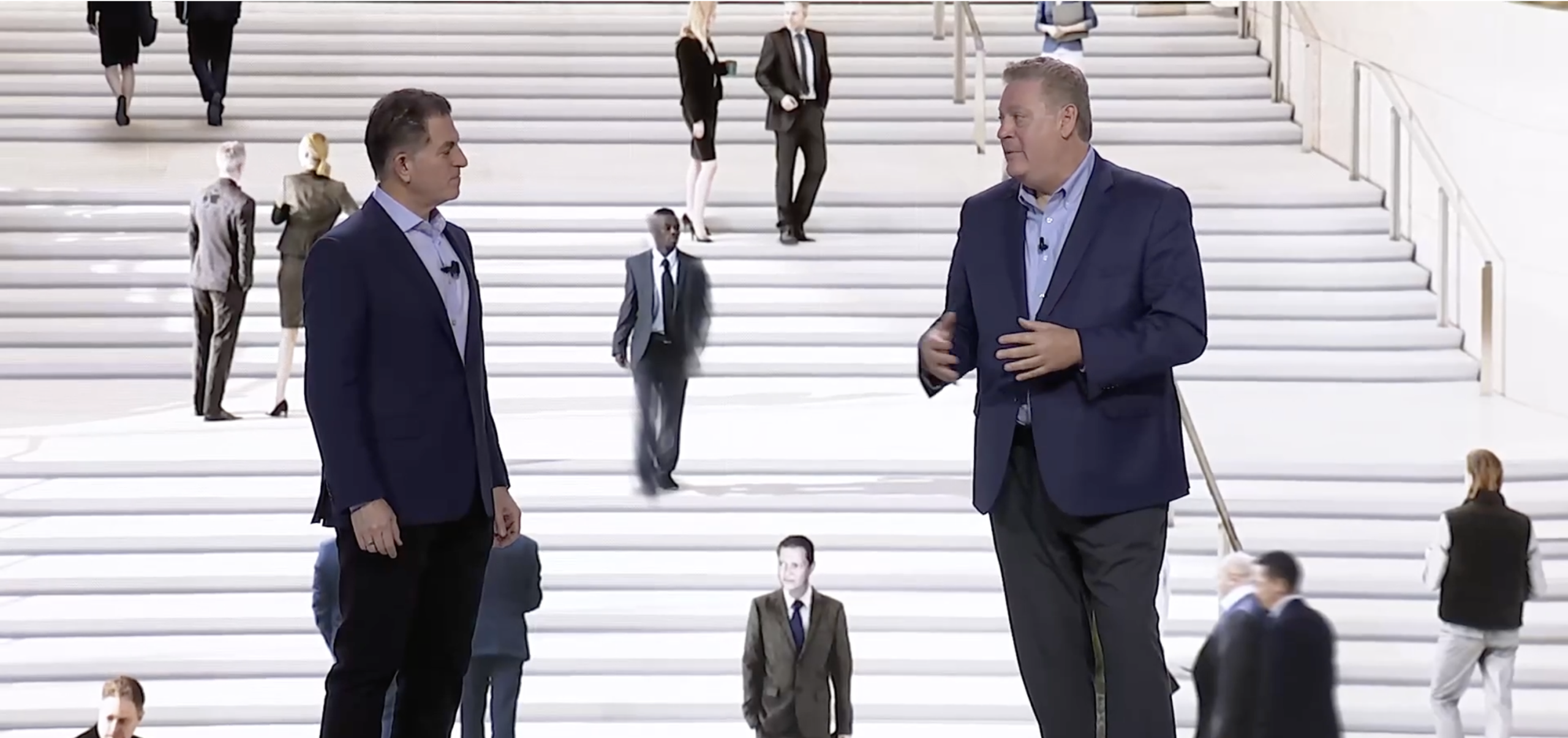
    The company has attracted over 3,000 AI Factory customers since launching the platform last year. In an earlier call with industry analysts, Dell shared research stating that 79% of production AI workloads are running outside of public cloud environments—a trend driven by cost, security, and data governance concerns. During the keynote, Michael Dell provided more color on the value of Dell’s AI factory concept. He said, “The Dell AI factory is up to 60% more cost effective than the public cloud, and recent studies indicate that about three-fourths of AI initiatives are meeting or exceeding expectations. That means organizations are driving ROI and productivity gains from 20% to 40% in some cases. 

    Making AI Easier to Deploy

    Organizations need the freedom to run AI workloads wherever makes the most sense for their business, without sacrificing performance or control. While IT leaders embraced the public cloud for their initial AI services, many organizations are now looking for a more nuanced approach where the company can control over their most critical AI assets while maintaining the flexibility to use cloud resources when appropriate. Over 80 percent of the companies Lopez Research interviewed said they struggled to find the budget and technical talent to deploy AI. These AI deployment challenges have only increased as more AI models and AI infrastructure services have been launched.

    Silicon Diversity and Customer Choice

    A central theme of Dell’s AI Factory message is how Dell makes AI easier to deploy while delivering choice. Dell is offering customers choice through silicon diversity in its designs, but also with ISV models. The company announced it has added Intel to its AI Factory portfolio with Intel Gaudi 3 AI accelerators and Intel Xeon processors, with a strong focus on inferencing workloads.

    Dell also announced its fourth update to the Dell AI Platform with AMD, rolling out two new PowerEdge servers—the XE9785 and the XE9785L—equipped with the latest AMD Instinct MI350 series GPUs. The Dell AI Factory with NVIDIA combines Dell’s infrastructure with NVIDIA’s AI software and GPU technologies to deliver end-to-end solutions that can reduce setup time by up to 86% compared to traditional approaches. The company also continues to strengthen its partnership with NVIDIA, announcing products leveraging NVIDIA’s Blackwell family and other updates launched at NVIDIA GTC. As of today, Dell supports choice by delivering AI solutions with all of the primary GPU and AI accelerator infrastructure providers.

    Client-Side AI Advancements

    At the edge of the AI Factory ecosystem, Dell announced enhancements to the Dell Pro Max in a mobile form factor, leveraging Qualcomm’s AI 100 discrete NPUs designed for AI engineers and data scientists who need fast inferencing capabilities. With up to 288 TOPs at 16-bit floating point precision, these devices can power up to a 70-billion parameter model, delivering 7x the inferencing speed and 4x the accuracy over a 40 TOPs NPU. Dell says the Pro Max Plus line can run a 109-billion-parameter AI model.

    The Pro Max and Plus launches follow Dell’s previous announcement of AI PCs featuring Dell Pro Max with GB 10 and GB 300 processors powered by NVIDIA’s Grace Blackwell architecture. Overall, Dell has simplified its PC portfolio but made it easier for customers to choose the right system for their workloads by providing the latest chips from AMD, Intel, Nvidia, and Qualcomm.

    On-Premise AI Deployment Gains Ecosystem Momentum

    Following the theme of choice, organizations need the flexibility to run AI workloads on-premises and in the cloud. Dell is making significant strides in enabling on-premise AI deployments with major software partners. The company announced it is the first provider to bring Cohere capabilities on-premises, combining Cohere’s generative AI models with Dell’s secure, scalable infrastructure for turnkey enterprise solutions.

    Similar partnerships with Mistral and Glean were also announced, with Dell facilitating their first on-premise deployments. Additionally, Dell is supporting Google’s Gemini on-premises with Google Distributed Cloud.

    To simplify model deployment, Dell now offers customers the ability to choose models on Hugging Face and deploy them in an automated fashion using containers and scripts. Enterprises increasingly recognize that while public cloud AI has its place, a hybrid AI infrastructure approach could deliver better economics and security for production workloads.

    The imperative for scalable yet efficient AI infrastructure at the edge is a growing need. As Michael Dell said during his Dell Technologies World keynote, “Over 75% of enterprise data will soon be created and processed at the edge, and AI will follow that data; it’s not the other way around. The future of AI will be decentralized, low latency, and hyper-efficient.”

    Dell’s ability to offer robust hybrid and fully on-premises solutions for AI is proving to be a significant advantage as companies increasingly seek on-premises support and even potentially air-gapped solutions for their most sensitive AI workloads. Key industries adopting the Dell AI Factory include finance, retail, energy, and healthcare providers.

    Scaling AI Requires a Focus on Energy Efficiency 

    Simplifying AI also requires product innovations that deliver cost-effective, energy-efficient technology. As AI workloads drive unprecedented power consumption, Dell has prioritized energy efficiency in its latest offerings. The company introduced the Dell PowerCool Enclosed Rear Door Heat Exchanger (eRDHx) with Dell Integrated Rack Controller (IRC). This new cooling solution captures nearly 100% of the heat coming from GPU-intensive workloads. This innovation lowers cooling energy requirements for a rack by 60%, allowing customers to deploy 16% more racks with the same power infrastructure.

    Dell’s new systems are rated to operate at 32 to 37 degrees Celsius, supporting significantly warmer temperatures than traditional air-cooled or water-chilled systems, further reducing power consumption for cooling. The PowerEdge XE9785L now offers Dell liquid cooling for flexible power management. Even if a company isn’t aiming for a specific sustainability goal, every organization wants to improve energy utilization. 

    Early Adopter Use Cases Highlight AI’s Opportunity

    With over 200 product enhancements to its AI Factory in just one year, Dell Technologies is positioning itself as a central player in the rapidly evolving enterprise AI infrastructure market. It offers the breadth of solutions and expertise organizations require to successfully implement production-grade AI systems in a secure and scalable fashion. However, none of this technology matters if enterprises can’t find a way to create business value by adopting it. Fortunately, examples from the first wave of enterprise early adopters highlight ways AI can deliver meaningful returns in productivity and customer experience. Let’s look at two use cases presented at Dell Tech World. 

    The Power of LLMs in Finance at JPMorgan Chase

    JPMorgan Chase took the stage to make AI real from a customer’s perspective. The financial firm uses Dell’s compute hardware, software-defined storage, client, and peripheral solutions. Larry Feinsmith, the Managing Director and Head of Global Tech Strategy, Innovation & Partnerships at JPMorgan Chase, said, “We have a hybrid, multi-cloud, multi-provider strategy. Our private cloud is an incredibly strategic asset for us. We still have many applications and data on-premises for resiliency, latency, and a variety of other benefits.” 

    Feinsmith also spoke of the company’s Large Language Model (LLM) strategy. He said, “Our strategy is to use a constellation of models, both foundational and open, which requires a tremendous amount of compute in our data centers, in the public cloud, and, of course, at the edge. The one constant thing, whether you’re training models, fine-tuning models, or finding a great use case that has large-scale inferencing, is that they all will drive compute. We think Dell is incredibly well positioned to help JPMorgan Chase and other companies in their AI journey.”

    Feinsmith noted that using AI isn’t new for JPMorgan Chase. For over a decade, JPMorgan Chase has leveraged various types of AI, such as machine learning models for fraud detection, personalization, and marketing operations. The company uses what Feinsmith called its LLM suite, which over 200,000 people at JPMorgan Chase use today. The generative AI application is used for QA summarization and content generation using JPMorgan Chase’s data in a highly secure way. Next, it has used the LLM suite architecture to build applications for its financial advisors, contact center agents, and any employee interacting with its clients. Its third use case highlighted changes in the software development area. JPMorgan Chase rolled out code generation AI capabilities to over 40,000 engineers. It has achieved as much as 20% productivity in the code creation and expects to leverage AI throughout the software development life cycle. Going forward, the financial firm expects to use AI agents and reasoning models to execute complex business processes end-to-end.

    Seemantini Godbole, EVP and Chief Digital and Information Officer at Lowe's, shared insights on designing the strategy for AI

    How AI Makes It Easier For Employees to Serve Customers at Lowe’s

    Lowe’s Home Improvement Stores provided another example of how companies are leveraging Dell Technology and AI to transform the customer and employee experience. Seemantini Godbole, EVP and Chief Digital and Information Officer at Lowe’s, shared insights on designing the strategy for AI when she said, “How should we deploy AI? We wanted to do impactful and meaningful things. We did not want to die a death of 1000 pilots, and we organized our efforts across how we sell, how we shop, and how we work. How we sell was for our associates. How we shop is for our customers, and how we work is for our headquarters employees. For whatever reason, most companies have begun with their workforce in the headquarters. We said, No, we are going to put AI in the hands of 300,000 associates.” For example, she described a generative AI companion app for store associates. “Every store associate now has on his or her zebra device a ChatGPT-like experience for home improvement.”, said Godbole. Lowe’s is also deploying computer vision algorithms at the edge to understand issues such as whether a customer in a particular aisle is waiting for help. The system will then send notifications to the associates in that department. Customers can also ask various home improvement questions, such as what paint finish to use in a bathroom, at Lowes.com/AI.

    Designing A World Where AI Delivers Human Opportunity

    Michael Dell said, “We are entering the age of ubiquitous intelligence, where AI becomes as essential as electricity, with AI, you can distill years of experience into instant insights, speeding up decisions and uncovering patterns in massive data. But it’s not here to replace humans. AI is a collaborator that frees your teams to do what they do best, to innovate, to imagine, and to solve the world’s toughest problems.” 

    While there are many AI deployment challenges ahead, the customer examples shared at Dell Technologies World provide a glimpse into a world where AI benefits both customers and employees. The challenge now is to do this sustainably and ethically at scale.