
AWS is betting that Amazon Connect agentic AI belongs in supply chain, hiring, and healthcare — not just customer service. The branding is smart. Here’s my quick take.
For years, Amazon Connect meant one thing: contact center software. As of this week, it means four products, three new markets, and a bet that agentic AI is ready to run business operations — not just answer customer calls.
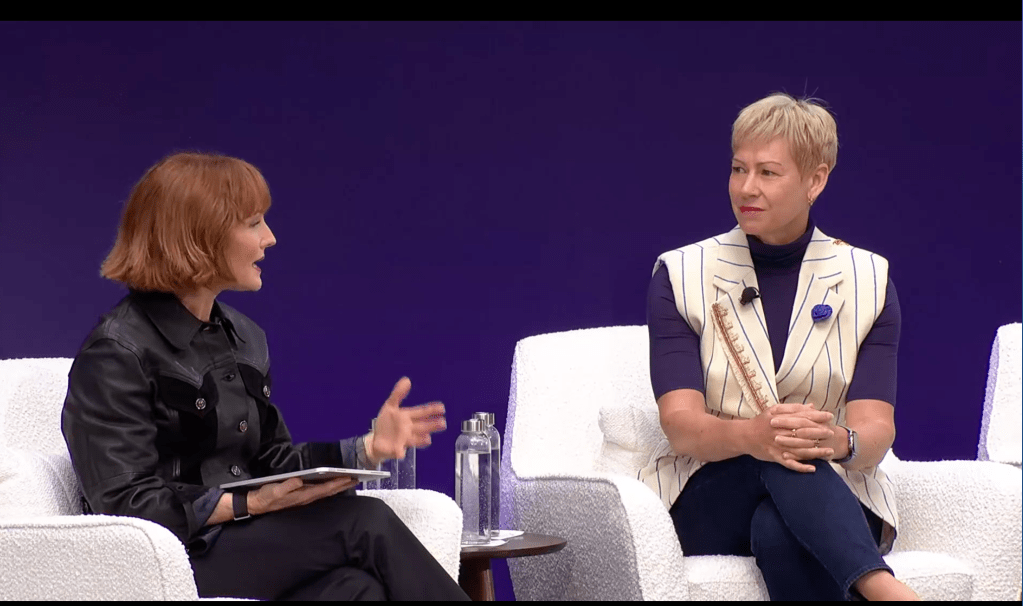
At its “What’s Next with AWS” event, Amazon Web Services announced the expansion of the Amazon Connect name into a family of agentic business solutions. The original contact center product is now called Amazon Connect Customer. Three new products join it: Amazon Connect Decisions (supply chain and demand planning), Amazon Connect Talent (high-volume hiring), and Amazon Connect Health (clinical documentation and patient coordination). All four products sit under the Connect name. All four are agentic by design.
The naming will raise eyebrows — more on that shortly. But the strategic logic is sound, and enterprise buyers should pay attention.
What “Agentic by Design” Actually Means Here
It’s worth being precise about what makes these products different from the AI-infused software most enterprises already live with.
Agentic AI doesn’t just surface recommendations. It plans a sequence of actions, executes them, monitors the results, and adjusts. The word “connect” is doing double duty in this brand: it references both the product family name and the agents’ actual function — connecting to your systems, your data, and your workflows to get something done without waiting for a human to click “approve” at every step.
The original Amazon Connect spent the last year being rebuilt on this principle. In 2025, AWS introduced what it called “next generation connect” — adding AI across the full customer journey, not just within a single interaction. Sentiment analysis, agent assist, post-call wrap-up, outbound communication, and full transcription all came along. The shift from the original Connect to Connect Customer is a shift from AI as a feature to AI as the operating model.
The three new products start from that same premise, except they aren’t retrofits. They were built from scratch for agentic execution.
Three Reasons the Benefits Case Is Credible
Vendor AI announcements are easy to be skeptical of. This one has a few things working in its favor.
Scale. Amazon Connect Customer handled 20 million interactions per day and processed 12 billion AI-powered minutes of conversation last year. That’s not a pilot. The new products are built on the same infrastructure. For enterprise buyers who have watched AI proofs of concept collapse under production load, operational scale at this level is a legitimate differentiator.
Domain expertise embedded in the product. Amazon didn’t hire supply chain consultants to build Connect Decisions. It extracted the models and decision frameworks from its own retail and logistics operations — systems managing demand planning across more than 400 million SKUs. Connect Talent draws from Amazon’s process for hiring 250,000 seasonal workers in a single season. Connect Health is built on the clinical AI running at One Medical, which has now processed more than one million ambient documentation visits. This is proprietary operational knowledge baked into the product, not a general-purpose LLM applied to a new domain. That distinction matters for buyers evaluating whether a product will actually understand their problem.
Integration with existing AWS infrastructure. For organizations already running on AWS, these products inherit the identity management, access controls, audit logging, and compliance certifications already in place. Buyers don’t start from zero on security posture or governance. That’s a real reduction in implementation risk, particularly in regulated industries like healthcare and financial services.
On the Branding: Confusing Short-Term, Coherent Long-Term
The name “Amazon Connect” has strong recognition in the enterprise market specifically as a contact center product. Adding supply chain, hiring, and healthcare products under the same name will require education.
That said, the decision is defensible. The Connect products share a common architecture and a common design philosophy. AWS is calling that philosophy “Humorphism” — building products designed around how humans and AI agents collaborate, rather than how humans use static tools. Agents ask clarifying questions. They capture the reasoning behind manual edits. They improve over time as they learn from user decisions. Every Connect product is designed to work this way.
The naming creates a coherent category: all Connect products are agentic, all are built on Amazon’s internal operational experience, and all are designed for line-of-business adoption rather than IT-led implementation. That’s a real product strategy, not just a logo change.
Buyers evaluating these products should simply be explicit in conversations with AWS about which Connect product they mean. In the short term, that’s a small friction. In the long term, a unified family brand is cleaner than four separate product names with no connective tissue.
The Open Questions That Need Answers
Pricing is TBD. AWS did not address how these products will be priced or licensed. For supply chain and hiring products competing with established enterprise software, pricing model matters significantly. Per-transaction, per-user, and consumption-based models all create different budget implications. Enterprise buyers should not evaluate these products without getting pricing clarity first.
The ERP and HCM question is unresolved. Connect Decisions targets supply chain planning. Connect Talent targets high-volume hiring. Both markets have entrenched incumbents — SAP and Oracle on the ERP side, Workday and Oracle HCM on the talent side — that already hold enterprise data and run existing workflows.
The question isn’t whether Amazon can build better AI. The question is how Connect Decisions and Connect Talent interact with the systems enterprises already have. A few scenarios are possible, and AWS hasn’t clarified which one applies. The existing ERP or HCM system could become a data source that feeds the Connect agents. The incumbent vendor could build its own agents that call Connect products as tools. Or both systems end up running parallel agent workflows that need to be orchestrated together. Each of these plays out differently for buyers in terms of integration complexity, data governance, and total cost of ownership.
The demos shown at the event depict Connect Decisions and Connect Talent operating as primary systems of action — generating demand plans, running interviews, surfacing candidate assessments. That implies some displacement of existing workflow software, at minimum for the activities these agents handle. Whether that displacement requires wholesale replacement of incumbent systems, or whether it can coexist alongside them, is not clear from what was announced. Buyers who already run SAP or Workday should press AWS specifically on this before evaluating further.
What to Do With This Information
If you’re an existing Amazon Connect customer, evaluate what the next-generation Connect Customer capabilities mean for your current deployment before looking at the new products. The AI-across-the-journey architecture is a meaningful shift from the original product, and understanding it fully is the right starting point.
If you’re in supply chain, high-volume hiring, or healthcare and are currently underserved by your existing software, these products are worth a serious look. The domain expertise and scale credentials are real. Get pricing clarity and understand the integration model before committing.
If you’re running SAP, Workday, or another incumbent system in these domains, don’t assume this announcement is irrelevant to you. The better question to ask your existing vendor is: what is your agent strategy, and how does it interact with what AWS just announced?
The question isn’t whether Amazon Connect should be a family of products. The question is whether or how to make your current stack work alongside it.
Subscribe to my AI with Maribel Lopez podcast on your channel of choice at https://www.buzzsprout.com/194744.
 Lopez Research