Tag: AI Infrastructure

  • HPE Updates Hardware, Private Cloud And Networking For  Agentic AI Era

    HPE Updates Hardware, Private Cloud And Networking For Agentic AI Era

    When public cloud computing emerged in the late 2000s and began scaling through the early 2010s, the prevailing theory was straightforward. Cloud computing theory claimed nearly every workload would eventually migrate off-premises. The economics were compelling, the convenience undeniable, and the momentum felt unstoppable. More than 15 years later, enterprise IT leaders are still managing substantial on-premises infrastructure — and many are actively investing in upgrades.

    Today, various research reports estimate that between 35 and 50 percent of workloads have moved to the cloud. Whether that figure is above or below 50 percent, it’s clear that workloads remain distributed. Cost, data sensitivity, regulatory compliance, latency requirements, and operational control all shape where a given workload belongs. The public cloud became one option in a complex portfolio, and the same will be true for AI workload placement. 

    Organizations have absorbed that lesson. In the early days, everyone ran AI proofs of concept in the cloud, but enterprise leaders are asking more specific questions on how to design scalable AI architecture. Today’s discussion centers on which AI workloads belong where and under what conditions? Cost recently surfaced as a major concern as AI token use skyrocketed. In many cases, AI costs escalated due to flawed policies that incentivized employees to consume as many tokens as possible to prove they were using AI.

    Today, organizations are considering the rationale for keeping workloads on-premises and whether upgrading their on-premises technology will be a cost-benefit or a disadvantage. It is not an easy question to answer. No technology vendor has delivered a definitive framework or spreadsheet that simplifies that decision. What has happened is that every major cloud and hardware vendor now offers some combination of managed AI services and pre-validated AI factory reference designs intended to help organizations scale AI deployments beyond proof of concept.

    The Hybrid AI Reality Is Already Here and Continues to Gain Momentum

    Walk into a strategy conversation with a large enterprise today, and you will rarely encounter a pure cloud or pure on-premises AI strategy. Hybrid deployments are the operating assumption. The more substantive discussion is about placement logic — what drives a workload toward private infrastructure, what drives it toward a public cloud, and what governance and connectivity model bridges the two. It is worth noting up front that HPE, as a hardware and infrastructure company, has a clear commercial interest in upgrading on-premises deployments. That context does not invalidate the market need, but it is relevant when evaluating how the company frames its positioning.

    Regulated financial institutions, healthcare systems, defense contractors, and national governments all have data residency requirements, sovereignty mandates, and security classifications must consider partitioning workloads between cloud and updated on-premises infrastructure.

    The AI Infrastructure Market Responds to Private and Sovereign Demand

    In 2026, most vendors are discussing which infrastructure advancements are needed to support agentic AI. While there were many hardware announcements at HPE’s annual Discover conference, the company also discussed updates to private cloud and sovereign AI infrastructure for agentic AI. HPE launched its first private cloud offerings roughly 2 years ago. 

    HPE is not alone in this space. Dell, Lenovo, and others have announced comparable on-premises AI infrastructure products built around Nvidia accelerators. Google Cloud was among the early movers in offering air-gapped, disconnected cloud offerings for regulated industries. The differentiation between these offerings — at the architecture, software, and services layer — is still being established in the market and warrants scrutiny from buyers evaluating alternatives. 

    HPE CEO Antonio Neri described the AI infrastructure decision as inseparable from data governance and sovereignty. Lopez Research has found this framing is consistent with what enterprise buyers in regulated industries report when asked about deployment constraints. HPE is delivering a pre-validated, purpose-built on-premises environment for AI workloads that reduces integration complexity and accelerates deployment timelines relative to assembling components independently. HPE also announced a Sovereign AI Factory configuration targeting governments and regulated industries, with built-in defense-grade security hardening, federal compliance readiness, and air-gapped operation. Let’s talk specifically about some of the ways HPE is addressing the agentic AI challenge. 

    Agentic AI Adds New Complexity to the Security and Governance Problem

    Neri articulated a theme that was consistent across the 2026 enterprise technology conference season when he discussed how AI has moved beyond generative assistants to autonomous AI agents. Technology vendors have discussed AI agents for more than a year. Many enterprises are already encountering agentic AI through their existing SaaS platforms. More advanced organizations are building and deploying their own agents. Lopez Research’s conversations with early adopters consistently surface the same operational pain points, including multi-agent orchestration across enterprise applications, securing and permissioning AI agents, governance, and company-wide observability into what agents are doing.

    Agentic AI introduces a security and governance surface for every organization that most existing enterprise security stacks were not designed to handle. Today’s security products were designed for individuals, not AI agents. These solutions are anchored on user credentials, access policies, and behavioral patterns. An AI agent, if allowed to do so, can operate autonomously, continuously, and at machine speed across multiple systems simultaneously. Bad situations propagate across workflows fast before any human reviewer is aware that something has gone wrong.

    HPE’s response at Discover included a three-tier identity model for agentic workloads that includes user verification, agent-level governance, and human approval gates for sensitive actions. It also offers the ability to wrap agents built in any framework with security controls, including API protection, identity management, and encryption, without requiring code changes. Integration with Nvidia OpenShell provides isolated execution environments per agent. NeMo Guardrails enforce policy at the model level. Zerto integration enables rollback to a clean state if an agent executes incorrectly.

    Private Cloud AI now includes a governed data layer with deep integration into the Nvidia AI Data Platform, giving enterprises a unified way to access, prepare, and manage data across their existing environments — no custom pipelines required. The HPE Alletra Storage MP Extend 1000 serves as the storage foundation, purpose-built for the performance demands of modern AI workloads. It adds real-time metadata enrichment and native MCP support, so agents and applications can retrieve the right data and context faster across both structured and unstructured data. HPE claims the result is a 7–12x faster time to value compared to building the environment yourself.

    Once your data is governed and ready, Private Cloud AI delivers the infrastructure to scale inference. Multi-node inference allows larger models to be served across multiple systems, so capacity grows naturally with demand. A new unified gateway gives teams a single API for accessing both frontier and open-source models, with centralized credentials, budgets, and policies built in. New configurations now scale up to 256 GPUs, which includes the new ProLiant DL394 with Nvidia GPUs optimized specifically for inferencing and long-context workloads. Additionally, shared KV cache capabilities eliminate the need to repeatedly recompute context, reducing cost per first token and delivering significant performance gains across the board.

    No architecture from any specific vendor will ever fully address a company’s governance or security problems. Still, buyers need to ensure that their vendors are addressing the problem and that they are willing to work with others to support a holistic approach. What HPE’s offering does represent is a concrete, specific engineering response to a recognized gap. Rami Rahim, HPE’s EVP and President of Networking, expanded on this in a separate day 2 session, arguing that the network itself must become an active enforcement layer for agentic security through zero-trust architecture, AI-driven anomaly detection, and automated policy enforcement. 

    Familiar AI Themes, With A Focus on Execution

    Assessed across the first half of the 2026 enterprise technology conference season, HPE Discover did not introduce themes that were new to the industry conversation. Sovereign AI requirements, the governance gap in agentic systems, and hybrid placement logic have all been visible in analyst briefings, vendor roadmaps, and customer conversations for some time. 

    That observation, however, should not diminish the significance of what Neri and Rahim presented. Identifying a trend early is necessary but not sufficient. The value of HPE Discover lies not in the novelty of the concept but in the focus of execution. What HPE customers were looking for was the degree to which the company has translated an accurate read of market direction into deployable infrastructure that enterprises and governments can procure and operate today. Whether HPE’s implementation proves durable competitive differentiation in a space where competitors are moving quickly is a question the next twelve months will answer. 

    HPE’s position is architecturally sound and consistent with broader industry direction. The customer deployments already underway illustrate there’s real demand in this space from various industry segments. The U.S. Defense Information Systems Agency (DISA) awarded HPE a ten-year contract to modernize its digital and AI platform capabilities, requiring a NIST-compliant private cloud environment that meets federal security classifications. In Europe, HPE is building the HammerHAI system at the High-Performance Computing Center Stuttgart (HLRS) in Germany. It is a sovereign AI installation delivering more than 15 exaflops of peak AI inference performance for research institutions and industrial organizations that must comply with European data residency requirements. In healthcare, St. Jude Children’s Research Hospital is using HPE Private Cloud AI to bring AI capabilities to its clinical and research teams while protecting sensitive pediatric oncology data. These three deployments — federal defense, national research infrastructure, and regulated healthcare — represent the segment of buyers for whom private and sovereign AI is a requirement, not a preference.

    Scaling AI Requires A Portfolio Approach

    The cloud never won all of the workloads. The economics, the regulations, and the operational realities of enterprise IT ensured that on-premises infrastructure remained relevant long after public cloud momentum suggested otherwise. The same dynamics are now shaping AI infrastructure decisions. 

    For organizations in regulated industries, private and sovereign AI is not a conservative hedge against innovation. For many, it is the enabling condition for AI adoption at all. But private AI infrastructure is not a complete exit from cloud services, and buyers should be cautious about treating it as such. 

    Even organizations running heavily on-premises AI environments (regulated or not) will almost certainly rely on the public cloud for a portion of their AI workloads. The question is how much. AI model training is the most frequently cited example — training large foundation models requires burst compute capacity that few enterprises can justify owning outright. But the dependencies extend further. AI experimentation and prototyping typically benefit from the speed and low commitment of cloud environments before workloads are validated for on-premises production. And accessing specialized frontier models — from providers like Anthropic, Google, OpenAI, or open-source alternatives — will often happen via cloud APIs, particularly for capabilities that do not require fine-tuning on proprietary data.

    In some cases, even those cloud touchpoints will need to meet sovereign requirements. Major hyperscalers have developed sovereign cloud offerings for regulated industries. A growing tier of neoclouds is positioning explicitly around sovereign infrastructure for organizations requiring local data residency, compliance certification, and jurisdictional control within a managed cloud model. The decision, in most cases, is not binary — it is a portfolio question about which workloads run where and what governance conditions each environment must satisfy.

    Regardless of the type of organization you are, validated reference designs for private deployment that can scale in a reasonable timeframe with minimal execution risk serve a real purpose. AI is not trivial to engineer independently. Pre-validated stacks lower the barrier for organizations that need private AI the most but have the least tolerance for deployment risk. HPE has made a substantive set of announcements in this space. So have others. Organizations keep getting better solutions to the “How do I build AI?” question nearly every month. Perhaps, the bigger question businesses need to focus on is “What do we need to build?” 
  • The Enterprise AI Time Bomb Is Ticking.  Cisco Shares Its Plan.

    The Enterprise AI Time Bomb Is Ticking. Cisco Shares Its Plan.

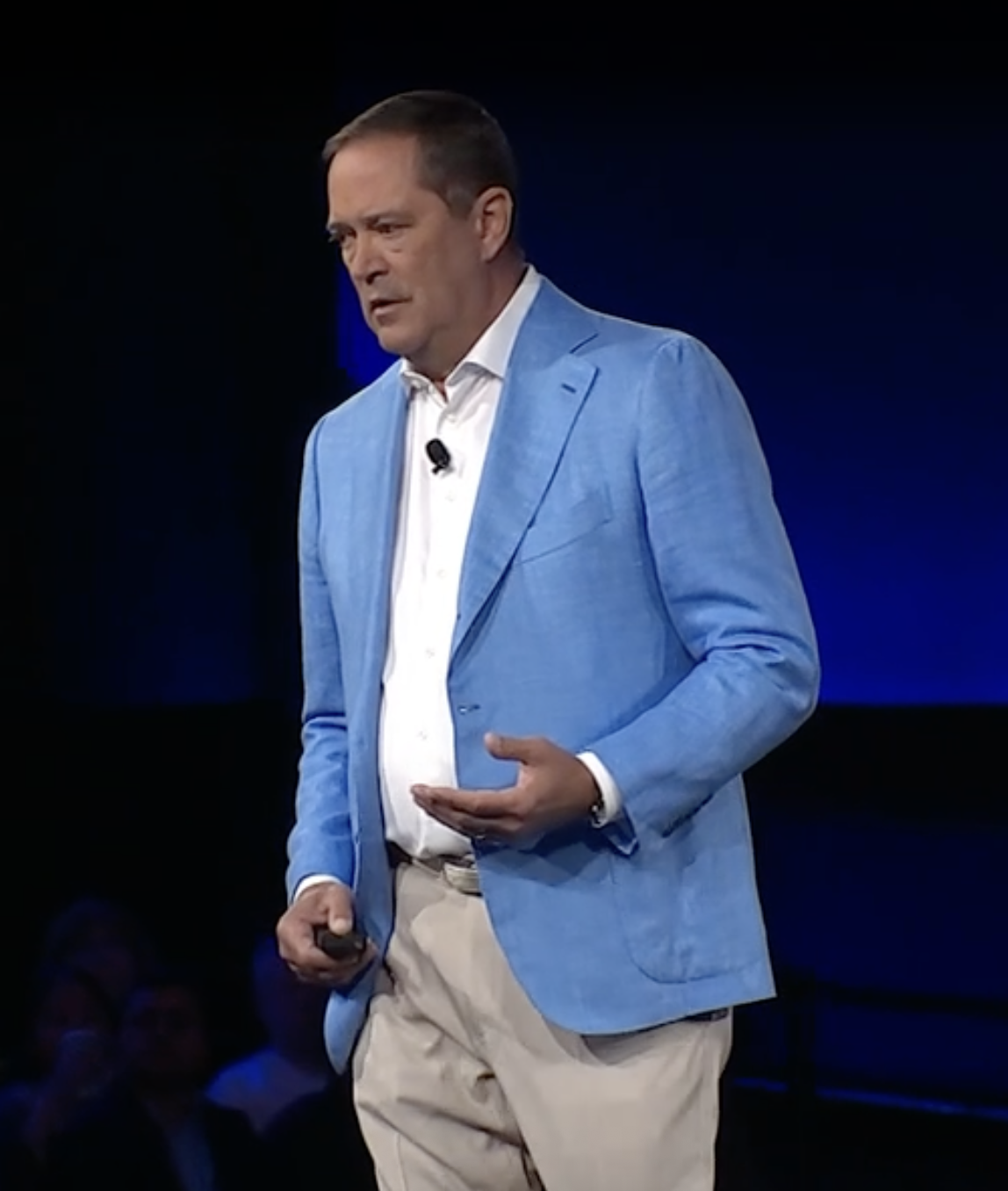
    At Cisco Live in Las Vegas this week, the company delivered a sobering security message for enterprise buyers. AI helps the bad actors move faster, and the window to get ahead of it is closing quickly.

    “AI changes the speed of defense. The bad corollary to that is it’s empowering our adversaries at a pace that we’ve never seen in our careers. These models are as bad today as they’re ever going to be,” Cisco CEO Chuck Robbins told the packed keynote audience — a line that landed with more weight than a typical tech conference applause line. He wasn’t talking about AI being ineffective. He was talking about it being weaponized.

    A New Kind of Threat

    The cybersecurity industry has spent years warning about AI-powered attacks. What’s changed in 2026 is that frontier AI models — particularly Anthropic’s Claude Mythos have made those warnings concrete.

    What sets Mythos apart from prior AI models is not general intelligence but what it can do in a cybersecurity context. According to Anthropic, it can autonomously identify and exploit software vulnerabilities at a level that outpaces almost all human security experts. In controlled testing, the model has been shown to identify thousands of zero-day vulnerabilities over several weeks — a pace no human security researcher or team could match.

    The dual-use nature of that capability is what makes Mythos a defining moment for enterprise security. The same model that can find and patch vulnerabilities at unprecedented speed can, in the wrong hands, find and exploit them. CrowdStrike’s 2026 Global Threat Report found an 89% increase in attacks by adversaries using AI — and Mythos-class capability represents a meaningful step change in what those adversaries can bring to bear.

    Anthropic has acknowledged that “models of this capability level require stronger cyber safeguards before they can be generally released,” which is why public access has been withheld while safety work continues. But what this tells us is that enterprises must prepare for a post-Mythos threat environment where any number of increasingly capable open and commercial models can and will help bad actors exploit vulnerabilities in legacy or unpatched systems. We can also see that patching isn’t enough.

    Robbins warned that the capability floor for AI-assisted attacks had just risen significantly and will not come back down. The most alarming shift is speed. Where it once took days or weeks for bad actors to move from a disclosed vulnerability to a working exploit, that timeline has compressed to minutes. Cisco’s own security team demonstrated the flip side of that same capability. Robbins said in the past eight weeks, Cisco used AI to scan 1.8 billion lines of code across 25 programming languages. Before these models existed, Robbins said, that would have taken approximately eight years.

    The implication is uncomfortable but unavoidable. The same technology accelerating legitimate security work is accelerating attacks at the same pace. Neither side has an obvious advantage, and the defender’s job — protecting a complex, distributed enterprise — is structurally harder than the attacker’s.

    Agents Make Everything Harder

    If AI-powered threats were the only problem, that would be manageable. But Cisco’s President and Chief Product Officer, Jeetu Patel, outlined a second, compounding challenge: the rapid proliferation of AI agents is creating an attack surface that enterprises are almost entirely unprepared for.

    The AI industry evolved from chatbots that respond to questions to AI agents that can act autonomously. Patel said Cisco’s research found that a single AI agent generates roughly 450% more network traffic than a human performing the same task. Multiply that by thousands of agents running across an enterprise, and the infrastructure and security implications are significant.

    More importantly, agents have access to tools. Agents call APIs, query databases, submit code, and interact with external services. The goal of an agentic AI system is to perform tasks without a human in the loop. Patel’s framing was blunt: “Agents are like teenagers. They’re supremely intelligent, but they have no fear of consequence.”

    Agentic AI creates new attack vectors that aren’t easy to manage with existing solutions. For example, prompt injection attacks can manipulate an agent’s behavior. Data poisoning can corrupt its decision-making. Meanwhile, bad actors can perform tasks at high speed with a compromised agent  before anyone notices anything is wrong.

    While agentic AI has great potential, most enterprises lack the proper visibility, security and management to handle agents. Companies need a systematic way to know how many agents are running in their environment, what those agents are authorized to do, or whether they are behaving as intended. This is one security gap Cisco is racing to close alongside other security companies, hyperscalers, and startups.

    The Identity Problem Nobody Has Solved

    Businesses are just waking up to the problem of non-human identity posed by AI agents. Every person accessing a corporate system has an identity with a role, credentials, and permissions. Machines, services, and AI agents largely do not, at least not in any consistent or governed way.

    In May, Cisco acquired Astiix Security, an AI company focused on the non-human identity category.  Before enterprises can enforce meaningful controls on agent behavior, they need a reliable way to know which agents exist, what they have access to, and what they should be allowed to do. The platform helps organizations discover, govern, and protect machine identities, preventing unauthorized access and securing AI agents from malicious attacks. Cisco can integrate this technology into its Cisco Identity Intelligence and zero-trust products, such as Duo and Secure Access, to safely manage the proliferation of AI agents.

    This is not a theoretical future problem. Enterprises are deploying agents today, and most are doing so without the right identity infrastructure to govern them. If they deploy agents within a specific SaaS stack, permissions and governance are typically handled by that software. Once we start discussing multi-agent workflows that cross applications, the challenge becomes more complex. Astrix gives Cisco more capabilities to support identity for an agentic future.

    Cisco’s Response In Three Moves

    Beyond the Asterix acquisition, Cisco announced a set of products and capabilities aimed directly at the threat landscape it described.

    1. AI Defense, extended for agents. Cisco launched AI Defense roughly 18 months ago to provide visibility and guardrails for AI models and applications. The updated version adds capabilities specifically for agentic deployments: adaptive testing, behavioral guardrails, security for agentic supply chains, and support for all major agent platforms, including Claude, Codex, and OpenAI.
    2. Zero trust that gets an update for AI agents. The traditional zero trust model is built around access control: verify identity, grant minimum necessary permissions, and monitor behavior. Cisco correctly argues that today’s access control is insufficient for agents. What enterprises need is action control — the ability to intercept and verify every action an agent takes, not just whether it was authorized to log in. This is a meaningful architectural shift, and one that Cisco is embedding into its platform rather than offering as a standalone product.
    3. An agentic SOC. The cybersecurity talent shortage is severe. Approximately 4 million positions go unfilled annually in the US alone, according to Cisco. The volume of security alerts already exceeds human capacity to investigate. Cisco’s answer is an AI-powered Security Operations Center where agents autonomously triage alerts, identify anomalies, and, in time, predict and prevent breaches. The foundation is Cisco Data Fabric, a Splunk-powered platform that ingests petabyte-scale telemetry from network, security, application, and third-party sources.

    The Galileo Acquisition: Watching the Watchers

    Governing AI agents requires knowing what they are doing — not just whether they are authorized to act, but whether they are producing the outcomes they were designed for. This is the observability problem, and it is harder than it sounds.

    To address it, Cisco acquired Galileo, an AI observability company founded by researchers who previously worked with Google and DeepMind. Galileo’s technology powers what Cisco calls full-stack agent observability. This is visibility into infrastructure performance, model behavior, application runtime, and agent output quality. It also includes whether agents consume tokens at a sensible rate.

    That last point surfaced repeatedly during the keynote and reflects a real operational concern. A runaway agent that has been misconfigured or has drifted from its intended behavior can consume an entire organization’s annual AI budget in a matter of days. Token cost management is not a glamorous feature, but it is required for this new era of infrastructure.

    Cisco Cloud Control: The Platform Beneath All of It

    One of the more surprising announcements was the newly launched Cisco Cloud Control. For anyone who’s followed networking and Cisco for years, the concept of a true unified management console has been discussed for many years, and it’s devilishly difficult to execute. Every part of the portfolio had its own management tools that were loosely coupled at best, if at all. Cisco Cloud Control aims to be a new unified management platform that consolidates the company’s entire product portfolio under a single interface with single sign-on. Cloud Control is the operational layer through which Cisco intends to deliver its AI security and observability strategy.

    The security-specific capabilities embedded in Cloud Control, such as agent security monitoring, cross-domain threat correlation, and policy enforcement in natural language, represent a meaningful shift from how enterprise security tools have historically operated. Rather than logging into separate dashboards for networking, security, and operations, administrators can query their entire infrastructure environment in natural language and receive correlated, actionable insights across domains.

    The demos made it look like Cisco had finally cracked the code. Whether that vision holds up at enterprise scale remains to be tested. But the architecture Cisco described — silicon to semantics, from custom networking chips to AI agents operating on top of them — reflects a deliberate bet that the company’s control of the full infrastructure stack is a genuine competitive advantage in an AI-defined security landscape.

    The Reality. Enterprise AI Threats Are Real.

    Cisco’s keynote was, of course, a product announcement. But stripped of the stage production, the underlying argument is sound and worth taking seriously.

    AI is compressing attack timelines. Agents are expanding the attack surface in ways that existing security architectures can’t handle. The cybersecurity workforce is not growing fast enough to compensate. And most enterprises are deploying agents today without the governance infrastructure to know what those agents are doing, let alone control them.

    The organizations that will navigate this well are not necessarily the ones that move fastest. They are the ones that treat agent governance — identity, authorization, behavioral monitoring, and action control — as a first-class infrastructure concern rather than an afterthought. Enterprise technology leaders want and need their existing technology stack providers to evolve their security and management stacks to support AI threats. Cisco is making a significant bet that enterprises will pay for that infrastructure. Given the threat landscape it described, the bet seems rational.

    This article was originally published on Forbes.com.

  • Amazon Connect Is Now a Family of Products That Adds Agentic AI  to CX, HCM, Supply Chain and Healthcare

    Amazon Connect Is Now a Family of Products That Adds Agentic AI to CX, HCM, Supply Chain and Healthcare

    AWS is betting that Amazon Connect agentic AI belongs in supply chain, hiring, and healthcare — not just customer service. The branding is smart. Here’s my quick take. 

    For years, Amazon Connect meant one thing: contact center software. As of this week, it means four products, three new markets, and a bet that agentic AI is ready to run business operations — not just answer customer calls.

    At its “What’s Next with AWS” event, Amazon Web Services announced the expansion of the Amazon Connect name into a family of agentic business solutions. The original contact center product is now called Amazon Connect Customer. Three new products join it: Amazon Connect Decisions (supply chain and demand planning), Amazon Connect Talent (high-volume hiring), and Amazon Connect Health (clinical documentation and patient coordination). All four products sit under the Connect name. All four are agentic by design.

    The naming will raise eyebrows — more on that shortly. But the strategic logic is sound, and enterprise buyers should pay attention.

    What “Agentic by Design” Actually Means Here

    It’s worth being precise about what makes these products different from the AI-infused software most enterprises already live with.

    Agentic AI doesn’t just surface recommendations. It plans a sequence of actions, executes them, monitors the results, and adjusts. The word “connect” is doing double duty in this brand: it references both the product family name and the agents’ actual function — connecting to your systems, your data, and your workflows to get something done without waiting for a human to click “approve” at every step.

    The original Amazon Connect spent the last year being rebuilt on this principle. In 2025, AWS introduced what it called “next generation connect” — adding AI across the full customer journey, not just within a single interaction. Sentiment analysis, agent assist, post-call wrap-up, outbound communication, and full transcription all came along. The shift from the original Connect to Connect Customer is a shift from AI as a feature to AI as the operating model.

    The three new products start from that same premise, except they aren’t retrofits. They were built from scratch for agentic execution.

    Three Reasons the Benefits Case Is Credible

    Vendor AI announcements are easy to be skeptical of. This one has a few things working in its favor.

    Scale. Amazon Connect Customer handled 20 million interactions per day and processed 12 billion AI-powered minutes of conversation last year. That’s not a pilot. The new products are built on the same infrastructure. For enterprise buyers who have watched AI proofs of concept collapse under production load, operational scale at this level is a legitimate differentiator.

    Domain expertise embedded in the product. Amazon didn’t hire supply chain consultants to build Connect Decisions. It extracted the models and decision frameworks from its own retail and logistics operations — systems managing demand planning across more than 400 million SKUs. Connect Talent draws from Amazon’s process for hiring 250,000 seasonal workers in a single season. Connect Health is built on the clinical AI running at One Medical, which has now processed more than one million ambient documentation visits. This is proprietary operational knowledge baked into the product, not a general-purpose LLM applied to a new domain. That distinction matters for buyers evaluating whether a product will actually understand their problem.

    Integration with existing AWS infrastructure. For organizations already running on AWS, these products inherit the identity management, access controls, audit logging, and compliance certifications already in place. Buyers don’t start from zero on security posture or governance. That’s a real reduction in implementation risk, particularly in regulated industries like healthcare and financial services.

    On the Branding: Confusing Short-Term, Coherent Long-Term

    The name “Amazon Connect” has strong recognition in the enterprise market specifically as a contact center product. Adding supply chain, hiring, and healthcare products under the same name will require education.

    That said, the decision is defensible. The Connect products share a common architecture and a common design philosophy. AWS is calling that philosophy “Humorphism” — building products designed around how humans and AI agents collaborate, rather than how humans use static tools. Agents ask clarifying questions. They capture the reasoning behind manual edits. They improve over time as they learn from user decisions. Every Connect product is designed to work this way.

    The naming creates a coherent category: all Connect products are agentic, all are built on Amazon’s internal operational experience, and all are designed for line-of-business adoption rather than IT-led implementation. That’s a real product strategy, not just a logo change.

    Buyers evaluating these products should simply be explicit in conversations with AWS about which Connect product they mean. In the short term, that’s a small friction. In the long term, a unified family brand is cleaner than four separate product names with no connective tissue.

    The Open Questions That Need Answers

    Pricing is TBD. AWS did not address how these products will be priced or licensed. For supply chain and hiring products competing with established enterprise software, pricing model matters significantly. Per-transaction, per-user, and consumption-based models all create different budget implications. Enterprise buyers should not evaluate these products without getting pricing clarity first.

    The ERP and HCM question is unresolved. Connect Decisions targets supply chain planning. Connect Talent targets high-volume hiring. Both markets have entrenched incumbents — SAP and Oracle on the ERP side, Workday and Oracle HCM on the talent side — that already hold enterprise data and run existing workflows.

    The question isn’t whether Amazon can build better AI. The question is how Connect Decisions and Connect Talent interact with the systems enterprises already have. A few scenarios are possible, and AWS hasn’t clarified which one applies. The existing ERP or HCM system could become a data source that feeds the Connect agents. The incumbent vendor could build its own agents that call Connect products as tools. Or both systems end up running parallel agent workflows that need to be orchestrated together. Each of these plays out differently for buyers in terms of integration complexity, data governance, and total cost of ownership.

    The demos shown at the event depict Connect Decisions and Connect Talent operating as primary systems of action — generating demand plans, running interviews, surfacing candidate assessments. That implies some displacement of existing workflow software, at minimum for the activities these agents handle. Whether that displacement requires wholesale replacement of incumbent systems, or whether it can coexist alongside them, is not clear from what was announced. Buyers who already run SAP or Workday should press AWS specifically on this before evaluating further.

    What to Do With This Information

    If you’re an existing Amazon Connect customer, evaluate what the next-generation Connect Customer capabilities mean for your current deployment before looking at the new products. The AI-across-the-journey architecture is a meaningful shift from the original product, and understanding it fully is the right starting point.

    If you’re in supply chain, high-volume hiring, or healthcare and are currently underserved by your existing software, these products are worth a serious look. The domain expertise and scale credentials are real. Get pricing clarity and understand the integration model before committing.

    If you’re running SAP, Workday, or another incumbent system in these domains, don’t assume this announcement is irrelevant to you. The better question to ask your existing vendor is: what is your agent strategy, and how does it interact with what AWS just announced?

    The question isn’t whether Amazon Connect should be a family of products. The question is whether or how to make your current stack work alongside it.

    Subscribe to my AI with Maribel Lopez podcast on your channel of choice at https://www.buzzsprout.com/194744.

  • Physics AI Explained: Why Hardware Design Requires a Different Kind of AI

    Physics AI Explained: Why Hardware Design Requires a Different Kind of AI

    Not every AI problem is a language problem. I talk with Vinci CEO Hardik Kabaria about what changes when AI has to reason about the physical world.

    Full show notes

    Most of the AI conversation in enterprise circles is about large language models — text, code, maybe images. This episode is about something different: what happens when AI has to reason about physical systems where the laws of physics don't negotiate and a wrong answer can't be patched after the product ships.

    I talked with Hardik Kabaria, CEO of Vinci, about how physics-based AI models are built differently from generative models, why determinism is a requirement rather than a preference in hardware design, and what it means for organizations manufacturing physical products to think carefully about where AI fits in their workflow. The conversation covers data security, scalability, and the practical question of how to evaluate new AI tools when the cost of a mistake is measured in product recalls rather than content edits.

    This episode is most relevant for technology leaders at companies that design or manufacture physical products. But the underlying insight — that deterministic and probabilistic AI serve different purposes and require different evaluation criteria — applies to any organization building a portfolio of AI tools.

    What we cover:

    • Why physics-based AI is a different modality than large language models, and what that means for how you build and evaluate it
    • The case for determinism in AI: why hardware design requires the same answer every time, regardless of who asks
    • How AI is making physics analysis accessible to more engineers, reducing dependence on a small pool of highly specialized talent
    • Why data security requirements are higher for hardware design than for most enterprise AI deployments — and what deployment models address that
    • How to think about AI across the full product lifecycle, from early concept to manufacturing sign-off
    • What “trust but verify” looks like in practice: building benchmarks before deploying AI in high-stakes design workflows

    Timestamps:

    Chapters:
    00:00 Introduction to AI and Vinci
    02:04 Understanding Physics Intelligence Layer
    04:20 The Role of Physics in AI Models
    07:04 Digital Twins and AI Scalability
    09:35 Misconceptions in AI for Physical Systems
    12:15 Determinism vs. Non-Determinism in AI
    15:01 Deployment Challenges for Physics-Based AI
    17:41 Signals of Success in AI Implementation
    20:20 The Future of AI in Hardware Design
    23:01 Preparing for the Shift to AI in Physical Systems

    Guest bio Hardik Kabaria is CEO and co-founder of Vinci, an AI company building foundation models for the physical world. His background is in physics and geometry software for hardware engineering, with experience across the tools mechanical and electrical engineers use to design, simulate, and manufacture physical components. Vinci was founded two and a half years ago and is focused on making physics-based analysis accessible at the speed and scale of AI inference.

    • Company: Vinci

    Resources mentioned:

    📢 STAY CONNECTED

  • Beyond Models and GPUs: Why Enterprise AI Libraries Matter

    Beyond Models and GPUs: Why Enterprise AI Libraries Matter

    By Maribel Lopez

    NVIDIA GTC 2026 Part 2. Everyone is talking about AI hardware and AI models, but companies need more than that to make AI deployable in the enterprise. Let’s talk about enterprise AI libraries.

     Enterprise AI spending has grown eightfold over the past three years. The ambition is real. So is the frustration.

    Ask any CIO who has tried to move a pilot to production, and you’ll hear the same story: the technology worked well enough, but everything around it — the data, the skills, the integration work — took far longer and cost far more than expected. The gap between “we want to use AI” and “we have AI delivering measurable ROI” is where most initiatives stall.

    NVIDIA GTC this week was full of announcements — a new LPU architecture, next-generation inference servers, new models. The hardware gets the headlines. But tucked inside the announcements from both NVIDIA and its infrastructure partners was something that matters as much to enterprise buyers right now as the models: the emergence of AI libraries and validated blueprints as a serious category.

    A briefing with Lenovo on its AI factory and AI libraries brought this to light during the GTC announcements. AI libraries aren’t a new concept, but the category is getting more serious.  Jensen Huang made clear at GTC why that matters.

    The Part of the AI Stack Nobody Talks About Enough

    When most enterprise buyers think about AI investment, they think about two things: hardware and models. Which GPU? Which LLM? These are legitimate questions, but they’re not the only questions that determine whether an AI deployment succeeds.

    At GTC, Jensen Huang made the point directly. Speaking about NVIDIA’s CUDA X libraries, which are domain-specific algorithm libraries that sit between the hardware and the application.  He said:

    “The libraries are the crown jewels of our company. It is what makes it possible for that platform, the computing platform, to be activated in service of solving a problem.”

    He’s describing NVIDIA’s own libraries such as cuDNN, cuOpt (real-time logistics and routing optimization), Parabricks (Genomics Analysis), and many more.  Each one purpose-built for a specific problem domain. But the principle extends beyond NVIDIA. The layer between the hardware and the business outcome is where AI either becomes useful or becomes expensive shelfware.

    Enterprise-grade AI libraries serve the same function at a different level of the stack. They translate validated infrastructure configurations into deployable patterns for specific business problems, such as robotic inspection, customer service agents, and supply chain optimization. They don’t entirely replace data science expertise. They compress the amount of it you need to get started.

    This is an underserved part of the conversation. Infrastructure vendors are competing aggressively on compute specs. Model providers are competing on benchmarks. AI libraries that offer the connective tissue between hardware capability and business outcome — get far less attention than they deserve.

    Why AI Libraries Are Important

    Every analyst (including myself) talks about data as the bottleneck for AI. That’s the first hurdle, but it’s not the only one.

    Most enterprises don’t have enough data scientists. The companies that can hire and retain data scientists at scale are a small fraction of the market. For most organizations, standing up even a well-scoped AI use case requires expertise they don’t have in-house such as the expertise to evaluate which models fit the problem, which infrastructure to run them on, and how to configure the full stack from data ingestion to output.

    A curated, validated AI library addresses this directly. It isn’t a data solution. It’s an expertise solution.

    An AI factory offers the infrastructure layer these libraries sit on top of. It provides the compute, orchestration, and resources to run those use cases. The library tells you what to build and how to configure it. Together, they significantly compress the starting problem.

    Lenovo offers its own AI factory solutions. During a briefing with analysts, Dipak Prasad , who leads hybrid cloud and AI solutions at Lenovo, described the AI Library’s purpose this way: “The AI library is a curated collection of use cases and outcomes that are designed to help customers accelerate their enterprise AI journey. It’s something meant to give them a clear and practical starting point with proven patterns for success.”

    Flynn Maloy , Lenovo’s Chief Marketing Officer for its Infrastructure Solutions Group, framed the buyer need plainly: “They don’t just want to buy the parts. They want to see validated designs. They want to see solutions and outcomes.”

    That’s a real need across the market. Infrastructure vendors building in this direction are responding to the same signal.

    What You Still Need

    To be clear, AI libraries and validated blueprints are a faster on-ramp, not necessarily a complete solution. Three prerequisites remain that no vendor can hand you:

    • Clean, accessible data. Data readiness is still on you. AI outcomes are only as good as what you feed them. Validated blueprints assume data is available and reasonably structured. If your customer data lives in five different systems with inconsistent schemas, that integration work comes first. We’re starting to see some AI factorie address data prepareness, but it’s not universal. A blueprint will help structure your approach, but won’t fix the underlying problem.

    • A governance framework. Roughly half of organizations still don’t have a formal AI governance policy. Deploying production AI — especially in customer-facing or operational contexts — without one creates legal, compliance, and reputational risk that a blueprint can’t manage.

    • Integration planning. Every blueprint connects to your existing systems at some point. The scope of that integration — to your CRM, your ERP, your identity stack — determines actual deployment cost and timeline. It’s rarely trivial.

    Service partnerships help. For example, Lenovo’s expanded collaboration with IBM Technology Lifecycle Services, which will support the deployment and ongoing management of hybrid AI infrastructure in regulated industries. It’s an example of what filling the services gap looks like. But a services partnership expands your support options; it doesn’t substitute for your own operational readiness.

    Early, But Real Outcomes Exist

    One fair critique of AI libraries and validated blueprints at this stage: the evidence base is thin. Most enterprise AI deployments are less than a few years old. Production-grade results with published ROI are still the exception.

    Lenovo references internal deployments — what they call “Lenovo powers Lenovo,” built first to run their own 36 factories and FIFA as an external example of the knowledge super-agent.

    But ‘early’ doesn’t mean there are no results. If we look at AI deployments across industries over the past several years, we see documented real returns. American Express focused on 70 high-impact use cases and saw a 10% increase in developer productivity and a 40% reduction in IT escalations. Cisco applied AI to network management, reducing the time spent on renewals from 40% to under 5%. Walmart used AI to cut inventory waste by 30%. These outcomes came from the same discipline that AI libraries are designed to replicate: a specific problem, a defined scope, foundations built before deployment, and measurement from day one.

    The AI library concept is a mechanism for replicating that pattern without requiring every enterprise to discover it through trial and error. Expect the evidence base to strengthen over the next 18 to 24 months. Companies that start now with well-scoped use cases will be the ones producing it.

    You Have Choices. Start With Your Current Infrastructure Partner.

    Lenovo is not the only infrastructure vendor building in this direction. Dell, HPE, and the major hyperscalers are all developing versions of AI factories with validated software layers and ecosystem programs.

    Dell Technologies‘ AI Factory with NVIDIA wraps validated reference architectures, partner software, and services around comparable infrastructure breadth. Hewlett Packard Enterprise‘s Private Cloud AI combines GreenLake infrastructure with NVIDIA AI Enterprise software. IBM has its own watsonx AI platform and infrastructure stack. The hyperscalers — Amazon Web Services (AWS) , Microsoft Azure, Google Cloud — offer industry-specific AI solution catalogs, primarily cloud-native rather than hybrid.

    The market is moving quickly. Enterprises will have genuine choices, and those choices will vary by infrastructure philosophy, existing vendor relationships, and the specific use cases being targeted.

    The practical starting point: begin your evaluation with whichever vendor already has the most significant footprint in your data center. Not because that vendor necessarily has the best AI library and factory offering because it  may or may not. If your existing vendor has a solid, but perhaps not the best offering, you will have a baseline for your evaluation. With this baseline, you can decide whether the difference in product offerings is worth the pain of switching.

    Three questions to ask any vendor with an AI factory or library offering:

    • Show me a deployed customer in my industry. Not a reference architecture. Not a proof of concept. A production deployment with measurable outcomes and a customer willing to discuss it. If they can’t provide one, treat the offering as early-stage.

    • What do I need to have in place before this works? Push for specifics on data readiness, integration requirements, and governance prerequisites. Vague answers signal the vendor hasn’t worked through enough real deployments to know what breaks.

    • What does the full engagement cost? Blueprints reduce the expertise required to start, but they don’t eliminate service costs. Get the total cost — hardware, software, implementation, ongoing management, etc.

    The use cases are real. The tools are rapidly evolving. Seek out solutions that minimize the execution variable.


    Subscribe to the AI with Maribel Lopez podcast on your channel of choice here.