Category: Automation

  • Five Steps to Follow for Successful AI Deployments

    Five Steps to Follow for Successful AI Deployments

    The paradox facing enterprise AI today is stark: organizations report an eightfold increase in AI spending over three years, yet studies show 95% of generative AI use cases never reach production, and 75% fail outright. This disconnect reveals that most organizations are making fundamental execution errors—not that AI lacks business value.

    After years of advising enterprise buyers on AI deployments, several critical success principles have emerged. Organizations that follow these principles consistently deliver measurable ROI. Those that don’t contribute to the failure statistics.

    1. Start with Business Outcomes, Not Technology Platforms

    The most common AI failure pattern mirrors mistakes from mobile and IoT adoption: organizations build “AI platforms” before identifying specific use cases that deliver measurable business value.

    The problem: Selecting tools (LLMs, vector databases, orchestration frameworks) before defining what you’re trying to accomplish is equivalent to buying hammers, screwdrivers, and impact drivers before knowing what you’re building.

    The solution: Begin every AI initiative by identifying specific use cases tied directly to organizational KPIs. Examples of scoped, high-value use cases include:

    • Reducing containment rates for specific support call types by 90%
    • Deploying task-specific LLMs customized on proprietary data for financial services advisors
    • Achieving 15-20% improvement in software development velocity (not the 40% often marketed, but still significant ROI)

    The use case must be specific enough to measure, valuable enough to justify investment, and scoped tightly enough to complete successfully. “Transforming customer experience” is not a use case. “Reducing password reset support calls by 85% using a custom chatbot” is.

    2. Fix Your Data Foundation First

    Bad data produces bad AI outcomes. This principle has not changed despite advances in model capabilities, and it remains the biggest obstacle after poor use case selection.

    Many AI vendors assume enterprise data is ready for production use. It rarely is. Organizations must prioritize:

    • Data quality: Ensuring accuracy, completeness, and consistency across sources
    • Data availability: Making relevant data accessible to AI systems without introducing security or governance gaps
    • Data architecture modernization: Restructuring how data is stored, indexed, and retrieved to support AI workloads

    Infrastructure strategies established five to seven years ago did not account for generative AI as the dominant workload. A strategic pause to reassess data architecture is not optional—it’s a prerequisite for success. This includes evaluating hybrid and distributed infrastructure models, as the industry has conclusively moved past the “public vs. private vs. hybrid” debate: AI will be hybrid and distributed.

    3. Implement Observability and Metrics from Day One

    Approximately half of organizations implementing AI fail to establish proper governance and observability frameworks at the outset. This virtually guarantees failure.

    Why this matters: Without metrics, you cannot determine if an AI system is delivering value. Without observability, you cannot determine if it’s functioning correctly or degrading over time.

    What this requires:

    • Establishing baseline measurements before AI deployment
    • Defining success metrics aligned with business KPIs
    • Implementing monitoring systems that track model performance, data drift, and output quality
    • Creating feedback loops that enable continuous improvement

    Organizations that cannot answer “Is this working?” or “Are we winning?” with quantitative data are not ready for production AI deployment.

    4. Narrow Your Focus to Maximize Impact

    The temptation to launch hundreds of AI initiatives simultaneously is strong, particularly when board-level mandates lack specific structure. Resist this temptation.

    The bowling alley principle: Aim for the first pin precisely rather than all ten at once. When you get the first one right, it often knocks down others. This approach matters for two reasons:

    First, fewer projects enable teams to deliver measurable impact rather than spreading resources too thin. Second, and more importantly, each AI initiative requires rethinking the entire technology stack—data architecture, governance structures, security frameworks, infrastructure placement decisions. Working through these complexities across 1,000 applications simultaneously is unmanageable. Solving them for three high-value initiatives is achievable.

    These initial projects serve as “pipe cleaners” that help organizations establish repeatable patterns for data modernization, security implementation, and governance frameworks. Once established, these patterns accelerate subsequent deployments.

    5. Establish Governance and Security Before Deploying Agents

    The current push toward agentic AI—systems that pursue goals autonomously across multiple steps and applications—introduces new risks that many organizations are unprepared to manage.

    The fundamental difference: Chatbots respond to queries. Agents pursue multi-step goals that often span multiple software systems, trigger financial transactions, and make autonomous decisions. An agent onboarding a new employee might schedule calendar invites, order laptops (procurement decisions with financial impact), create email accounts, and establish identity credentials—all without human intervention.

    Critical requirements before deploying agents:

    • Identity management: Every agent must have a registered identity, even those provided by third parties. Treat agents as assets in your CMDB (Configuration Management Database).
    • Authorization frameworks: Define what each agent can do, when it escalates to humans, and what systems it can access. Role-based access control applies to agents as it does to humans.
    • Security protocols: Establish standards for agent-to-agent communication, particularly across vendors. This includes adopting emerging protocols (like OAuth for AI and Model Context Protocol) and defining interworking standards.
    • Risk assessment: Before deploying any agent, map out what could go wrong if the agent operates without proper controls. Customer data exposure, unauthorized spending, and incorrect decisions all carry material risk.

    Most organizations should pause agentic deployments until they have clear answers to these questions. The upside: we can use a mix of new tools and  existing identity, authorization, and security tools with modest modifications. You don’t have to throw out your entire security stack but you do need to modernize it for agents. The industry does not need entirely new protocol stacks.

    Key Takeaways from Lopez Research

    Organizations achieving strong AI ROI share common execution patterns: they select narrow, high-value use cases; they modernize data architecture before deployment; they establish observability frameworks from the start; they resist the temptation to scale before validating their approach; and they implement governance and security commensurate with the risk agents introduce.

    The failure rates cited at the beginning of this article reflect poor execution, not technological limitations. When AI is deployed with discipline, precision, and appropriate governance, it delivers measurable business impact. The question is not whether your organization should pursue AI—board mandates have settled that question. The question is whether you will execute with the rigor required to avoid becoming another failure statistic.

    Most of the technology exists. The use cases are proven. The only remaining variable is execution discipline.
  • From Chatbots To Digital Workers: Why NiCE’s AI Focuses On Execution

    From Chatbots To Digital Workers: Why NiCE’s AI Focuses On Execution

    NiCE is betting that AI agents that complete tasks—not just conversations—will separate winners from pretenders in the enterprise AI race

    The artificial intelligence hype cycle has reached peak saturation, with technology vendors scrambling to slap “AI-powered” labels on everything from refrigerator recipe suggestions to chatbots that rely on simple keyword matching. Yet, for all the breathless marketing rhetoric, most business leaders are still waiting for AI that simplifies operations and improves data analysis.

    NiCE, a customer experience platform provider, is making a calculated bet that the next phase of enterprise AI won’t be about making chatbots sound more human. The next wave of business outcomes will leverage AI agents that can navigate complex business processes from start to finish with minimal human intervention. 

    NiCE’s CEO, Scott Russell said, “Optimizing knowledge is not just critical for AI to truly thrive in your environment, but it’s also the key for transforming service from reactive to proactive, identifying opportunities to solve issues and predict future needs.” NiCE’s recent product launches and strategic moves reveal a move toward enhanced automation and agentic AI.

    From AI Data Access to Intelligent Action

    The first wave of enterprise AI focused primarily on making data more accessible through conversational interfaces—essentially putting a chat layer on top of existing applications and knowledge repositories. 

    While this represented significant progress in democratizing data access, it only scratched the surface of AI’s potential business value. Organizations could ask questions and get answers, but the burden of reasoning through complex decisions and taking action remained entirely on human operators.

    Going forward, technology vendors, such as NiCE, will use AI to deliver solutions that can reason through multifaceted problems and take semi or fully autonomous action. This evolution from conversational AI to agentic AI represents the difference between AI that informs and AI that performs. Agentic AI enhances a company’s ability to analyze context, weigh multiple variables, make informed decisions based on key business performance indicators, and execute actions across interconnected systems.

    Traditional conversational AI helps a customer service representative find relevant information. Still, agentic AI can help a representative evaluate a customer’s complete history more easily, assess risk factors, determine appropriate responses based on business rules, and automatically trigger the necessary workflows to resolve issues end-to-end. “There’s a big difference between AI that talks and AI that gets things done,” explains Barry Cooper, President of NiCE’s CX Division. “While others are building agents that mimic conversations, we’re building agents that fulfill customer needs—end to end.” 

    This distinction becomes crucial when examining NiCE’s CXone Mpower Agents. Traditional AI chatbots had limited access to data, offered scripted responses, and were confined to specific areas of the business, such as front-office or back-office operations. NiCE’s AI agent platform aim to break through these constraints by operating across the entire enterprise ecosystem—from initial customer contact through mid-office approvals to back-end fulfillment systems. Admittedly, Agentic AI is the AI buzzword of 2025, but early, well-scoped use cases show promise. 

    Speeding Up Time to AI Agent Creation

    Technology companies are increasingly working to streamline AI deployment as traditional approaches require extensive technical resources, custom development, and lengthy implementation cycles. NiCE’s model simplifies AI agent creation while maintaining enterprise-grade sophistication through what they call vibe coding, allowing business users to tailor each agent’s personality and communication style without requiring technical expertise.

    While the concept of vibe coding remains ill-defined, and its merits are hotly debated within the enterprise software community, there is a broad consensus around the underlying goal of making AI agents easier to code and deploy. The specific term matters less than the fundamental shift toward empowering business users to create and customize AI functionality without requiring deep technical expertise.

    Breaking Down Data and Function Silos With Strategic Partnerships

    In a rapidly evolving tech landscape, no single vendor can deliver everything an enterprise needs to succeed with AI, cloud, data, and digital transformation. Today, companies are no longer looking for isolated solutions—they need interconnected ecosystems. That’s why strategic partnerships are essential. By working together, enterprise technology vendors can bridge data and function silos, improving workflows and accelerating innovation. Just as importantly, these alliances help enterprises extract greater value from existing technology investments by ensuring that new capabilities work in concert with the tools already in place. Over the past several months, NiCE has expanded its partnership with Amazon Web Services (AWS) and added ServiceNow and Snowflake to the mix.

    NICE and AWS Tackle AI Integration at Enterprise Scale

    At Interactions 2025, NiCE announced an expanded collaboration with AWS, bringing together NiCE’s domain expertise and rich interaction data with AWS’s cloud infrastructure and generative AI services, including Amazon Bedrock, Amazon Q, and the Amazon Nova family of large language models. The partnership addresses some of the most pressing challenges facing enterprise AI deployments: fragmented workflows, disconnected data, and inconsistent global performance. 

    The partnership focuses on three core pillars. First, content-aware automation ensures that AI-generated responses are highly relevant and context-specific. Using the Amazon Q Index, Mpower Agents are equipped with up-to-date business content—from product documentation to policy details and case histories—enabling them to respond accurately and confidently in real time.

    Second, the integration delivers enterprise-wide orchestration by bridging front, middle, and back-office operations. NiCE’s CXone Mpower Orchestrator automates workflows across functional teams, while Amazon Q Business extends this reach into a broader set of enterprise applications—eliminating silos and streamlining complex processes.

    Additionally, global scalability is made possible through AWS’s robust cloud infrastructure. With low-latency performance and high availability across regions, multinational organizations can deploy and scale AI-driven customer service experiences quickly and consistently around the world. NiCE’s partnership strategy also extends beyond AWS to include other critical enterprise platforms, such as ServiceNow and Snowflake. 

    NiCE and ServiceNow Partner to Automate the Full Customer Journey

    NiCE’s latest partnership with ServiceNow aims to eliminate long-standing service gaps by tightly integrating real-time customer engagement with enterprise workflow automation. Announced at ServiceNow’s Knowledge 2025 event, the collaboration integrates NiCE’s customer service platform with ServiceNow’s AI and Customer Service Management (CSM) tools to streamline operations across the entire organization, from the front office to the back.

    The goal: fully automated customer service fulfillment. The combined solution routes inquiries based on sentiment, intent, and service-level agreements (SLAs)—bridging siloed departments to accelerate resolution times and enhance both customer and employee experiences. Role-based AI copilots assist agents and back-office teams with real-time insights and next-best actions, while continuous optimization tools flag issues and launch workflows automatically.

    These relationships provide access to complementary technologies and customer bases, allowing NiCE to integrate with the broader enterprise software ecosystem that companies rely on for operations, data management, and workflow automation.

    NICE and Snowflake Partner to Turn Customer Interaction Data Into Enterprise Intelligence

    NiCE’s strategic collaboration with Snowflake aims to unlock the full value of customer interaction data by making it accessible, secure, and actionable across the enterprise. By integrating Snowflake’s AI Data Cloud with CXone Mpower, NICE can improve data sharing, breaking down silos that have traditionally limited the impact of customer insights. Snowflake serves as the backbone of the CXone Mpower data lake, centralizing interaction data and enriching it with information from other enterprise systems. This unified data foundation allows organizations to automate key processes—from billing to claims handling—while powering AI-driven analytics, dashboards, and decision-making. The result: faster fulfillment, greater accuracy, and a deeper, organization-wide understanding of the customer experience.

    The Strategic Imperative of Brand Evolution in an AI Era

    Apparently, 2025 is the year of the brand refresh. The technology industry has witnessed updates from Five9, Google’s G, Hitachi HPE, and Qualcomm’s introduction of Dragonwing, alongside NiCE’s own transformation. Every brand refresh has its own story to tell, but NiCE’s new logo and marketing campaign represent more than a desire for fresh typography and color schemes.

    The rebrand indicates the company’s strategic desire to expand its AI vision beyond the contact center to encompass its broader portfolio of finance and security solutions. The company describes the rebrand as positioning “NICE to empower brands to deliver AI-powered experiences that are proactive, human-centered and intuitive—whether connecting with customers, protecting communities or combatting financial crime.”

    NiCE’s solution involves partnering with actress Kristen Bell, who serves as the face of the company’s “NiCE World” brand campaign. The initiative positions Bell as the “NiCEst Person in the World,” NiCE said the campaign “builds on NiCE’s reimagined brand, championing a future where AI isn’t just intelligent – it’s connected, intuitive and working behind the scenes to make life better.

    Key Takeaways

    The enterprise AI market remains in flux, with new entrants and existing players continually repositioning themselves. NiCE’s focus on domain expertise, integration depth, strategic partnerships, and automation suggests a company that understands both the technical and implementation requirements necessary for large-scale AI adoption.

    As enterprises increasingly demand AI that delivers results, NiCE’s bet on fulfillment-focused automation may prove prescient. Of course, there’s still the matter of  cost and return on investment. Most companies struggle to understand and plan for the true product and operational costs of AI. Organizations need to work with their technology vendors to deploy well-scoped use case that deliver measurable return on investment, fast. The question isn’t whether AI will transform customer experience—it’s which companies will build AI that completes the transformation rather than just talking about it.

  • SAP Modernization Gains Momentum: Customer Success Stories From Sapphire

    SAP Modernization Gains Momentum: Customer Success Stories From Sapphire

    For nearly two decades, Lopez Research has tracked SAP customers’ struggles when transitioning to standardized, cloud-based solutions. The reality of enterprise IT deployments is undeniable: SAP powers critical business operations—from finance and human resources to sales, marketing, and supply chain management—making any transition extraordinarily complex.

    Lopez Research has consistently heard these concerns from organizations across industries. However, we’re witnessing a significant shift as customers finally embrace modernization. Two key factors drive the modernization momentum: substantially improved SAP offerings and an urgent desire to capitalize on artificial intelligence capabilities that require modern infrastructure.

    Migrating business software from on-premises to cloud environments is like changing a car’s tires while driving at full speed. This challenge gets amplified by years of customizations that make simple drop-in replacements to modern cloud offerings impossible. The path to a new business suite is inevitably costly, complex, and time-consuming.

    Simplifying Business with SAP

    At Sapphire 2025, SAP’s message was unmistakable: they’re committed to simplifying how customers engage with their products—whether through faster, more cost-effective modernization of existing solutions, embracing AI innovations, or building solutions with partners. This comprehensive transformation has been years in the making.

    On day one, Christian Klein introduced a new transition guidance tool to accelerate migrations with fewer resources. SAP is streamlining AI deployment by embedding intelligence directly into its products. The company expects to deliver more than 400 embedded AI scenarios by year-end, with Joule functioning as a CoPilot interface across the entire suite. Multi-agent frameworks are this year’s dominant theme, and SAP has embraced agentic AI capabilities. A key objective is providing tools that reduce custom application and AI development costs throughout the entire lifecycle. SAP is enhancing customer experience through several key initiatives:

    • Line-of-business specific solution packages tailored to different buying centers (finance, HR, supply chain, sales, procurement, services)
    • Simplified commercial terms and contracts
    • Out-of-the-box AI packages with managed integration
    • Pre-packaged, SAP-managed industry-specific content
    • Inclusion of SAP Build to extend applications while maintaining a clean core

    With these changes, SAP aims to create solutions that deliver a “best of suite as a service” approach, significantly reducing complexity and implementation costs for companies adopting SAP’s business suite.

    At Sapphire 2025, SAP also announced new partnerships with AWS and Perplexity.ai. The Perplexity answer engine is being embedded directly into SAP Joule. It allows companies to integrate accurate, trusted, real-time answers on public web data with their SAP data for enhanced decision-making. The AWS collaboration establishes a dedicated AI co-innovation program and fund to support the development and deployment of generative AI applications on the SAP Business Technology Platform for cloud ERP workloads.

    SAP Responds to Customer Challenges

    On day two of SAP’s Sapphire conference, Thomas Saueressig acknowledged these customer challenges and highlighted the company’s progress over the past year. At last year’s Sapphire, SAP introduced its simplified engagement model, the RISE with SAP offering, and an integrated tool chain to streamline transformation processes. This year, Saueressig revealed that “customers using the RISE with SAP methodology and the integrated tool chain saved up to 30% of the cost for their transformations.”

    The RISE with SAP offering helps businesses transition their SAP ERP systems from on-premises to the cloud. Rather than a new standalone product, it’s a bundled package of software, platform, infrastructure, and services, marketed as “Business Transformation as a Service.” The RISE with SAP methodology encompasses SAP S/4HANA Cloud and the SAP Business Suite, enabling customers to progress from fit-to-standard to fit-to-suite implementations.

    SAP also offers GROW with SAP, a program tailored for small to medium-sized businesses seeking rapid cloud ERP adoption. It delivers a comprehensive package of solutions, best practices, adoption services, community access, and learning resources for smooth cloud implementation. The company now supports 8,500 RISE with SAP customers and manages over 146,000 systems with an impressive five-nines (99.999%) availability service level agreement.

    While companies recognize data as their strategic asset, unlocking its value has remained challenging. In February 2025, SAP announced the SAP Business Data Cloud (BDC)—a next-generation, fully managed Software-as-a-Service platform that unifies, governs, and analyzes business data across SAP and third-party sources. This solution represents the evolution of SAP’s data and analytics offerings, integrating capabilities from SAP BW, SAP Datasphere, SAP Analytics Cloud, and new AI features enabled through a strategic partnership with Databricks.

    Real-World Customer Success Stories

    The critical question remains: Will SAP’s efforts yield meaningful results? This year’s Sapphire showcased customers sharing their modernization journeys and the value they’re creating through SAP solutions and artificial intelligence.

    Mercedes-Benz: Navigating Complex Transformation

    Mercedes-Benz decided to adopt RISE with SAP in 2024. Katrin Lehmann, CIO of Mercedes-Benz Group, explained, “I took on that role just a year ago, and the first thing you do is assess what you have. I have over 10,000 applications in the system landscape, and 1,200 of those are SAP applications. Most of them (SAP apps) are still on ECC. How did we tackle that topic? We bought LeanIX.”

    SAP’s LeanIX software provides comprehensive visibility into an organization’s entire software estate—whether purchased, planned, or custom-built. By offering detailed insights into the current IT landscape and all interdependencies, SAP LeanIX helps companies plan and navigate both technical and business aspects of ERP transformation.

    Lehmann continued, “We implemented LeanIX and sorted the systems by importance. We used the time methodology, transform, invest, migrate, eliminate, to plan where we need to go. We took the most important systems, and we’re migrating those to RISE right now.”

    She emphasized that “Moving to RISE also means that we can leverage innovation, and AI is very important to us. But, AI is not new to us at all.” Mercedes-Benz engineers have been using GitHub Copilot for several years throughout their supply chain and value chain. The company has developed its own internal ChatGPT called MRS GPT, which is used across finance, HR, and manufacturing plants. When quality issues arise, workers can use natural language to ask MRS GPT for resolution assistance. The company is now looking to incorporate Joule and other SAP AI capabilities.

    Metal Services: Transformation During Crisis

    Jeff Suellentrop, CITO of Metal Services LLC, shared how his company grew too quickly and needed to reinvent its business during bankruptcy, which followed rapid growth. “We wanted to reimagine how we do business. We selected GROW with SAP, and an all-best practice implementation to replace every system in the entire company. Now there are other subsystems, but we got rid of the paper and pencil. And not only do we use the best practices for simplification, but also to level up. The (SAP) best practices were better than many existing processes. It was a few huge lifts, and we went live within eight months of initiating that process.”

    He added, “We’ve built out our full data model, which is one of the big unlocks (of value). We have the ability with a standardized, out-of-the-box core product to deploy to multiple sites, and then we can continuously innovate on top of that. We use SAP maintenance to maintain all our equipment, and we’ve returned millions and millions of dollars back into the business. Our profitability and utilization are up. We have some other AI models as well, and we’ve just scratched the surface.”

    Mars: Multi-Business Unit Strategy

    Large multinational companies face unique challenges when designing systems that can’t follow a one-size-fits-all approach. Will Beery, Global CIO of Mars Snacking, outlined the company’s digital strategy to create an architecture that is “global, standardized, scalable, and has the ability to make it easier to plug in acquisitions.”

    “We’re using the public cloud to house True Fruit, Nature’s Bakery, and now KIND. For my retail business, we’ve deployed a retail-specific RISE instance that will run M&M stores but also be fit-for-purpose (solution) for Hotel Chocolat. For Mars Wrigley, we’re developing a more customized, complex template for the rest of Mars Incorporated. The three-tier model allows us the agility to support smaller businesses like KIND. It allows us interoperability across all businesses, to drive scale and efficiency where it makes sense. It’s also going to enable a massive integration if we were to acquire a sizable snacking business in the future. SAP and RISE are a massive partner, helping us do that fast and at a lower total cost of ownership.”

    Praveen Moturu, Global Vice President – Digital Platforms at Mars Information Services, elaborated, “We took a model-driven approach from our business capabilities, business processes, data, applications, and technology, and put those models in the SAP Business Suite. It has helped us to build a cleaner platform for the future, which is resilient, and that’s one of the key cornerstones of our transformation.”

    Starting with what SAP calls a “clean core” is challenging but potentially rewarding. Moturu explained, “The productivity from the business suite is enormous for us. We started with leveraging the automation that’s already available in the (SAP) Business Suite to reduce manual interactions, human errors, and give our associates time back. Real-time data and embedded analytics helped us to drive productivity and make accurate and timely decisions that help us to drive quality. And last, but not least, the AI components that the business we introduced with Joule have increased productivity across the company. We have deployed it in our public and private cloud, and it helped us onboard new users, change management, and learning.”

    NBCUniversal: From Project to Platform Mindset

    How you start the transformation journey will shape how resilient and flexible your company becomes as market dynamics change. Abhinav Gupta, SVP of Enterprise Product at NBCUniversal, shared how his company approached transformation and offered advice for business leaders.

    “The fundamental premise of our strategy is to consolidate disparate technology platforms supporting similar processes onto a common technology platform with a standardized set of processes. It sounds easy, right? This is hard to do because this is not about the technology. It requires driving a significant mindset shift within the company. The way I like to verbalize this mindset shift is this concept of moving from a project mindset to a product or platform mindset.”

    Gupta explained how NBCUniversal structured its governance to drive this mindset shift: “One of the ways we are driving this mindset shift within NBC Universal is in the way that we have structured our governance model. The steering committee for our finance transformation effort has representation across the entire breadth of the company. We have the four CFOs who represent each of the four divisions. We have our chief accounting officer, our corporate Financial Planning and Analysis leader, our global CIO, our CTO, and our head of AI on the steering committee as well. We also have representation from EY, our primary Systems Integrator in this effort, and SAP.”

    He praised SAP’s collaborative approach, noting that SAP “brought its top product and engineering folks that have collaborated with our teams, and collectively, we have overcome some significant problem statements.”

    Despite the successes, NBCUniversal acknowledged the ongoing challenges of transformation. Gupta emphasized, “In spite of the incredible wins that I’ve shared with all of you today, we still have a long way ahead of us. The one key takeaway for the audience is this. It’s important to bake in incremental wins across your long transformation journeys. This is helpful to keep your organization and people energized, which is crucial to your success.”

    Expanding Success Stories

    Saueressig highlighted additional customer achievements, including PHP’s creation of $500 million in value using Signavio for business process transformation, enabling the company to reinvent its shared service center model. SAP Signavio is a comprehensive suite for business process transformation that helps organizations design, analyze, improve, manage, and monitor process changes.

    Nestlé saved over 5 million hours using solutions like SAP’s WalkMe—a digital adoption platform providing in-app guidance, automation, and analytics—to drive enablement and digital adoption for 270,000 people across more than 200 applications. First Abu Dhabi Bank achieved a 25% reduction in application count.

    Jan Gilg, Chief Revenue Officer for SAP Americas and SAP Business Suite, and Member of the SAP Extended Board, emphasized, “An integrated, harmonized enterprise foundation is the key, and that’s the reimagined SAP Business Suite. It is data-driven, AI-powered, and can democratize access to business AI. I’m convinced that this will then truly unlock the next wave of productivity, and the time is now.”

    Lopez Research Perspective

    Lopez Research believes we’re witnessing a critical inflection point in enterprise software modernization. After years of hesitation, SAP customers are accelerating their transformation journeys, driven by more flexible migration options and the compelling business case for AI-powered operations. While the path remains challenging, the potential benefits in operational efficiency, data-driven decision making, and competitive differentiation are becoming too significant to ignore.

    SAP customers have long viewed their relationship with the software provider as a partnership rather than a typical vendor arrangement. They expect SAP to innovate on their behalf but adopt these innovations cautiously, recognizing the potential business disruption of hasty implementation. This balanced approach to modernization—combining thoughtful planning with strategic ambition—appears to be gaining traction as organizations seek the agility needed to thrive in increasingly digital markets.

  • Google Cloud’s Vertex And Models Advance Enterprise AI Agent Adoption

    Google Cloud’s Vertex And Models Advance Enterprise AI Agent Adoption

    New Reasoning Models and AI Agent Capabilities Promise To Transform Business Applications

    Enterprises need reliable platforms that combine powerful models with practical deployment capabilities. Google Cloud’s latest enhancements to Vertex AI and the Gemini model family offer businesses a comprehensive solution for building, deploying, and managing AI applications with unprecedented speed and efficiency. Vertex AI is Google Cloud’s platform to orchestrate the three pillars of production AI: models, data, and AI agents.

    Google Cloud has significantly enhanced its Vertex AI platform with new capabilities centered around reasoning models and agent ecosystems, improving the ability for enterprises to build and deploy artificial intelligence applications. The Vertex AI platform now supports over 200 models besides Google’s. The cloud provider’s latest Gemini 2.5 models represent a fundamental shift from simple response generation to what Google calls “reasoning models” – AI systems that demonstrate transparent step-by-step thinking before producing outputs. Reasoning models can work through complex analyses across multiple information sources and make nuanced decisions based on enterprise data and

    Google offers two complementary models targeting different business needs. Gemini 2.5 Pro, designed for complex problem-solving with a one-million token context window, enables sophisticated analysis of extensive documents and codebases. Meanwhile, Gemini 2.5 Flash offers optimized performance for high-volume, cost-sensitive applications where efficiency at scale is paramount.

    Organizations have faced insurmountable barriers to developing trust in AI outputs without understanding how AI arrives at conclusions. The first step in this process was listing the sources AI used in responses. Still, reasoning models enhance this by demonstrating their thought process, marking a critical advancement for enterprises requiring explainable AI for compliance and governance requirements.

    The availability of a combination of solutions that offer cost, performance, and transparency is a step in the right direction for supporting the wide range of enterprise AI requirements. Early adopters report compelling results. Moody’s claims Google’s Solution provided over 95% accuracy and an 80% reduction in processing time for complex financial document analysis. Box has implemented AI extract agents for unstructured data processing across procurement and reporting workflows, demonstrating practical applications in information management. But it takes more than AI models to build robust strategies.

    Bolstering AI Agent Capabilities With New Tools

    The number one agentic AI concern enterprise buyers have expressed to Lopez Research is fear that agents will make and implement the wrong decision. Many organizations shared concern that AI orchestration solutions are half-baked, and there’s fear that agents won’t operate properly because the data and work streams required to complete a task span multiple applications and services. To solve this, companies are looking for robust AI orchestration to coordinate and manage various AI systems, models, or components to work together seamlessly in solving complex tasks. Finally, it’s not as easy as you click a button and deploy an army of agents. Companies need tools that help them more easily build and deploy custom and out-of-the-box agents faster.

    New Solutions Aim to Overcome Enterprise AI Deployment Concerns

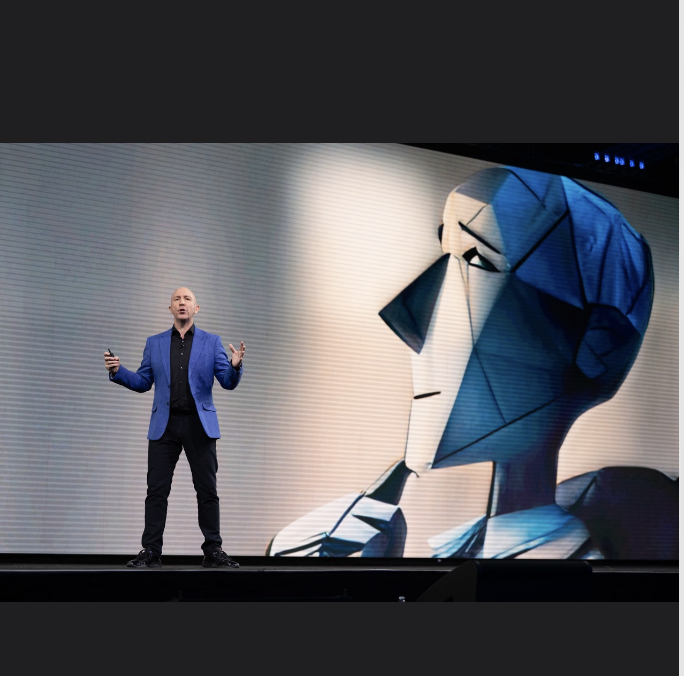
    To address these concerns, Google announced a wave of new multiagent ecosystem capabilities in its Vertex AI that allow multiple AI systems to work together to accomplish complex tasks. The company introduced several components to enable this approach, including the Agent Development Kit (ADK), the Agent2Agent protocol, Agent Engine, and updates to Agentspace.

    Minimizing the Data Collaboration Problem with the Agent2Agent Protocol

    Most vendors claim they can provide fully autonomous AI agents. Still, most buyers prefer to deploy these agents semi-autonomously to reduce concerns about process failures or inaccuracies. To address the enterprise buyer issue of data access and execution across various applications, Google introduced the Agent2Agent protocol, an open standard for enabling communication between agents built on different frameworks and vendors. Google launched the protocol with the support of over 50 industry partners, including Salesforce, ServiceNow, and UiPath. The Agent2Agent initiative addresses one of the most significant barriers to enterprise AI adoption: painful integration challenges to create interoperability across disparate systems.

    Making it Easier for Developers of All Skill Levels to Build AI

    Meanwhile, the Agent Development Kit (ADK), agent engine, and other advances in the Vertex AI platform help bootstrap the development of agents. Agent Development Kit, an open-source framework, allows developers to build sophisticated agents with approximately 100 lines of code –dramatically reducing development complexity. It also offers pre-built samples through Agent Garden to further accelerate development. ADK offers compatibility with over 200 models from providers like Anthropic, Meta, and Mistral AI.

    The companion Agent Engine provides a fully managed runtime for deployment, eliminating the traditional challenges such as rebuilding the agent to move from prototype to production. Agent engine also provides evaluation tools to measure and improve agent quality.

    Security and data integration capabilities round out the platform, with configurable content filters, identity controls, and Google Cloud’s Virtual Private Cloud (VPC) service controls providing multi-layered protection. Equally valuable is the platform’s ability to connect agents to enterprise data through various methods, including standard protocols and direct API integration.

    Improving Access to AI Agents

    Once a company can design, manage, and secure agents, the biggest obstacle to success is getting agents ubiquitously adopted within the enterprise. Agentspace aims to help employees find, publish, and consume agents. Agentspace, launched in December 2024, allows employees (and agents) to find information from across their organization, synthesize and understand it with Gemini’s multimodal intelligence, and act on it with AI agents. Enterprises can discover and adopt agents quickly and easily with Agent Gallery and create agents with Google’s no-code Agent Designer. Firms can also deploy Google-built agents, such as its new Deep Research and Idea Generation agents, to help employees generate and validate business ideas and synthesize dense information.

    At the conference, Google announced that Agentspace is integrated with Chrome Enterprise, letting employees leverage Agentspace’s unified search capabilities from the Chrome search box. Bringing Agentspace directly into Chrome will help employees easily and securely find information, including data and resources, right within their existing workflows.

    Perhaps what was most surprising was to learn that actual businesses are deploying agents today. Client quotes during the keynote and on Google Cloud’s website demonstrated that business impact is already evident across diverse industries. For example, Revionics has implemented a multiagent system for optimizing retail pricing, while Renault Group developed agents to strategically place EV charging infrastructure using geographical analysis. Gordon Food Service is using Agentspace to change how it accesses enterprise knowledge with searches grounded in its data across Google Workspace and other sources like ServiceNow. These early examples demonstrate the potential for complex automation of previously human-intensive analytical workflows.

    The Key takeaway: AI Agents Will Happen

    The strategy provides elements for sophisticated developers, novice designers, and employees who must find and use agents to improve their workflow. The availability of models, connectors, and out-of-the-box agents will help eliminate painful trade-offs between model capability, enterprise integration, and production readiness. The result isn’t merely faster development but significantly more reliable agents prepared for mission-critical enterprise workflows.

    As reasoning models and multi-agent systems evolve from experimental concepts to production realities, organizations should evaluate not only the capabilities of individual models but also the broader infrastructure required for responsible enterprise deployment. The key consideration for executives evaluating AI investments isn’t individual technical capabilities but rather the breadth of the portfolio and ecosystem to accelerate time-to-value while maintaining governance requirements. Google’s latest enhancements to Vertex AI and AI agent tooling suggest a maturing approach focused on practical enterprise adoption rather than merely advancing technical benchmarks.

  • 3 Tips For Automation Success

    3 Tips For Automation Success

    Image of hand pointing to the word Automation
    Source: Adobe Stock

    A study by Lopez Research found that 80% of organizations are looking to embrace and expand automation efforts in 2022. Today, market leaders are also using artificial intelligence to automate processes, find patterns in data and model outcomes of various actions.

    There are many definitions of automation; not all are considered artificial intelligence. Automation describes a wide range of technologies that reduce human intervention in processes. These solutions range from more basic automation, such as robotic process automation, that uses scripts to emulate human processes, such as extracting data, filling in forms, and moving files. Many companies started with robotic process automation, but the automation field is much more comprehensive than this. At the higher end of the practice, automation extends to using artificial intelligence to understand and react to conditions with minimal human intervention.

    I recently had several conversations with NTT DATA about intelligent automation, including an interview for the AI with Maribel Lopez (AI with ML) podcast that you can listen to here. A key takeaway from my conversations with the company is that there’s no one-size-fits-all approach to adopting automation. Organizations can use automation to help alleviate the impact of labor shortages by reducing human intervention for repetitive tasks. Still, in other cases, you may want more advanced AI-enhanced automation that streamlines alerts and suggests subsequent actions. For example, AI-enhanced network management may assess a variety of alerts, define which alerts are the most serious, and suggest network configuration changes to remediate an issue. A company can even set these solutions to make changes, if desired, automatically. My other takeaways are as follows:

    1. Focus on the problem, not the technologies.
    NTT DATA shared that a company needs to define the problem it’s trying to solve before the firm can successfully design a technology plan. It said, “We don’t define automation as technology. Automation is a set of tools and techniques to solve a business problem. We’re not looking for Robotic Process Automation (RPA), chatbot, machine learning, or IoT opportunities. (Instead), let’s first try and understand what we’re trying to solve and figure out if automation is the right solution.”

    2. Map automation to business key performance indicators.
    There are many areas where automation can assist the business. How do you decide where to start? NTT DATA spoke of mapping projects back to one of the three big levers of creating business value within a company. Does it help you grow revenue, optimize costs, or reduce organizational stress? These are the three major drivers of enterprise transformation for every type of company.

    As I work with IT leaders on defining areas where automation can significantly move the needle on business value, I’ve discovered these projects often require a more significant process transformation. Most companies struggle with the process reinvention aspect of automation but automating an inefficient process won’t yield the best results. A company should streamline the workflow first, then automate necessary but routine functions. For example, credit checks within a mortgage application process are easy to automate, but if there are five unnecessary steps before the credit check, automating a single aspect of the process will have minimal impact. The company can still achieve the benefits of automation by focusing on several “quick wins” where they can rapidly demonstrate the value of automation

    3. What gets measured gets improved.
    Like any other project, it’s important to define metrics and procedures to measure success at the outset. In my experience, most organizations fail to specify if they are measuring hard or soft goals. NTT DATA calls this measuring return on value versus return on investment because some returns are qualitative versus quantitative. At some point, management will ask you to quantify the value automation has created for the organization. At times, a business can quantify the value of automation in dollars. At other times, the value gets measured as process acceleration or what tasks no longer need to be performed.

    For example, employee experience and retention may improve due to automation minimizing manual labor. However, these types of metrics are difficult to equate to one item. NTT DATA shared that companies need to monitor automation outcomes to ensure everything works as planned and continues to perform well over time. Lopez Research reports that creating a lifecycle management approach to validating and refining automation is particularly important in AI-based automation, where machine learning can modify processes in unintended ways. The takeaway? Don’t forget data and automation governance, monitoring, and management.


    Automation in the real world
    All of this sounds great but is it practical? Over the course of several meetings, the company shared several examples of automation, including a case study they had published on the company’s work with Integra Lifesciences. This case study highlights three different ways automation was used within an organization to achieve both quantifiable benefits as well as employee experience improvements. For example, Integra LifeSciences used NTT Data’s Nucleus AI platform to speed up Oracle ERP testing by 98%. It also achieved a 50% faster increase in processing Oracle ERP user access requests through digitizing paper-based forms. 

    As part of process transformation efforts, Integra also worked with NTT DATA’s Digital Experience designers to implement social listening technologies to actively track, gather and analyze data from the social media and online platforms favored by doctors and other users. Meanwhile, round-the-clock access to an Intelligent Assistant on Microsoft Teams, powered by Nucleus, allows employees to resolve issues at a time that works for them.


    Things to remember
    As your business upgrades its technology portfolio, a certain amount of AI and automation will be built into your business’s software and cloud computing solutions. There are several questions you should ask as you progress in your journey. What does your technology team need to create versus what comes inherently in the product? Do you have the internal skill set to develop automation, or do you need to select a partner? If you choose a development partner, does the vendor support a wide range of solutions so you can choose what’s right for you? These are just a few questions you’ll have to answer to make the most of your automation strategy.


    In the post-COVID era, organizations have experienced at least the first wave of digital transformation. Now companies are spending more time creating technology strategies that enable digital acceleration. Automation is a fundamental component of this strategy. Effectively, automation will help you evolve from accelerating simple repetitive tasks to creating intelligent systems.


    Other areas for you to consider
    Machine learning and automation are also heavily used in security. If you’d like to hear more about ML and security, please check out this podcast with Lacework. As you look to pursue automation and insight through AI, you must build ethical AI. You can find an article I wrote on ethical AI here.


    I look forward to sharing more with you on automation in the future.